


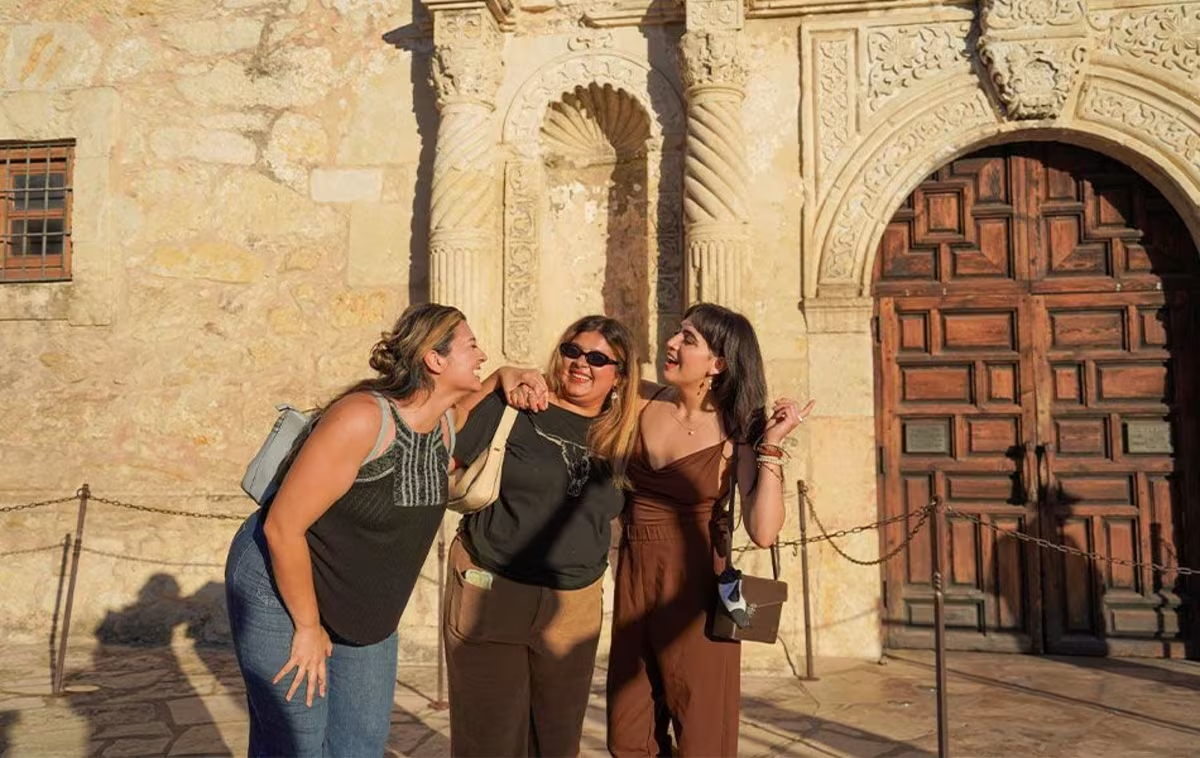

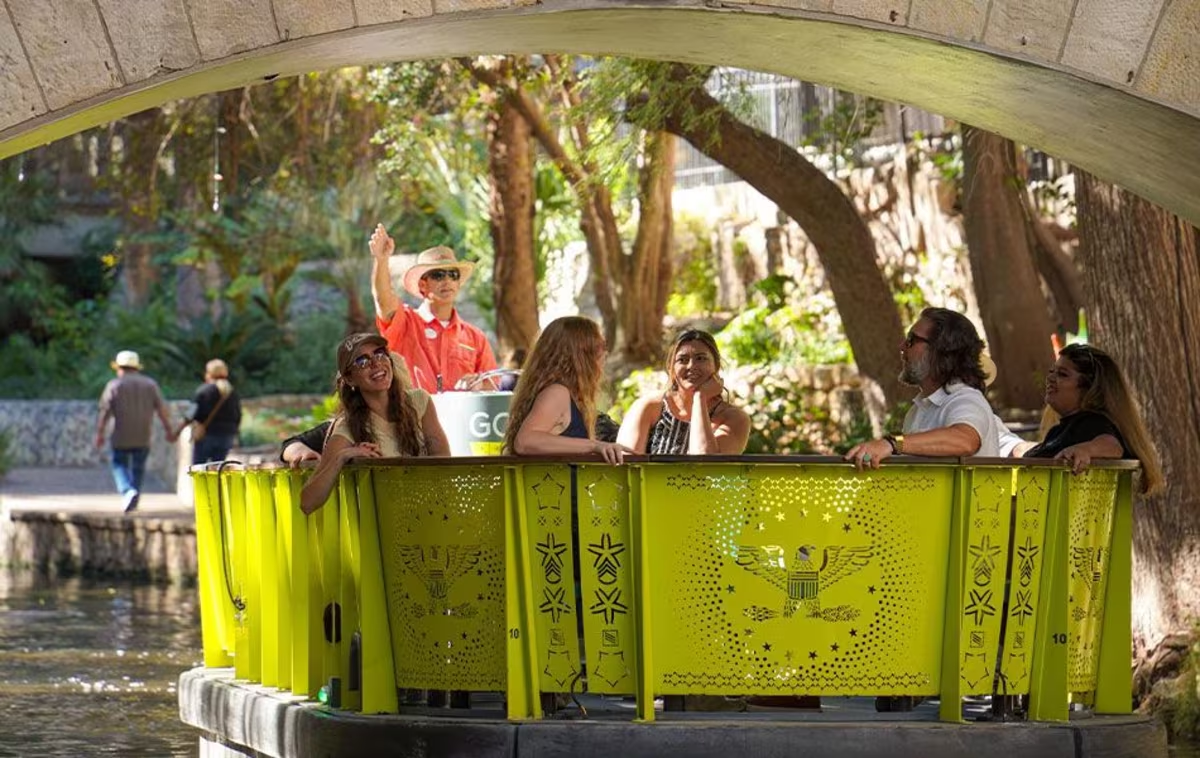

San Antonio is the kind of city that asks you to slow down – not because it’s sleepy, but because its best stories sit in places people tend to miss. Travelers often focus on the big landmarks: the Tower of the Americas, the River Walk, the Alamodome. But the soul of the city lives in the smaller spaces, the tucked-away courtyards, the alleys lined with limestone, and the secret corners of the missions that hold pieces of the state’s timeline stretching back nearly 300 years.
Spend a few days here and you realize something: San Antonio rewards attention. It’s not a city that performs; it’s a city that reveals itself when you wander, listen, and look twice. It’s in these overlooked spaces that hidden San Antonio history becomes visible — not through plaques or performances, but through atmosphere, texture, and continuity.
Where Stories Settle: The Courtyards of La Villita Historic District
La Villita is often introduced as a “historic arts district,” but that label misses the best part: the courtyards. Walk in from South Alamo Street and you enter a pocket of the city that feels quietly suspended. Behind adobe walls and under shady trees, San Antonio courtyards anchor the neighborhood, offering open-air rooms where time doesn’t move as fast.
Explore Villita and other neighborhoods with our local guides. Some of the spaces are easy to find. Others are tucked behind studio doors or reached by narrow, uneven passageways. The stone here – limestone, worn and soft at the edges – holds layers of history. Soldiers walked these paths. Early settlers gathered in these open-air squares. In the early 20th century, artists turned them into meeting points, hosting classes, workshops, and small community celebrations long before the area became a designated arts village.Sit for a while in Plaza Juárez or Plaza Nacional and you notice how sound behaves differently in these spaces. Street noise fades. Conversations float. Even in the heat of the afternoon, the shade from ancient live oaks and pecan trees creates a small, welcoming coolness. The courtyards are built for pause, not spectacle. And that’s what makes them essential – they’re reminders that San Antonio’s history isn’t only kept in the museums, but in the in-between spaces where people gathered, simply because gathering mattered.
The Stone That Built a City
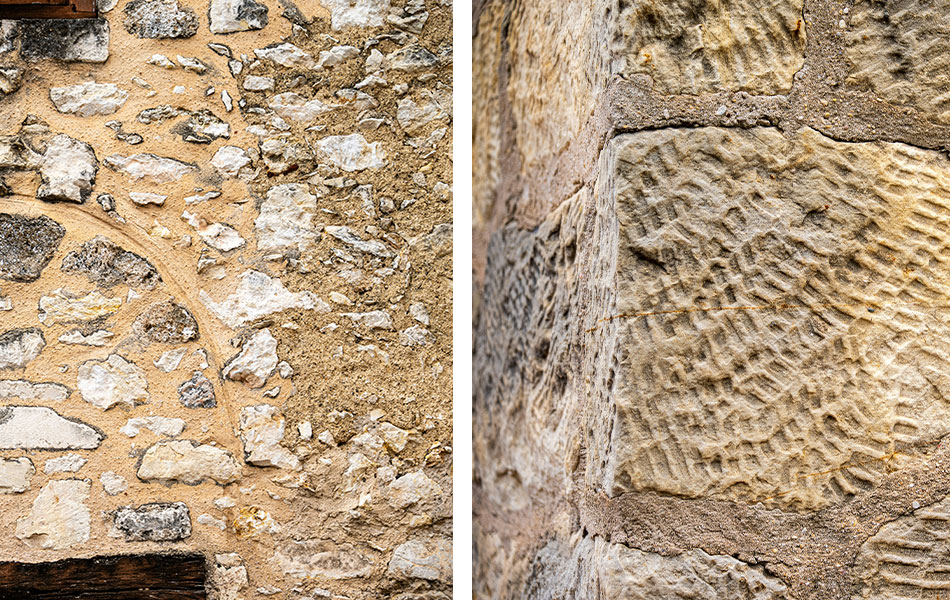
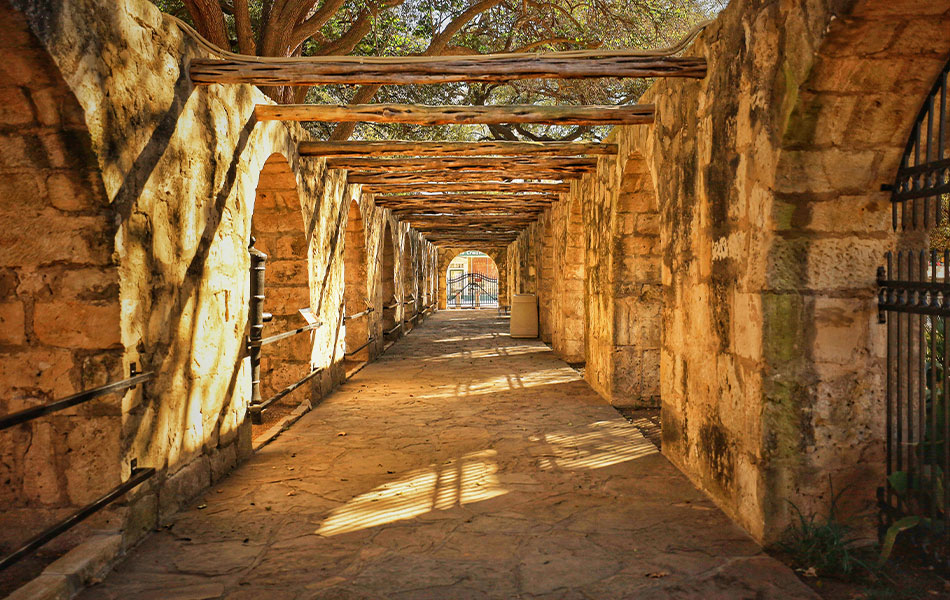
In San Antonio, architecture history is written in stone — limestone that functions as both structure and storytelling. Look closely at the limestone blocks in older neighborhoods and you’ll see fossils embedded inside – literal pieces of ancient seabeds now supporting homes, walls, and churches. Much of this limestone work dates back to the 18th Century, grounding modern San Antonio in materials shaped nearly 300 years ago. The city’s earliest builders didn’t just choose limestone because it was abundant; they chose it because it was workable, durable, and resilient, mirroring the communities that have shaped the region.
One of the best places to see this up close is King William Historic District. The area is well-known for its mansions and broad, tree-lined streets, but the details – especially the stonework – tell the real story. Walk the edges of the properties and you’ll find limestone walls built by German settlers in the 1800s. The blocks aren’t symmetrical. They’re imperfect, handmade, textured from years of rain and heat. Those details make the neighborhood feel less like a preserved exhibit and more like a living street-level archive.
Further south, in the Mission Reach, the stonework becomes even more important. Mission San José, often called the ‘Queen of the Missions,’ within the broader Mission San Antonio complex. It showcases some of the most intricate colonial stone carving in the country. Instead of looking at the façade from the distance most visitors keep, step close enough to notice the precision – the curves, the faint tile patterns, the chisel marks. The stone carries the handprints of Indigenous artisans who blended Spanish design with their own cultural motifs. They function as historic artifacts embedded directly into the architecture.And because these walls are original and incredibly fragile, it’s important that they stay preserved – so take care not to touch or disturb them. In the shadows of these carvings, you can feel how layered San Antonio’s identity really is. These mission walls predate the Texas Declaration of Independence, reminding visitors that San Antonio’s story began long before statehood.
Courtyards That Bridge Worlds
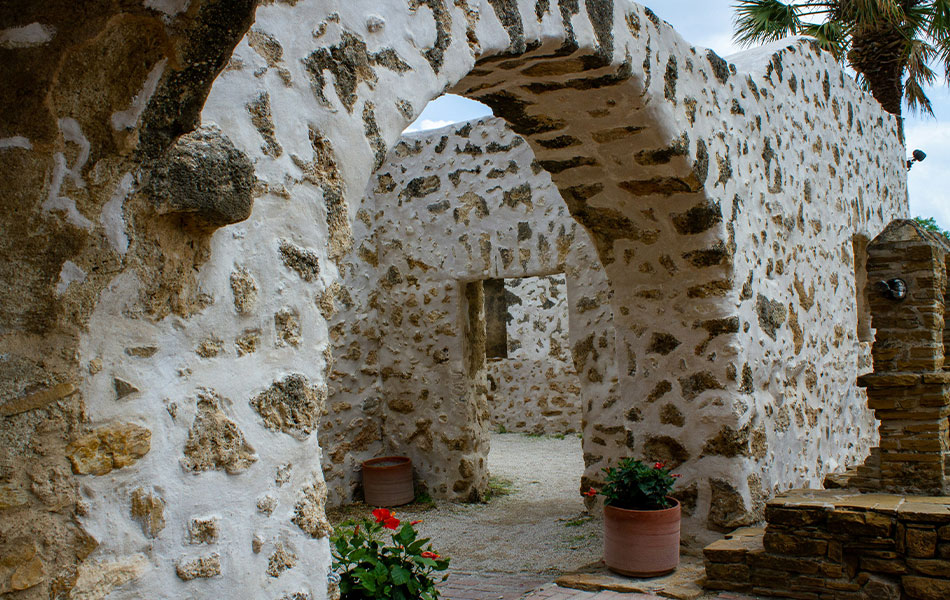
San Antonio’s courtyards are not just architectural features – they are cultural intersections. One of the best examples is the courtyard at the Spanish Governor’s Palace, one of the most intact Spanish colonial structures in Texas. The name itself makes the site sound grander than it is; in reality, the building is modest, simple, almost understated. But the courtyard transforms the space. Whitewashed walls surround a garden arranged around an old stone fountain. The air feels cooler here, and the geometry of the archways frames the sunlight in a way that turns the courtyard into a natural camera lens.
This courtyard has witnessed centuries of local life: military decisions, community gatherings, family events, and periods of neglect and restoration. Now it serves as a quiet point of reflection, a reminder that not all history is loud. Some of it is quiet enough that you have to step off the main routes to hear it.
Nearby, the Bexar County Courthouse reinforces this sense of continuity, its Romanesque stonework echoing the same limestone language that defines the city’s earliest civic spaces.
In nearby Market Square, one of the city’s most active cultural hubs, courtyards take on a different personality – noisy, colorful, layered with vendors and music. But walk a few blocks in any direction and you’ll find residential courtyards behind metal gates, small and intimate, each with its own mix of potted plants, stone benches, and ceramic tile. San Antonio’s Mexican influence shows up strong here, not in the staged décor of tourist zones but in the way residents claim and shape outdoor space to fit their daily lives.
Just beyond these spaces, San Fernando Cathedral stands as one of the city’s oldest active landmarks, quietly linking Market Square to the earliest layers of San Antonio’s civic and spiritual life.
The San Antonio Historic Corners Where History Turns
Some of San Antonio’s most meaningful corners don’t announce themselves. They show up quietly: the bend in the road where a mission trail shifts direction, the pocket park tucked between commercial buildings, the stone footbridge just beyond the reach of the River Walk crowds. These understated sites are often overshadowed by major historical landmarks in San Antonio, yet they provide deeper context than many headline attractions.
St. Paul Square
St. Paul Square is one of those corners – a small historic district east of downtown with Victorian commercial buildings and a calm rhythm that contrasts sharply with the activity around the Alamodome. Many locals pass through without stopping, but if you walk the side streets, you’ll find preserved stone archways, old wooden doors, and a layout that reveals how the area once functioned as a hub for railroad travelers. There’s a sense of in-between-ness here: not quite forgotten, not fully redeveloped, suspended at a point where the past and future are still negotiating.
The Southwest School of Art
Just off the river sits the courtyard of the former Ursuline Academy, now part of the Southwest School of Art. The complex blends 19th-century stone buildings with lush green spaces and modern studio additions. Here, the courtyards aren’t just quiet – they’re instructional. Students sketch, sculpt, and weld in open-air spaces that used to serve as dormitories for French Catholic nuns. The stones underfoot have layers of memory, but the activity around them – creative, experimental, contemporary – builds new stories on top.
The Corners of Historic Homes
In historic San Antonio neighborhoods such as Dignowity Hill and Monticello Park, historic corners tell stories through subtle details: limestone curbs, stone steps worn concave by decades of foot traffic, or property lines that follow the irregular pathways of 19th-century surveyors. These corners remind you that San Antonio wasn’t designed all at once – it grew in pieces, shaped by people who built as they lived.
Nearby sites like the Casa Navarro State Historic Site add another layer, connecting these quiet streets to the political foundations of Texas itself. Jose Antonio Navarro’s legacy ties these spaces together, bridging civic leadership, cultural identity, and early resistance movements.
Why These Spaces Matter
In cities built around spectacle, places like courtyards and quiet corners often get overshadowed. But in San Antonio, they function as the backbone of the city’s identity. These are some of the quiet places in San Antonio where history feels most present. They teach you to read the environment differently – to notice what’s been left in place, what’s been repaired, and what has been allowed to age naturally.
These spaces also challenge the idea that historical significance depends on perfection or polish. Some walls are chipped. Some courtyards are uneven. Some corners are sun-bleached. And some missions are barely intact at all—reduced to fragments of stone and outline, yet still carrying centuries of memory. These aren’t flaws; they’re proof of use. Proof of life. Cities that sand down every edge lose the stories written into their surfaces. San Antonio, instead, leans into the reality that beauty and identity often live in the imperfections.
They also highlight how the city balances progress and preservation. Several are also recognized as Recorded Texas Historic Landmarks, underscoring their value beyond tourism. San Antonio is modernizing – new tech corridors, growing startup spaces, and steady development – and it sits about an hour from Austin, one of the country’s fastest-rising tech hubs.
Yet even with that momentum nearby, this is still a place where an 18th-century stone wall can stand beside newly built apartments. The juxtaposition isn’t accidental; it’s the result of intentional planning and a local commitment to keep history present, not behind glass. Many of these locations are listed on the National Register of Historic Places San Antonio maintains, protecting not just buildings, but stories rooted in daily life. This approach turns the city itself into a living San Antonio cultural guide, shaped by observation rather than itinerary.
Leave the planning to us - see San Antonio with See Sight Tours.Finding Your Way Into the Story
If you’re exploring San Antonio, the instinct is to follow the guidebooks. Instead, try following the stone. It will lead you to the smaller, more revealing parts of the city:
- A courtyard where a sculptor is rinsing clay off their hands.
- A limestone wall catching late afternoon light.
- A mission corner where you can hear your footsteps echo.
- A quiet garden just steps from a busy downtown street.
- A narrow alley in La Villita where the temperature drops as you pass through.
San Antonio heritage stories aren’t just told in museums or guided tours — they’re embedded in the texture of these environments. These moments often become travelers’ favorite San Antonio hidden gems — unplanned, unmarked, and unforgettable.