Cornelius Amann
06 octobre 2026

5/5
Cette page est affichée en anglais.
10 days for families with children 8 and up: three nights in Tokyo, a ryokan night in Hakone, three nights in Kyoto with Nara, and two in Hiroshima with Miyajima, by bullet train with your suitcases sent ahead.
10 jours · Tokyo à Osaka (Kansai Airport) · jusqu'à 12 voyageurs
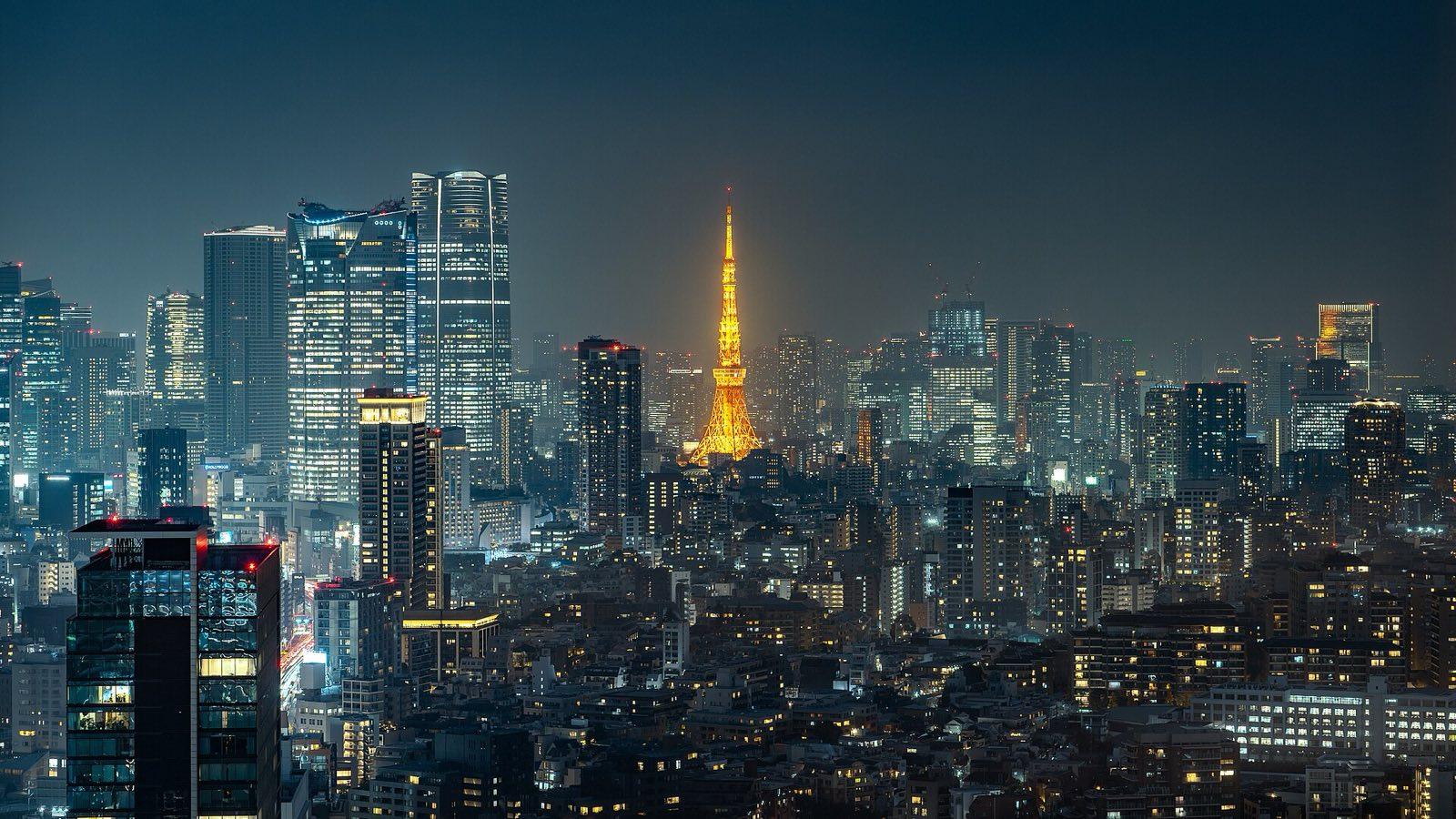
Tokyo at golden hour, with Tokyo Tower at the centre Photo: David Kernan, CC BY 4.0, via Wikimedia Commons (https://commons.wikimedia.org/wiki/File:Minato_City,_Tokyo,_Japan.jpg)
Les faits
Modéré
Most days are 3 to 5 hours on your feet on city pavements, station stairs and shrine steps, about 5 to 9 km, with a rest in the middle of the day. Day 7 at Fushimi Inari and Nara is the longest, about 9 km. The climbs are short: about 20 minutes uphill to the Arashiyama monkey park and as far as you like up Fushimi Inari's gates. One morning leaves at about 7 am (day 6) and sumo practice means a 7:30 start on day 2. Every long day has a way for a parent and child to sit part of it out.
Points forts
Le temps libre et les choix sont indiqués les jours où ils ont lieu.
Une chambre individuelle coûte + CAD 1,165 (prix estimé).
Jour par jour
Touchez une étape de la carte pour ouvrir ce jourCliquez sur une étape de la carte pour ouvrir ce jour
Tokyo Haneda or Narita airport to your hotel in central Tokyo
Fly into Tokyo Haneda (HND) or Narita (NRT). A driver meets your family in the arrivals hall with a vehicle big enough for everyone's luggage and takes you to the hotel: about 30 to 45 minutes from Haneda, about 90 minutes from Narita. The hotel is central, within about a 10-minute walk of a metro or JR station, and your room is a family, triple or connecting room.
Soir
Plan to land by about 3 pm so children can nap or shower before the evening. At about 6 pm your See Sight Tours guide meets the group in the lobby for a short briefing: how the trains work, how suitcases are forwarded on day 3, what goes in the overnight bag for the ryokan, and why everyone sits in silence at sumo practice. Each guest gets a loaded IC card for the metro. Then we walk to a family-friendly restaurant nearby for a welcome dinner of shared plates, yakitori, gyoza and rice dishes, where the children meet each other.
Compris
Temps libre : Free until the evening briefing
Activité : From Narita the transfer is about 70 km and 90 minutes. If your flight lands late, your guide briefs your family at breakfast.
Ryogoku for sumo practice and lunch, then Asakusa and Senso-ji
Matin
We leave at about 7:30 am for Ryogoku, Tokyo's sumo district, to watch morning practice at a sumo stable. Wrestlers slap, push and drill in a clay ring a few metres away while we sit quietly along the wall for about 90 minutes; your guide briefs the children on the way, because talking is not allowed. Stables can only be visited when the wrestlers are in Tokyo and not in a tournament, and stables normally do not take visitors during Tokyo's own tournaments, so on departures in January, March, May, July, September and November we book a ninja class instead, with throwing stars, stealth walking and a black outfit for each child.
Après-midi
Lunch is chanko-nabe in Ryogoku, the protein-heavy hotpot wrestlers eat every day. The afternoon is free to rest at the hotel. At about 4:30 pm we take the metro to Asakusa for Senso-ji, Tokyo's oldest temple, as the day-trip crowds thin: through the Kaminarimon gate with its giant red lantern, along Nakamise street for warm ningyo-yaki cakes, and to the main hall; from about October to February the lanterns are lit by the time we leave, in summer it is still bright.
Soir
The evening is free.
Compris
Option plus facile : Rest at the hotel through the afternoon and skip Asakusa, or meet the group there later.
Temps libre : Afternoon free until about 4:30 pm; evening free
Activité : About 90 minutes at sumo practice, seated and silent, 90 minutes for lunch and about an hour in Asakusa. About 5 km on foot across the day.
Meiji Jingu, Harajuku and Shibuya, then teamLab Borderless at Azabudai Hills
A later start. We reach Meiji Jingu at about 8:30, when the wide gravel path through its forest is still quiet, pass the wall of sake barrels given to the shrine, and let the children write a wish on a wooden ema plaque. From the shrine gate it is a few steps into Harajuku, where Takeshita Street's shops open at about 10 or 11: crepes, candy floss the size of a head and kawaii fashion.
Après-midi
We walk down to Shibuya to cross the scramble crossing from the station side, then lunch is on your own and the early afternoon is free to rest. Before you go out again, leave your suitcase at the hotel front desk with the forwarding slip your guide prepares; it travels to Kyoto by courier. At about 4 pm we go to teamLab Borderless at Azabudai Hills, a digital art museum without a map, where flowers, waterfalls and lamps move from room to room and react to your hands.
Soir
We come out after dark beside Tokyo Tower, lit orange, and dinner is your choice.
Compris
Option plus facile : Take the metro one stop from Harajuku to Shibuya instead of walking.
Temps libre : Lunch on your own; early afternoon free; evening free
Activité : About an hour at Meiji Jingu, 90 minutes in Harajuku and Shibuya, and about 2 hours at teamLab Borderless. About 7 km on foot. Pack an overnight bag for Hakone tonight.
Tokyo to Odawara by Shinkansen, then the Hakone Tozan Railway, cable car, ropeway and Lake Ashi cruise
Your first bullet train.
Matin
We leave mid-morning with only an overnight bag, and the Tokaido Shinkansen reaches Odawara in about 35 minutes. From there the Hakone Free Pass takes us round the Hakone loop. The little Hakone Tozan Railway climbs the mountain on switchbacks, reversing direction as it goes, to Gora, about an hour with a change at Hakone-Yumoto. A steep cable car rises to Sounzan, and the Hakone Ropeway swings over Owakudani, a volcanic valley of steam vents and yellow sulphur.
Après-midi
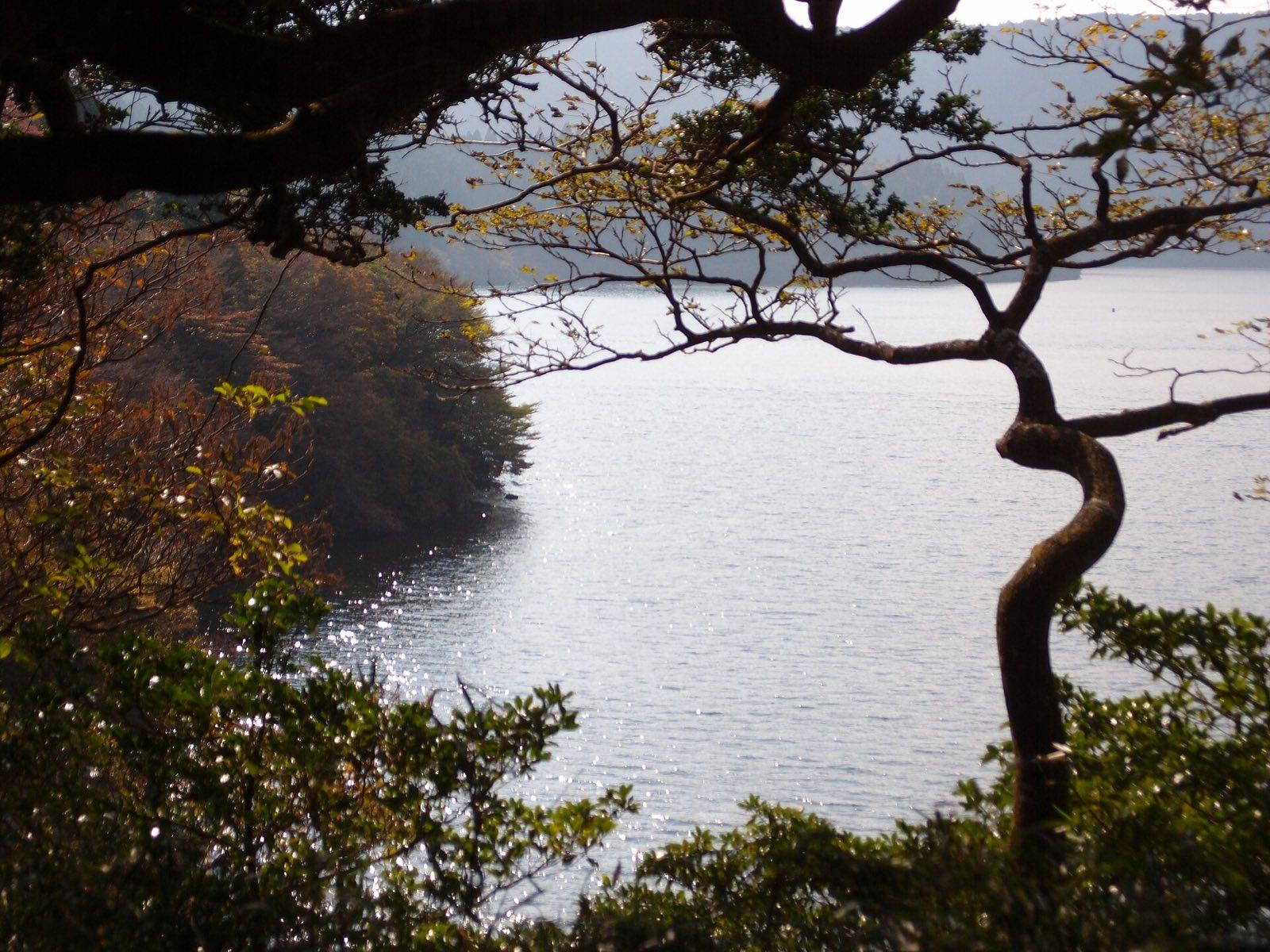
We stop there for lunch and a black egg boiled in the hot springs. If a volcanic alert closes the ropeway, a bus covers the same ground. From Togendai a sightseeing boat built like a pirate ship crosses Lake Ashi to Moto-Hakone, with Mount Fuji over the far shore on clear days.
Soir
By late afternoon we are at the ryokan: change into a yukata, soak in the onsen, and sit down to a kaiseki dinner of many small courses, with a children's menu for those who want it. Families sleep on futons laid out on tatami.
Compris
Temps libre : Late afternoon and evening at the ryokan
Activité : Mostly seated on trains, the ropeway and the boat, with short walks between them. About an hour at Owakudani, with lunch.
Hakone Shrine and Onshi-Hakone Park, by road to Odawara, then the Shinkansen to Kyoto
Matin
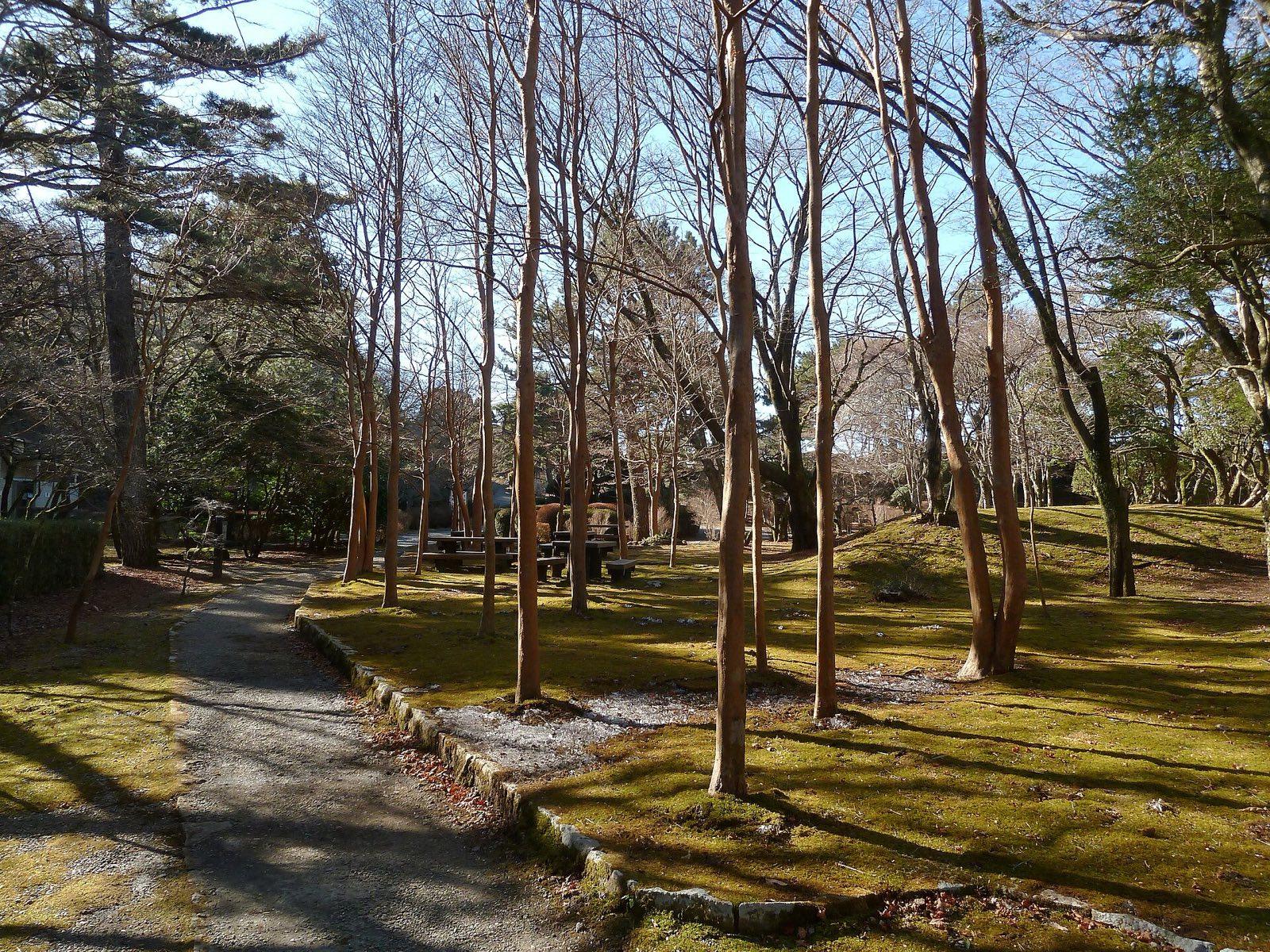
A Japanese breakfast at the ryokan, then we leave at about 8:15 for the lakeshore at Moto-Hakone, reaching Hakone Shrine by about 8:30, before the queue builds for photos at its red torii standing in the waters of Lake Ashi. We climb the cedar-lined steps to the shrine and walk on to Onshi-Hakone Park, the grounds of a former imperial villa on a headland, for the widest view across the lake. Late in the morning our vehicle takes us down to Odawara station, about 40 minutes, for the Shinkansen to Kyoto. The ride takes about two and a half to three and a half hours, because the fastest Nozomi trains do not stop at Odawara: we book a Hikari that does where the timetable allows, otherwise a Kodama, sometimes with a change at Nagoya.
Après-midi
Lunch is a bento on board, and children can watch for Fuji from the right-hand window. We reach Kyoto between about 2:30 and 3:30 pm and your suitcases are already at the hotel. The rest of the day is free: rest, swim if the hotel has a pool, or walk the Kamo River with your guide's map of where to eat.
Compris
Option plus facile : Stay at the ryokan for a slower morning and join the group at Odawara station.
Temps libre : Afternoon and evening free in Kyoto
Activité : About 45 minutes at Hakone Shrine and 30 minutes in Onshi-Hakone Park. About two and a half to three and a half hours on the train.
Arashiyama: the bamboo grove, Tenryu-ji and Iwatayama Monkey Park, then a samurai class in central Kyoto
The one early start.
Matin
Breakfast is from about 6:30 and our vehicle leaves at 7 for Arashiyama in the western hills, about 30 minutes away. At 7:30 the bamboo grove is still quiet, with tall green stems creaking in the wind; by nine the path is packed. Tenryu-ji opens its garden at 8:30 and we walk in as the gates open: a Zen temple with a pond garden set against the hills, part of Kyoto's UNESCO World Heritage listing. Then we cross the Togetsukyo bridge and climb about 20 minutes to Iwatayama Monkey Park, where wild Japanese macaques roam a hilltop above the city and children feed them from inside a hut, the monkeys reaching in through the wire.
Après-midi
Lunch is in Arashiyama, and we are back at the hotel by about 1:30 to rest. At about 4 pm the samurai class: put on a hakama, learn how a samurai bowed, drew and cut with a practice sword, and finish with a short performance of your own. On some departures it is a taiko drumming class instead.
Soir
The evening is free.
Compris
Option plus facile : Wait by the river at the Togetsukyo bridge with a snack instead of climbing to the monkey park.
Option plus active : Walk with your guide along the Hozu River path beyond the bridge before lunch, about 40 minutes there and back.
Temps libre : Rest from about 1:30 to 4 pm; evening free
Activité : About 30 minutes in the bamboo grove, 45 minutes at Tenryu-ji, an hour at the monkey park including the 20-minute climb on a steep path, and about 90 minutes for the samurai class. The monkey park closes in heavy rain.
Kyoto to Fushimi Inari and Nara by JR train, and back
After yesterday's early start, a later one. We leave at about 8:15 for the five-minute JR ride to Inari station, which opens straight onto Fushimi Inari Taisha, the shrine with thousands of vermilion torii gates climbing Mount Inari. The lowest tunnels of gates are busy by this hour, but the crowds thin quickly as you climb, and children love counting the stone foxes, the messengers of the rice god. We walk up for about 40 minutes and turn back when legs say so. From Inari the JR Nara line takes about an hour, with a change, to Nara, Japan's capital in the 8th century.
Après-midi
Lunch first, then Nara Park, where the deer bow for the rice crackers we buy for the children; your guide shows how to hold them high and bow back. At Todai-ji the bronze Great Buddha, about 15 metres tall, sits in a vast wooden hall, and children can try to squeeze through the hole in a pillar said to be the size of the Buddha's nostril. We are back in Kyoto by about 4 pm.
Soir
Tonight your suitcases go to Hiroshima by courier.
Compris
Option plus facile : Walk only the first tunnels of gates at Fushimi Inari, about 15 minutes, and wait at the foot of the shrine.
Option plus active : Carry on up Fushimi Inari to the Yotsutsuji crossroads and its view over Kyoto, about 45 minutes uphill on steps, while the rest of the group waits with a drink below.
Temps libre : Late afternoon and evening free
Activité : The longest day on foot, about 9 km. About 90 minutes at Fushimi Inari, 90 minutes in Nara Park and an hour at Todai-ji. The deer can nip or butt when they see food: no snacks in pockets.
Kyoto to Hiroshima by Shinkansen, then the Peace Memorial Park and Museum
We leave at about 9:15 for the Nozomi bullet train, about 1 hour 40 minutes to Hiroshima, with day bags only. On the way your guide teaches everyone to fold paper cranes and tells the story of Sadako Sasaki, the girl who folded paper cranes while she was ill with leukaemia caused by the bomb.
Après-midi
Lunch is Hiroshima-style okonomiyaki, layered with cabbage and noodles on a hot griddle in front of you. In the afternoon we walk through the Peace Memorial Park: the skeleton of the A-Bomb Dome, the Children's Peace Monument where we leave our cranes among thousands sent from schools around the world, and the cenotaph. Then the Peace Memorial Museum, about an hour.
Soir
Some galleries show injuries and belongings of the dead; your guide talks parents through them on the evening of day 7 and again on the train, so each family chooses its own route, and there is a quiet place to wait outside. We check in to the hotel in the late afternoon; your suitcases arrive by courier. The evening is free and gentle: a walk along the river or an early night.
Compris
Option plus facile : Skip the museum and spend the hour in the park by the river with your guide's suggestions.
Temps libre : Evening free
Activité : About 2 hours in the Peace Park and museum, mostly flat. About 4 km on foot. Hiroshima's streetcars run from the station to the park.
Hiroshima to Miyajimaguchi by road, the ferry to Miyajima and back
We leave at about 8:15 in our vehicle for Miyajimaguchi, about 45 minutes, and the JR ferry takes ten minutes to cross to Miyajima, passing close to the great vermilion torii that stands in the sea. Itsukushima Shrine, a UNESCO World Heritage Site, is built on stilts over the bay, so at high tide it seems to float; at low tide you can walk across the sand to the foot of the torii, and the tide table decides which we do first. Deer wander the lanes here too.
Matin
Mid-morning, a short class in baking momiji manju, the maple-leaf cakes filled with red bean or custard that Miyajima is known for.
Après-midi
Lunch is on the island, then the Miyajima Ropeway climbs Mount Misen to the Shishiiwa observatory for the view over the islands of the Seto Inland Sea.
Soir
We are back in Hiroshima by about 4 pm with time to rest, and in the evening we sit down together for a farewell dinner.
Compris
Option plus facile : Stay in the town by the shrine while the group rides the ropeway, and meet at the ferry.
Option plus active : From the ropeway's top station, walk on to the summit of Mount Misen, about 30 to 40 minutes each way on rocky steps, or walk back down the Momijidani trail, about 75 minutes.
Temps libre : Late afternoon free in Hiroshima
Activité : About an hour at the shrine and torii, an hour for the momiji manju class and about 90 minutes on Mount Misen. The ferry and ropeway can stop in high wind or a typhoon; your guide changes the order of the day if so. If the tide table puts the torii walk first, the baking class moves to after lunch and the ropeway is shortened to a ride up and down; the 4 pm return holds.
Hiroshima Castle grounds, the Shinkansen to Shin-Osaka, then by road to Kansai International Airport
Matin
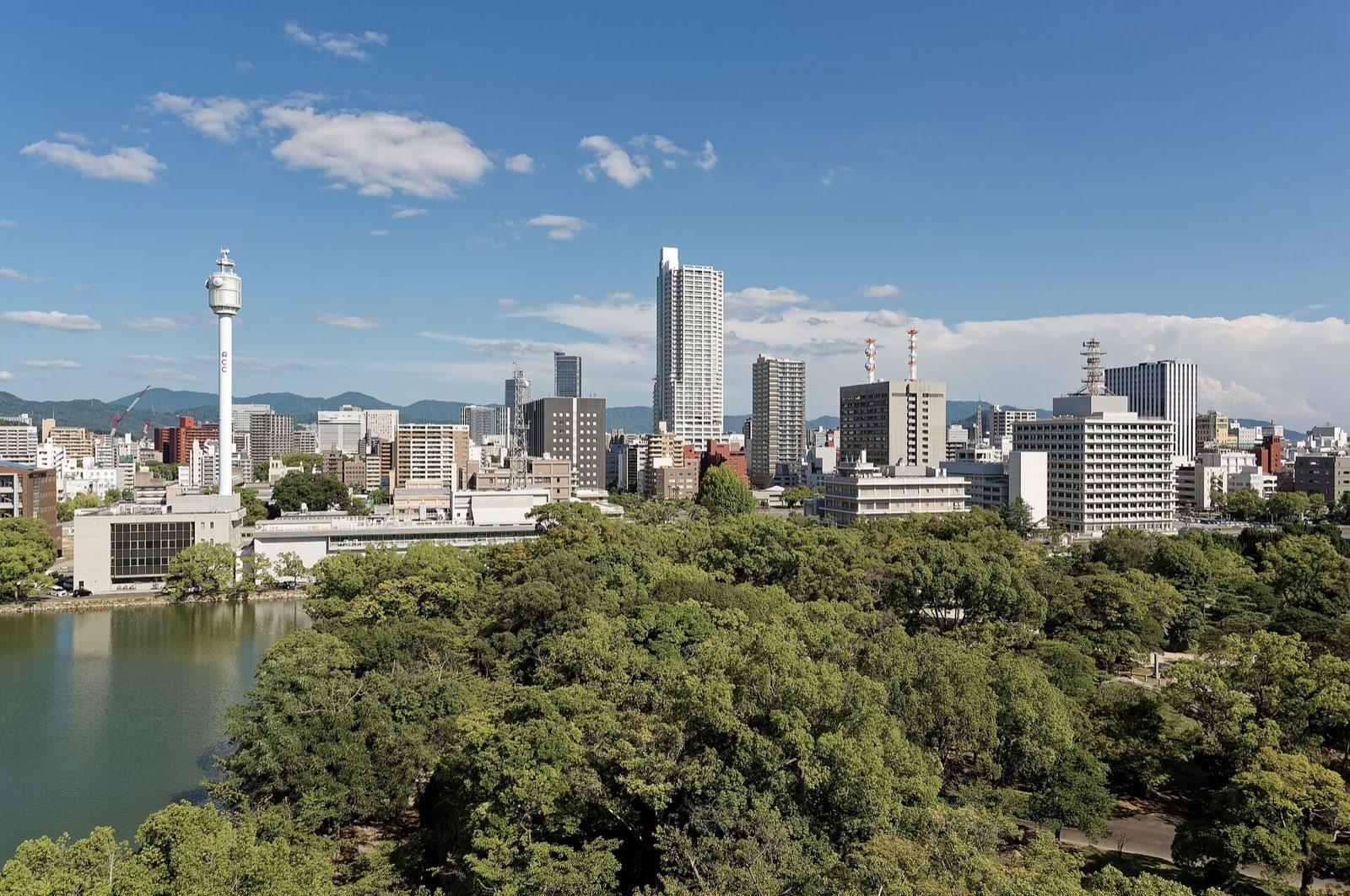
An unhurried last morning. At about 8:30 your guide walks anyone who wants to come to the grounds of Hiroshima Castle, about 15 minutes from the Peace Park: the wide moat, the stone walls and Hiroshima Gokoku Shrine inside them. The keep itself is closed for safety work, so this is a walk, not a visit inside. Check-out is usually at 10 or 11 am. At about 11 we take the Nozomi bullet train to Shin-Osaka, about 1 hour 25 minutes, where our vehicle meets the group and drives to Kansai International Airport (KIX), about an hour and 60 km. Your guide says goodbye at Shin-Osaka. Book an international flight leaving after about 4:30 pm. If you fly home from Tokyo, we book a reserved seat on the Shinkansen to Tokyo instead, about four hours, and you make your own way to the airport from there; if you fly from Hiroshima Airport or stay on, tell us when you book and we arrange the drop-off to match.
Compris
Option plus facile : Skip the castle walk and keep the morning for packing and breakfast.
Temps libre : Early morning free
Activité : Book an international flight from KIX leaving after about 4:30 pm.
Faune et météo : Spring and autumn are mild and mostly dry. Cherry blossom (late March to early April), Golden Week (29 April to 5 May) and Kyoto's autumn colour (mid to late November) bring crowds and higher hotel prices. The rainy season runs from about early June to mid-July. July and August are hot and humid, often above 30°C, so outdoor sights are in the morning and afternoons are free; typhoons can disrupt trains and the Miyajima ferry from August to October. Mount Fuji is often hidden in cloud from Hakone, most of all in summer. Nara's and Miyajima's deer are wild: they can nip or butt when they see food.
Recevez l'itinéraire jour par jour par courriel, ou posez-nous vos questions sur ce voyage. Un conseiller en voyages vous répond le jour même ou le jour ouvrable suivant.
Avant de réserver
Âge minimum : 8
La plupart des voyageurs ont Families with children aged 8 to 16
Réservez vos vols une fois votre place confirmée.
9 nuits
Vos hôtels sont nommés dans la confirmation de votre voyage.
Un seul prix
Quand partir
Choisissez votre date de départ au moment de votre demande de réservation. Nous vérifions cette date et la confirmons dans votre devis.
Vous préférez voyager sans groupe ni guide? Demandez-nous d'organiser vos hôtels, vos transports et vos visites de ville pour voyager en autonomie.
Avant de réserver
Rien n'est facturé maintenant. Les conditions complètes et le barème d'annulation accompagnent votre devis, avant que vous acceptiez.
Adresses de l'entreprise
See Sight Tours Trips (USA): 3172 N Rainbow Blvd, Las Vegas, NV 89108, United StatesSee Sight Tours Trips (Canada): 5305 50 Avenue, #1091, Red Deer, AB T4N 4B6, Canada+1-888-961-6584Avis des voyageurs
Avis de voyageurs ayant participé à nos visites d'une journée.
5/5

5/5
5/5

5/5
5/5
5/5
Bon à savoir
Nine nights in central family rooms and a Hakone ryokan, all breakfasts, 7 lunches and 3 dinners, four bullet train journeys, suitcase forwarding twice, airport transfers at both ends, a See Sight Tours guide throughout, and every activity in the day plan, including sumo or a ninja class, teamLab Borderless, the samurai class, the Peace Museum and the Miyajima ropeway.
The trip is designed for families with children 8 and up. The activities suit children of about 8 to 16, and teenagers enjoy the samurai class and teamLab as much as younger ones. Adults travelling with older relatives are welcome too. For younger children, a private trip lets us change the pace and the activities.
The small-group trip runs with 7 to 12 guests, counting children, so it is usually three or four families. That is small enough to sit along one wall at sumo practice, share one okonomiyaki griddle and one samurai class, and for the guide to change the plan when a child is tired.
A See Sight Tours guide travels with the group from the first evening in Tokyo to Shin-Osaka on the last day, handling trains, tickets, forwarding and timings. Local instructors run the sumo or ninja morning, the samurai class and the momiji manju class. We introduce your guide before you travel.
About 5 to 9 km on most days, broken up with lunch and a rest in the middle of the day. The longest is day 7 at Fushimi Inari and Nara, about 9 km. Climbs are short, and every long day has an easier option, so children of 8 and up usually manage well.
No. A parent sharing a room with one child pays the per-person price with no supplement. The single supplement, from CAD 1,165, applies only to a guest who wants a room alone. Tell us your family's make-up when you book and we ask each hotel for the right triple, family or connecting rooms.
Spring break and late April to May, and October to November, are mild and mostly dry. July and August suit school holidays but are hot and humid, so outdoor sights are in the morning and afternoons are free. We avoid the early summer rainy season, and cherry blossom and Golden Week are crowded and pricier.
Most families of children 8 and up visit, and the museum is designed for school groups. Some galleries show injuries and belongings of the dead, so your guide talks parents through it on the evening of day 7 and again on the train. Each family chooses its own route, and anyone can wait in the park outside instead.
No. Your suitcases go by courier from the Tokyo hotel to the Kyoto hotel, and later from Kyoto to Hiroshima, so the family rides the bullet train with day bags. You take a small overnight bag to the Hakone ryokan. On the last day our vehicle carries your bags to the airport.
Most children adjust within two or three days, and the plan allows for it. Day 1 is only a transfer, a briefing at 6 pm and an early dinner. Day 2 starts early, which suits bodies still on home time, and leaves the afternoon free for a nap before Asakusa. Arriving a day early is easy to arrange; ask when you book.
Prices are per person sharing a room, with taxes included: the small group starts from CAD 6,850 and the private trip from CAD 12,330. We confirm any child rate with your quote. Choose a start date and send a request to book; we confirm within 24 hours, and no payment is taken until we have confirmed.
Yes. The private version is for your family only, on a date you choose, with your own guide and the same hotels and activities. If you would rather travel independently on your own dates, without a guide, send us an inquiry from the dates section and we will quote the hotels, trains, classes and forwarding separately.
Citizens of Canada, the United States, the United Kingdom, Australia and most European countries can visit Japan visa-free for short tourist stays. Each child needs their own passport valid for the whole trip. Rules differ by passport and can change, so check before you book, and fill in Visit Japan Web before you fly.

See Sight Tours offre des services de voyage partout en Amérique du Nord depuis 2006. Présente dans 20 villes au Canada et aux États-Unis, l'entreprise se spécialise dans les tours en petit groupe qui offrent des expériences personnalisées et de grande qualité aux voyageurs.


© 2026 See Sight Tours. Tous droits réservés.

