Cornelius Amann
06 octobre 2026

5/5
Cette page est affichée en anglais.
15 days from Manila to Cebu: the Batad rice terraces and Sagada in the mountains of northern Luzon, the Underground River and El Nido on Palawan, then the Chocolate Hills, tarsiers and reefs of Bohol.
15 jours · Manila à Cebu · jusqu'à 12 voyageurs
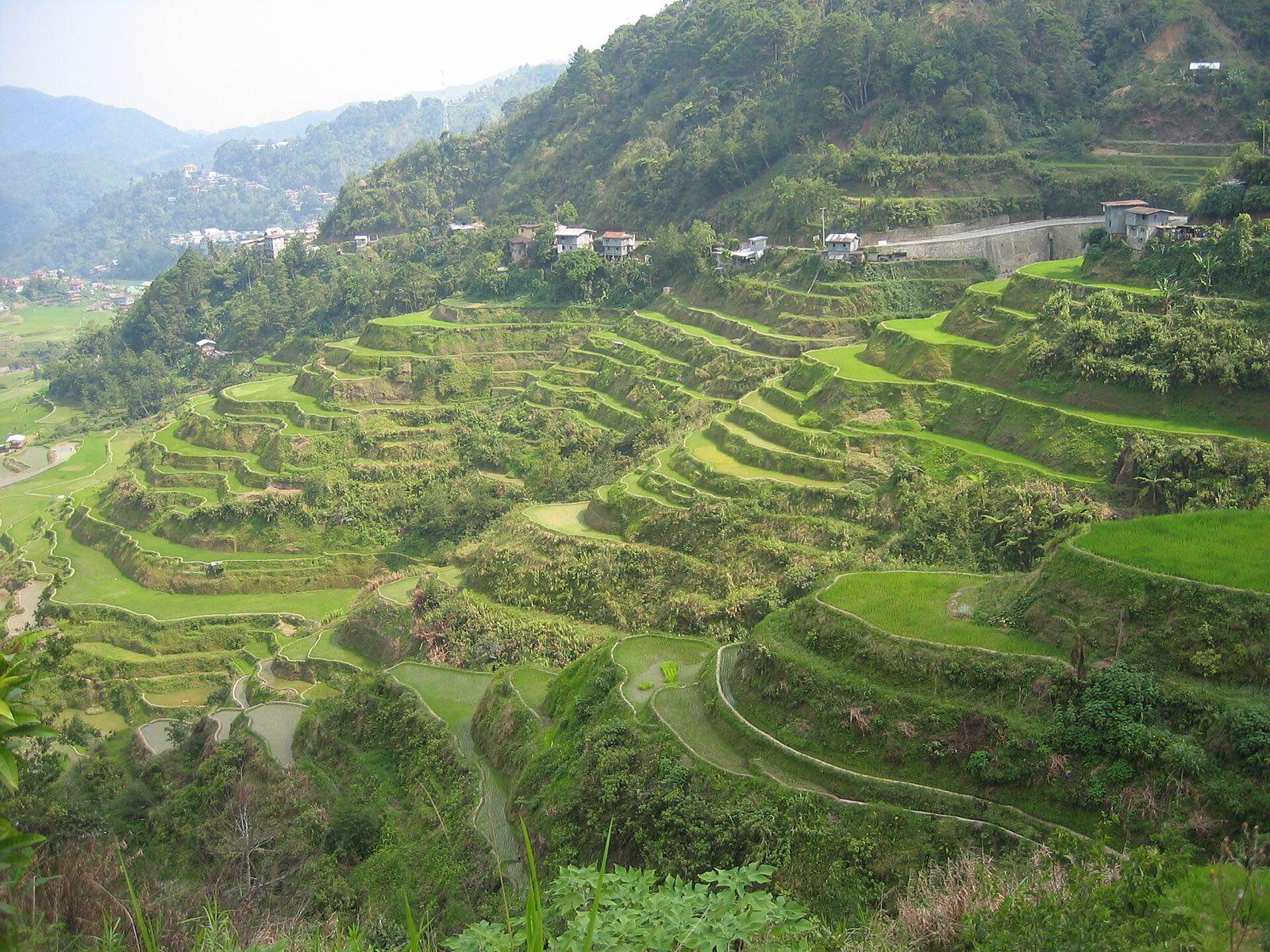
Rice terraces in the Ifugao highlands near Banaue Photo: User: (WT-shared) Roundtheworld at wts wikivoyage, Public domain, via Wikimedia Commons (https://commons.wikimedia.org/wiki/File:Banaue-terrace.JPG)
Les faits
Modéré
Most days have one to three hours on foot on village paths, stone steps and old streets, plus swimming and snorkelling from a boat on four days, always in a life jacket if you want one. The Batad walk is the hardest: about 45 minutes down a steep trail and stone steps to the village, along narrow terrace walls with drops to one side, then the climb back, about 3 hours in all at around 1,000 m. Sumaguing Cave means scrambling over wet limestone barefoot or in sandals. There are three long road days. Every hard walk and the cave have a shorter or seated alternative.
Points forts
Le temps libre et les choix sont indiqués les jours où ils ont lieu.
Jour par jour
Touchez une étape de la carte pour ouvrir ce jourCliquez sur une étape de la carte pour ouvrir ce jour
Ninoy Aquino International Airport to your hotel near Intramuros, then the walled city
Fly into Ninoy Aquino International Airport (MNL), where a driver meets you in arrivals for the drive to your hotel near Intramuros. Manila traffic is slow, so allow an hour or more.
Après-midi
If you land by early afternoon, rest, then join your See Sight Tours guide for a late-afternoon walk in Intramuros, the walled city the Spanish began in the late 16th century. We walk a stretch of the old walls, pass Manila Cathedral, step into San Agustin Church, said to be the oldest stone church in the country and listed by UNESCO among the Baroque Churches of the Philippines, and end in Fort Santiago as the heat goes out of the day.
Soir
In the evening a short briefing covers the fifteen days ahead: the long road north tomorrow, the mountain lodges, the four flights and their bag limits, and what to pack for Batad and the boats. Then we sit down together to a welcome dinner of Filipino dishes, from adobo to sinigang. It is an early night; we leave at 6 tomorrow.
Compris
Temps libre : Free until the late-afternoon walk
Activité : If you land after about 3 pm, skip the walk and join us at the briefing; Intramuros is close to the hotel if you stay on in Manila after the trip.
Manila to Cabanatuan, Balete Pass and Bayombong, then Lagawe and Banaue
Soir
This is the one long road day of the trip, about 380 km and roughly 8 to 10 hours of driving (our estimate; bus timetables give 9 to 10 hours), and we say so plainly: as we understand it, no airport or railway serves the Cordillera, and breaking the road with a night in Baguio would cost a day in the mountains. We leave at 6 am, before Manila's traffic builds, and cut the day into legs of about two hours. The expressway and then the old highway cross the flat rice bowl of central Luzon to a coffee stop near Cabanatuan. The road then climbs to Balete Pass, where one of the hardest battles of the Second World War on Luzon was fought in 1945, now a quiet memorial with a view down two valleys. Lunch is a sit-down meal in Bayombong. The last leg climbs into Ifugao province through Lagawe, and terraces appear on the slopes above the road. We reach Banaue in the late afternoon, in time to see the terraces below the town as the light goes. You stay two nights.
Compris
Temps libre : Evening free in Banaue
Activité : A 6 am start and roughly nine hours (8 to 10) on the road with stops every two hours or so. If you are prone to car sickness, bring tablets and ask for a front seat.
Banaue to the Batad Saddle, then on foot to Batad village and back
Après-midi
An early start, at about 7:30 am, so we walk down before the day-trip vans and the midday heat. Our van, or a local jeepney or tricycle if the road is rough, takes us roughly 45 minutes to the Batad Saddle, where a local Ifugao guide joins us. The trail drops for roughly 40 minutes, then opens onto the view people come for: a bowl of stone-walled terraces climbing the whole valley like the seats of a theatre, part of the Rice Terraces of the Philippine Cordilleras, which we understand UNESCO inscribed in 1995, with Batad reported to be one of the clusters in the listing. We walk along the terrace walls into the village, where the guide explains how water is shared from terrace to terrace and how the work follows the rice year. Lunch is in a village restaurant looking across the amphitheatre.
Soir
The climb back to the Saddle comes in the cooler afternoon, at your own pace, and we are back in Banaue by late afternoon with the evening free.
Compris
Activités en option
Option plus facile : Stay at the Saddle viewpoints, or walk only to the first view of the amphitheatre and back, about an hour in all.
Option plus active : From the village, carry on down to Tappiyah Falls and swim in the pool, about 2 to 3 more hours with a steep climb back.
Temps libre : Evening free in Banaue
Activité : The hardest walk of the trip: about 3 hours in all on a steep trail, stone steps and narrow terrace walls with drops to one side.
Banaue to the Banaue viewpoint, Bontoc, then Sagada and Echo Valley
Matin
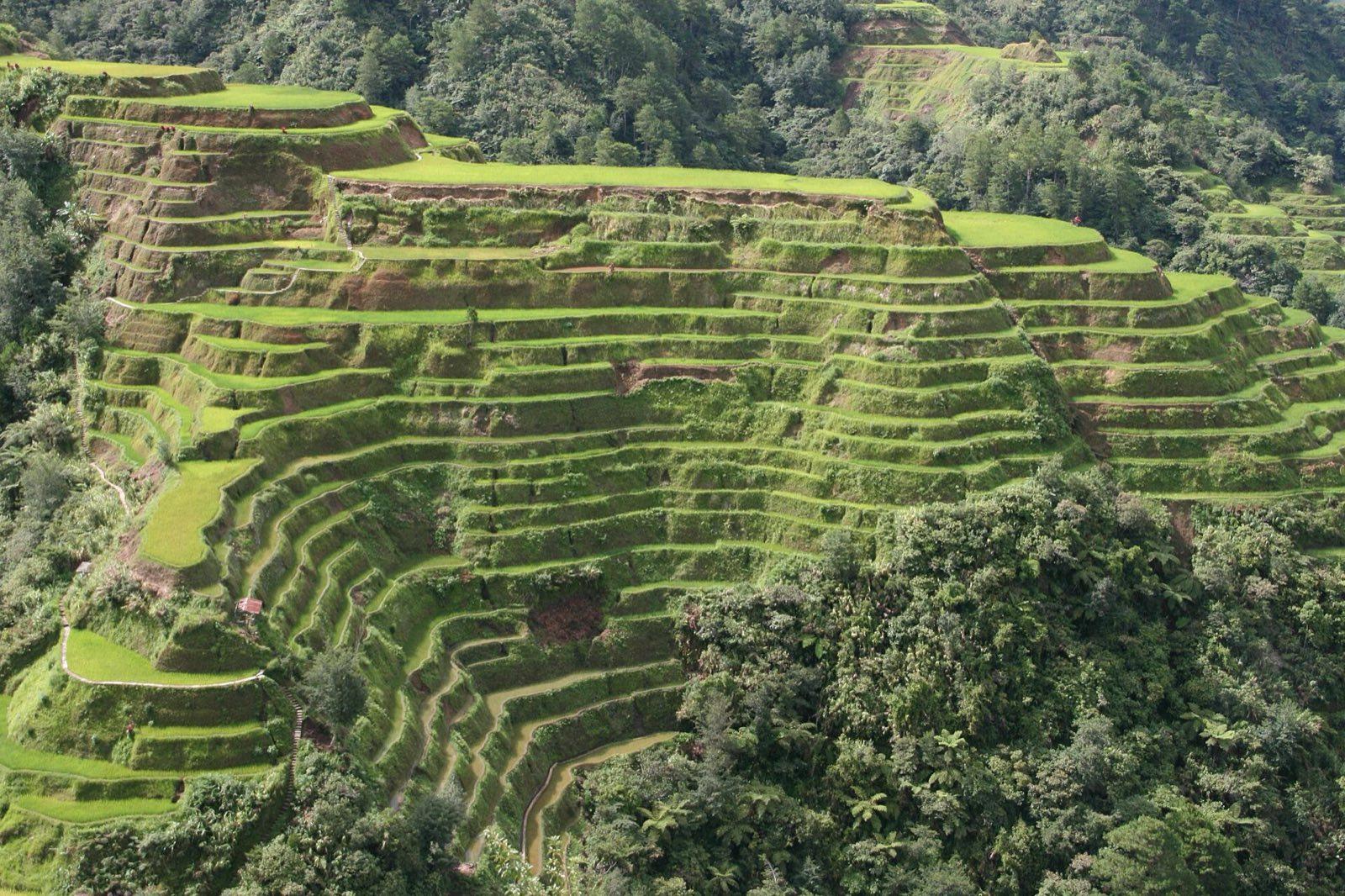
After a slower breakfast we leave Banaue at 8:30 am and stop first at the viewpoint on the road north, where the terraces fall away in tiers below the road in the morning light. The road to Bontoc climbs over a high pass in cloud forest, about two hours.
Après-midi
In Bontoc, once the capital of the old Mountain Province, we visit, subject to its opening days, the Bontoc Museum, a small collection of tools, textiles and old photographs of the Bontoc, Ifugao and Kalinga peoples, then sit down to lunch in town. It is under an hour on to Sagada, a quiet town of pine woods and limestone at about 1,500 m, where we stay two nights. After registering at the tourism office, we walk with a Sagada guide through the churchyard and down into Echo Valley, where coffins have been placed on the cliff face by the Igorot people for centuries. The late-afternoon light is softer then.
Soir
The evening is free.
Compris
Option plus facile : Look at the coffins from the top of Echo Valley instead of walking down the path.
Temps libre : Evening free in Sagada
Activité : The coffins are sacred to local families: do not touch them or climb to them, and take photos only where the guide allows. Sagada's tourism office has required registered local guides for the caves and Echo Valley; we confirm the current rules at quoting.
Sagada to Sumaguing Cave and back to town
We go to Sumaguing Cave first thing, at about 7:45 am, before the queue builds at the guides' office. With a local cave guide and his lantern we climb down into one of Sagada's best-known caves, over smooth, polished limestone into chambers of flowstone and cold, clear pools. Shoes come off for the lower part; the rock grips well barefoot.
Après-midi
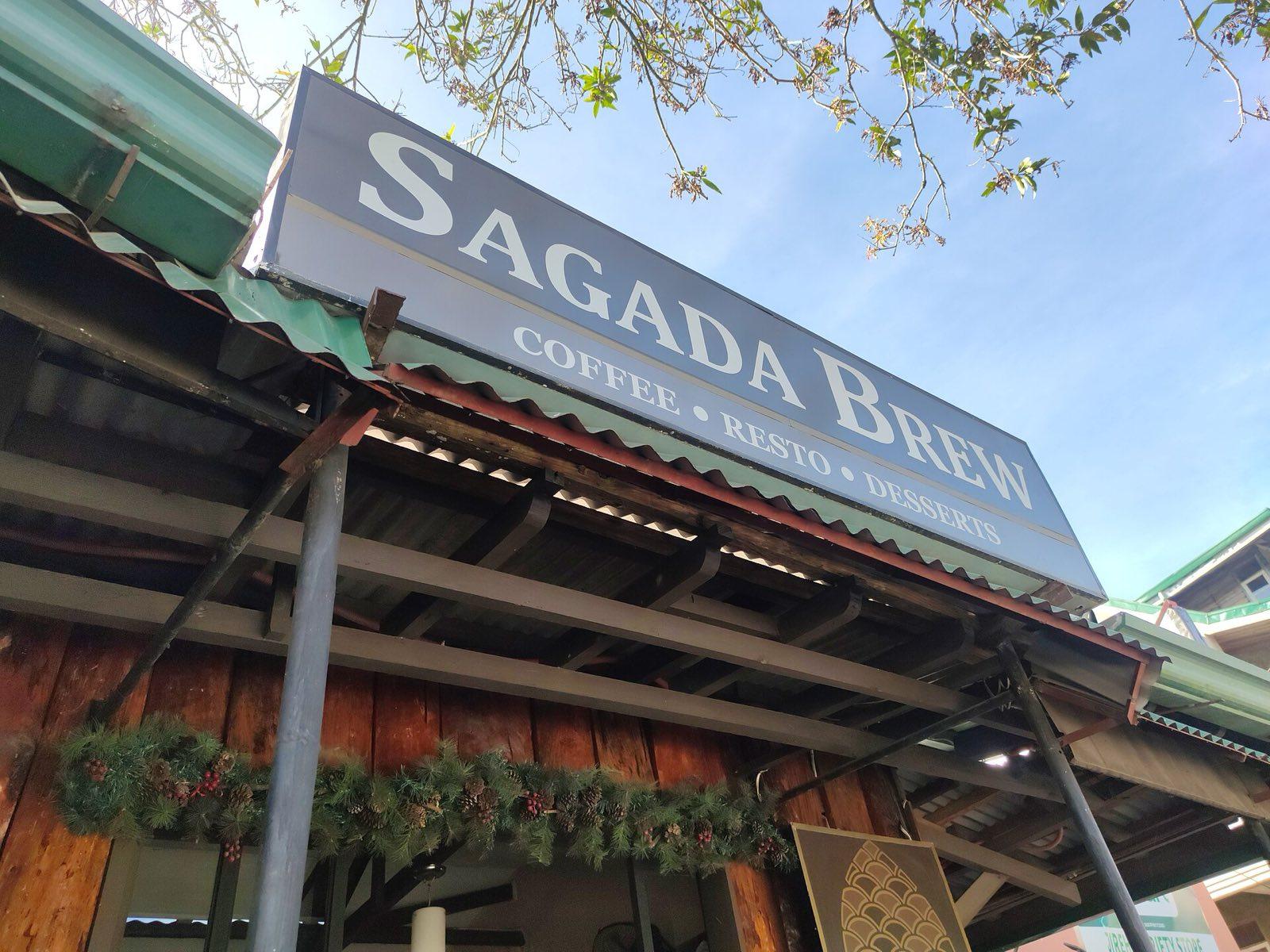
We are out by late morning and walk back to town for lunch together. The afternoon is free, the first real one of the trip, and Sagada is good for slow time: sit in one of the cafes over Sagada coffee and lemon pie, visit the weaving workshop or the pottery at the edge of town, walk out to the rice fields, or book a massage.
Soir
As evening falls the town is quiet and the air turns cold, so bring a warm layer for dinner. Pack tonight: tomorrow is an early start for the flight.
Compris
Activités en option
Option plus facile : Stay in the upper chamber of the cave with a guide, or skip the cave and walk to the weaving workshop instead.
Option plus active : Swap the Sumaguing visit for the longer Lumiang to Sumaguing cave connection, with ropes and some squeezes, as an optional.
Temps libre : Afternoon free in Sagada
Activité : Wear sandals with grip or go barefoot in the cave; the limestone is wet and slippery. Caves close when water is high, and the guide decides on the day.
Sagada to Bontoc, Banaue and Bagabag, then Cauayan airport and Manila by air
Today we leave the Cordillera. Driving back to Manila would take 10 to 12 hours, so instead we drive about 210 km and six hours east to Cauayan in the Cagayan Valley and fly to Manila in typically about an hour. It is still more road than our four-hour limit, and the reason is the mountains: as we understand it, there is no closer airport with scheduled flights.
Après-midi
We leave Sagada at 7 am to make an afternoon flight (as we understand it, Cauayan to Manila is flown by more than one airline, with afternoon departures; the flight and its timing are confirmed at quoting) and break the drive into three legs. The first runs back over the pass through Bontoc to Banaue, with a last look at the terraces. Lunch is a sit-down meal in Banaue. Then the road drops through Lagawe to Bagabag and out into the flat, rice-growing Cagayan Valley to Cauayan. Your guide sees the group through check-in for the included flight, and our Manila van meets us on arrival for the drive to the hotel.
Soir
Dinner is your choice; bags are repacked for the islands tonight.
Compris
Temps libre : Evening free in Manila
Activité : A 7 am start and about six hours on the road in three legs. Flight times are set by the airline and confirmed in the written quote.
Manila to Puerto Princesa by air, then Sabang and the Underground River and back
Matin
An early start for a morning flight of typically about an hour and twenty minutes, confirmed at quoting to Puerto Princesa, the capital of Palawan. Our van and driver meet the group there, and we head north for about an hour and three quarters through farmland and forest to Sabang, on the west coast.
Après-midi
Lunch is a sit-down meal in Sabang. Then a short outrigger boat ride along the shore brings us to the mouth of the Puerto Princesa Underground River, reported to be a UNESCO World Heritage Site since 1999. The park admits visitors only with a Visitor Entry Permit, up to a daily cap of 900, between 8 am and 4 pm, so the permit and time slot are booked at quoting and depend on availability; we ask for a quieter later slot. Wearing helmets and life jackets, we glide into the cave in paddle boats, a short stretch of a river that runs about 8 km under the limestone, past chambers of stalactites with swifts and bats overhead.
Soir
We are back in the city by early evening, and dinner is your choice.
Compris
Activités en option
Temps libre : Evening free in Puerto Princesa
Activité : The permit is for a fixed slot and depends on the park's daily cap; if the flight is badly delayed we ask for a later slot the same day before driving north.
Puerto Princesa cathedral, then Roxas and Taytay, then El Nido
Matin
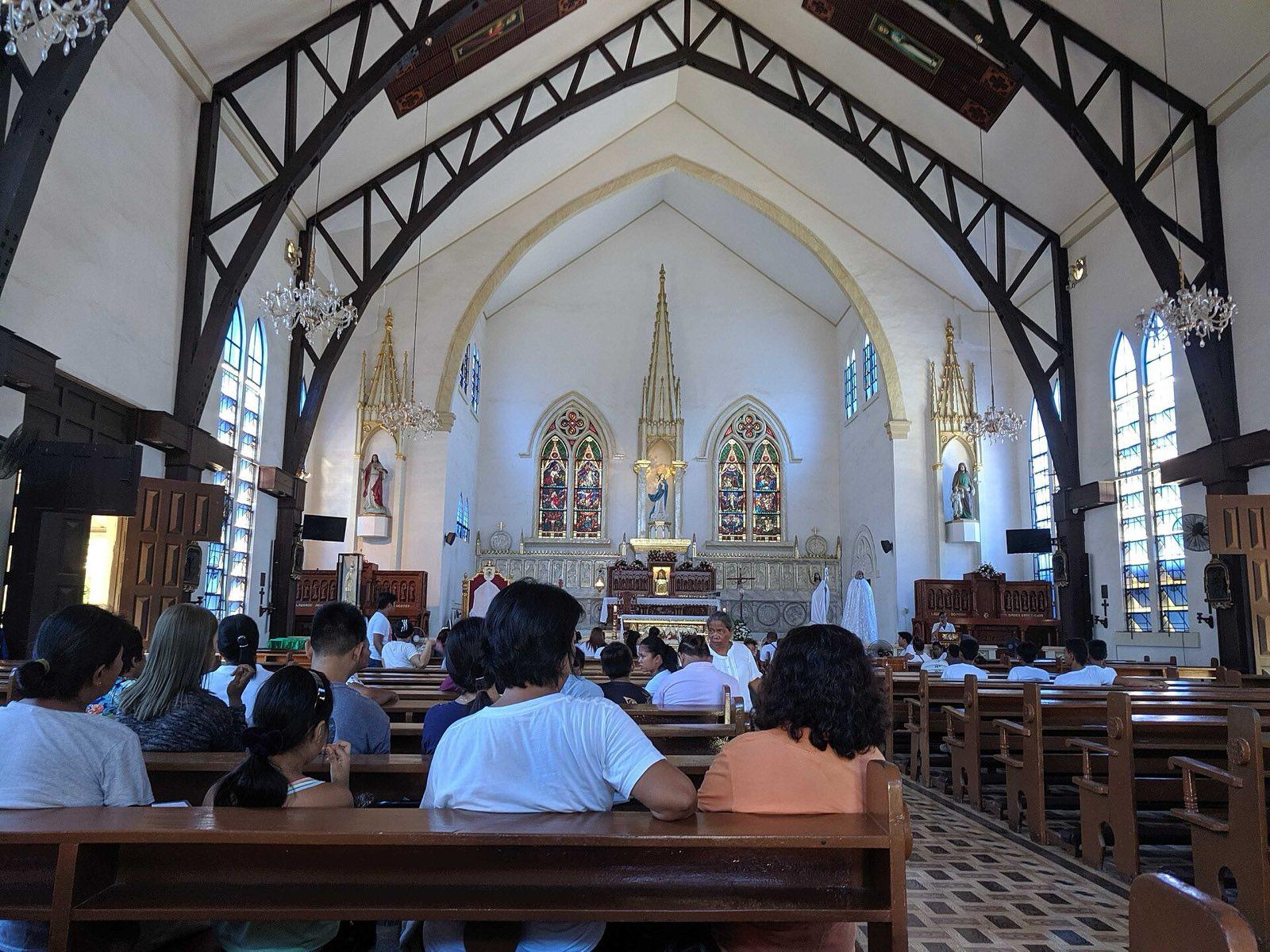
Before we leave the city, a short stop at Plaza Cuartel and the Immaculate Conception Cathedral beside it, in the old centre of Puerto Princesa, while the morning is quiet. Then comes the third long road of the trip, about 250 km and five hours of driving, over our four-hour limit because no regular flight links Puerto Princesa and El Nido and a detour through Manila would cost a day. We leave at about 8:30 and break the road about every two hours. The first stop is for coffee in Roxas, about halfway.
Après-midi
Lunch is a sit-down meal in Taytay, once the Spanish capital of the province, near Fort Santa Isabel, the small stone fort above the bay. The last stretch runs through forested hills to the first limestone cliffs of the north, and we reach El Nido in the middle of the afternoon. You stay three nights.
Soir
The evening is free: walk to Corong Corong for sunset over Bacuit Bay.
Compris
Temps libre : Evening free in El Nido
Activité : About five hours on the road, split by stops every two hours or so.
El Nido to the Big Lagoon, Small Lagoon and Secret Lagoon, Shimizu Island and back
Matin
A private outrigger boat and crew, arranged through a licensed local operator, wait on the beach after breakfast, and we head out early to reach the lagoons before the day builds. El Nido's island tours are, as we understand it, organised into set circuits, so today follows the circuit that includes the lagoons, as the operator confirms. Miniloc Island is the first stop. In the Big Lagoon, sheer limestone walls close around water that turns from green to deep blue, and we paddle in by kayak. In the Small Lagoon you swim or paddle through a low gap in the rock into a hidden pool. At the Secret Lagoon you crawl through a hole in the cliff into a still basin.
Après-midi
Lunch is fish, chicken and rice grilled by the crew on a beach, then snorkelling over the coral at Shimizu Island, where reef fish gather in the shallows. The crew adjusts the order to the tide and the crowds within what the rules allow.
Soir
We are back in town by mid-afternoon, with the evening free.
Compris
Option plus facile : Stay on the boat or the beach at any stop; nobody has to swim or kayak.
Temps libre : Late afternoon and evening free
Activité : Bring reef-safe sunscreen, a hat and sandals you can wet.
El Nido to Snake Island, Cudugnon Cave, Pinagbuyutan and Entalula Island, then back to town
Matin
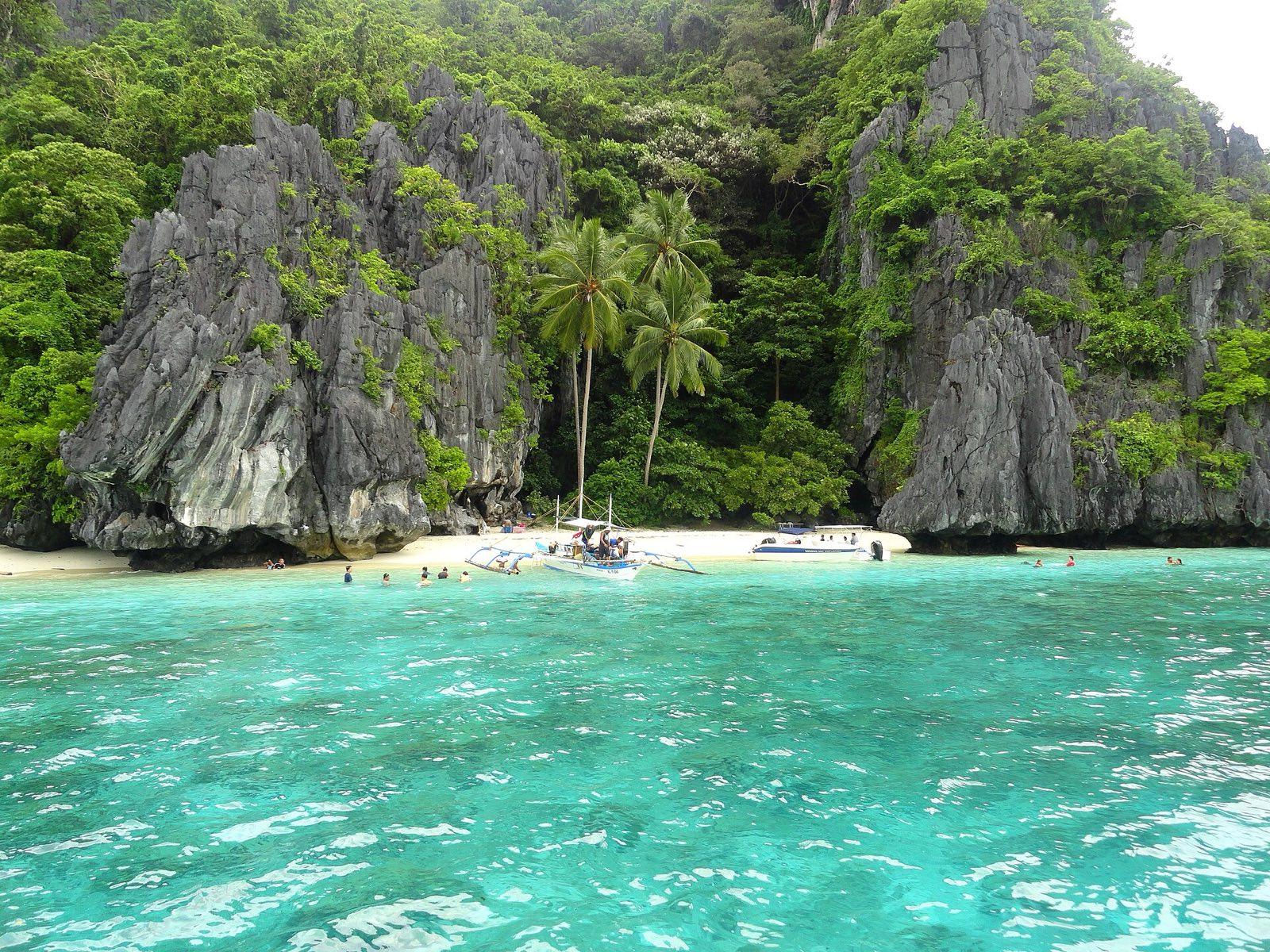
A second morning on the private boat, on a different loop to the south and west of the bay. Because El Nido's island tours are, as we understand it, organised into set circuits, the operator confirms which of these islands can be combined on the day; the plan below is the aim, not a promise. At low tide Snake Island shows a curving sandbar that you can walk along, with a short climb to a viewpoint over its shape. Cudugnon Cave is entered through a small gap in the rock and is said to open into a chamber once used by people long before the Spanish came. Pinagbuyutan is a tall limestone island with a pale beach and clear water at its foot for a swim.
Après-midi
Lunch is grilled on a beach again. Our last stop is Entalula Island, a strip of white sand at the foot of grey karst cliffs, for a long swim and snorkel before the run back. We are in El Nido by early afternoon, when the sun is fiercest, and the rest of the day is yours: sleep, read, take a massage, or hire a tricycle to Nacpan Beach, about 45 minutes north.
Soir
Las Cabanas Beach faces west for sunset.
Compris
Activités en option
Option plus facile : Stay on the boat at the cave and the viewpoint; the beaches are a step off the boat.
Temps libre : Afternoon and evening free
Activité : The crew and the operator set the order by the tide, the crowds and El Nido's circuit rules on the day.
El Nido airport to Manila by air, then Manila to Bohol-Panglao by air and on to Panglao Island
Today is a flying day, with two short flights through Manila.
Matin
After an early breakfast our van takes us about 20 minutes to the El Nido airport at Lio, north of town, for a morning flight of typically about an hour and a quarter to Manila, confirmed at quoting. Your guide stays with the group through the connection, and a second flight of typically about the same length takes us south to Bohol-Panglao International Airport (TAG) on Panglao Island, just off Bohol.
Après-midi
Our Bohol van meets us for the short drive to the hotel near Alona Beach, where we stay three nights, and we arrive in the afternoon. Lunch is on your own during the connection in Manila. The rest of the day is free.
Soir
Walk down to Alona for a swim and the sunset, and to the seafood grills along the beach, where you choose your fish from the ice and it is cooked while you wait. Unpack properly: there is no more packing until the last morning on Bohol.
Compris
Temps libre : Afternoon and evening free on Panglao
Activité : Bag limits on the El Nido flight are tight, often about 10 to 20 kg checked; we confirm the allowance when we book.
Panglao to the Chocolate Hills in Carmen, then Bilar, Loboc and the tarsier sanctuary in Corella
Après-midi
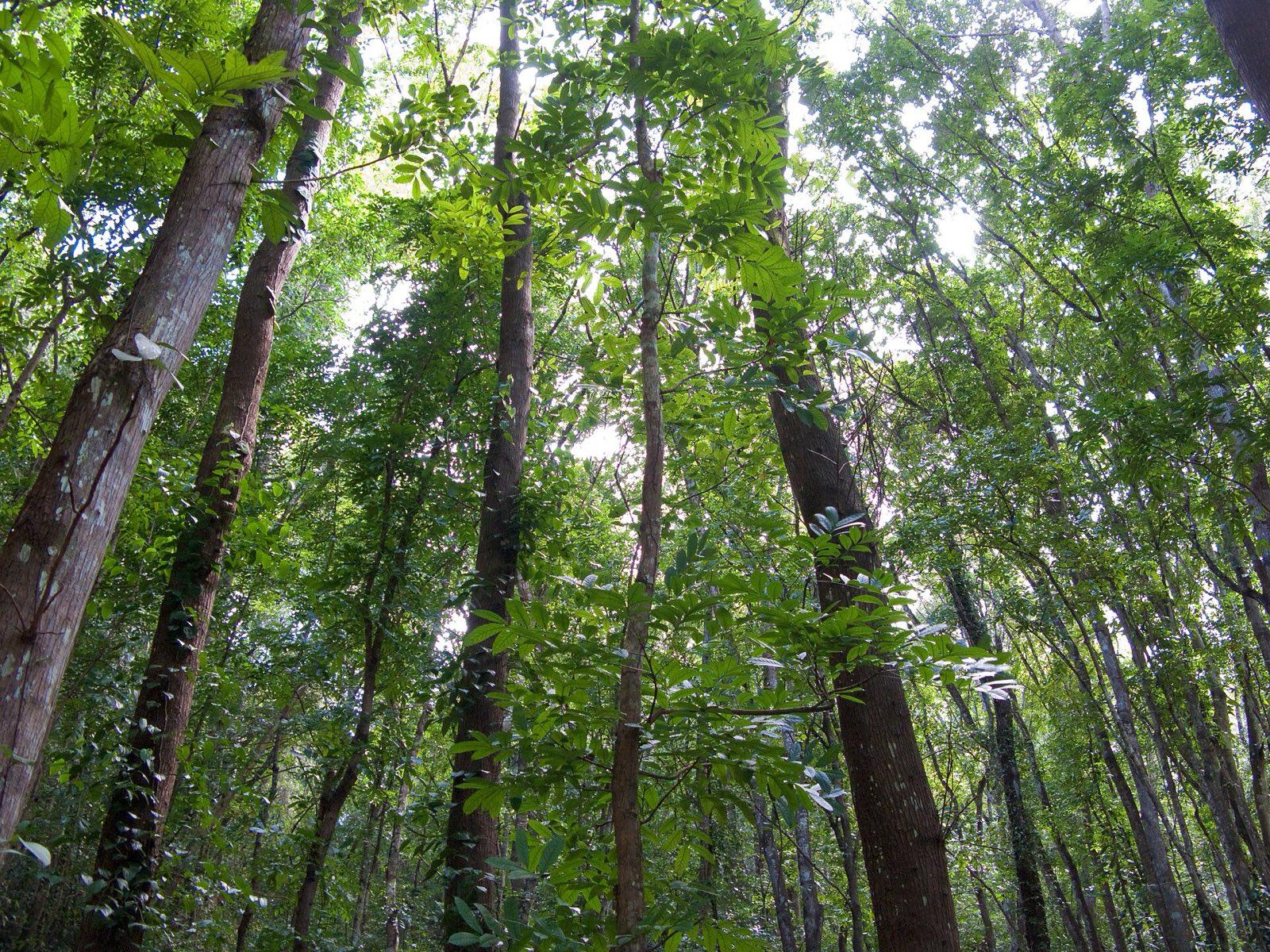
Most Bohol countryside tours see the tarsiers first and reach the Chocolate Hills in the afternoon, so we run the loop the other way. We leave at 8 am and drive about an hour and a half inland to Carmen, where more than 1,200 grassy limestone mounds (estimates vary), most of them 30 to 50 m high, roll away to the horizon. In the dry months the grass turns brown, which gave the hills their name. A stairway climbs to the viewing deck. Heading back, the road runs through the Bilar man-made forest, a stretch of tall planted mahogany that shades the highway. Lunch is on the Loboc River, aboard a floating restaurant that drifts upriver past nipa palms and villages and back. Mid-afternoon we reach the tarsier sanctuary in Corella, run by the Philippine Tarsier Foundation, where these tiny primates live in a patch of protected forest. As we understand it, visits are guided in small groups, in near silence, with no flash and no touching; the sanctuary's current rules are confirmed at quoting. We plan to visit only this kind of conservation sanctuary and avoid venues that let visitors handle tarsiers.
Compris
Option plus facile : Stay at the foot of the viewing-deck stairs; the hills show well from the car park terrace.
Temps libre : Evening free on Panglao
Activité : About 3.5 hours in the van in short stages. Tarsiers are wild and sleep by day, so how many we see varies. Opening hours are set by the sanctuary and confirmed at quoting.
Panglao to Balicasag Island by private boat, then back to Alona Beach
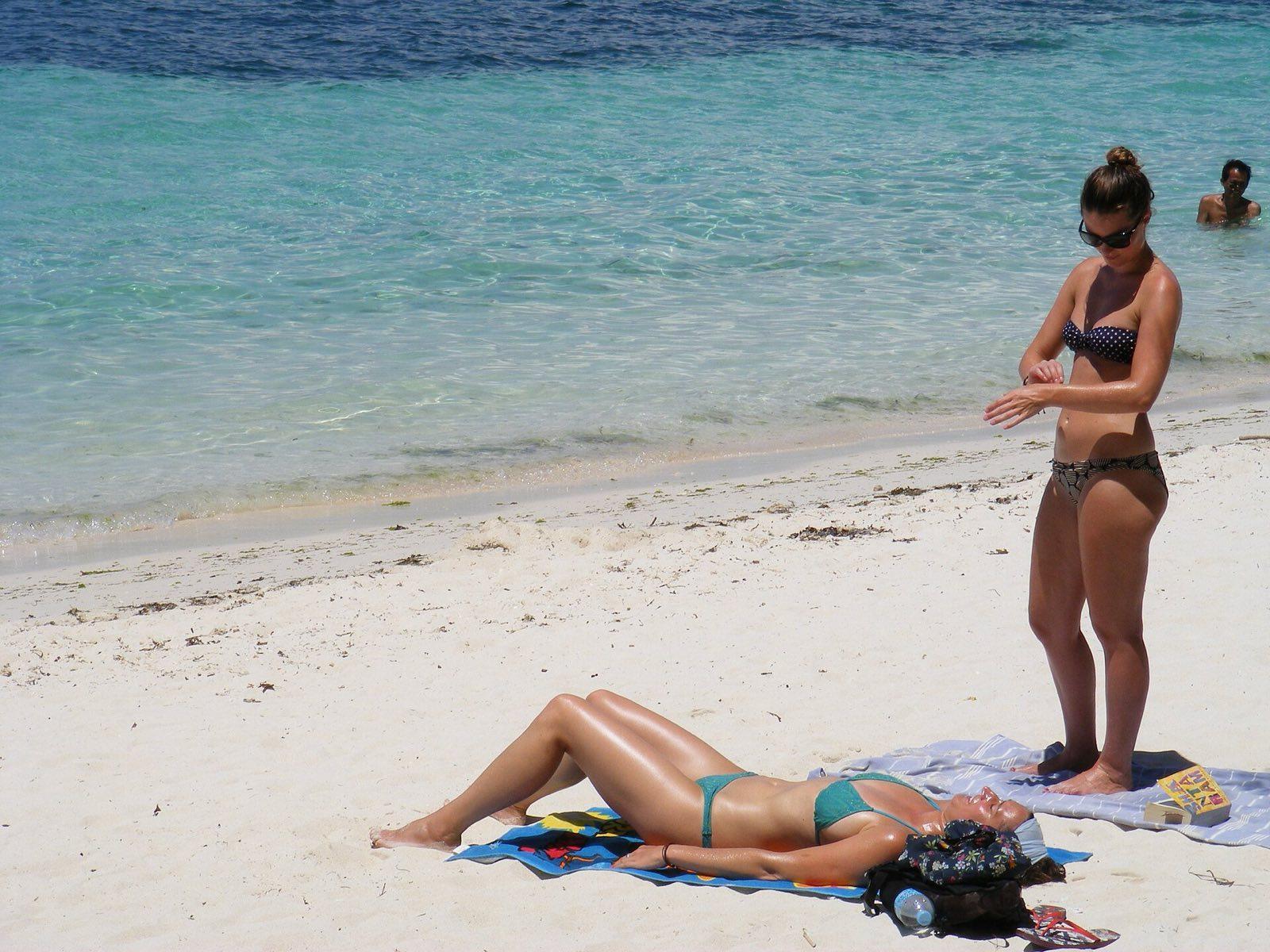
At about 8 am our own outrigger boat and crew take the group across to Balicasag, a small, flat island about 6 km off Panglao ringed by a marine sanctuary. Close to the island the reef sits in clear, shallow water; a little further out it drops away as a steep wall, and sea turtles are often seen feeding along the edge. We snorkel at two spots with the crew and a local guide, in life jackets, choosing the quieter side when other boats are moored.
Après-midi
Back on Panglao around 1 pm, we sit down to lunch by Alona Beach. The afternoon is free, and it is meant to be after twelve busy days: swim and read on the white sand, take a massage, or hire a tricycle to Hinagdanan Cave, a small cave with a freshwater pool lit through holes in its roof, and the old church at Dauis by the bridge.
Soir
Dinner is your choice.
Compris
Activités en option
Option plus facile : Snorkel only in the shallows by the island, or stay on the boat.
Option plus active : Certified divers can swap the snorkel for two dives on the wall, as an optional.
Temps libre : Afternoon and evening free
Activité : Turtles are wild, so sightings are likely but never promised.
Panglao to the Tagbilaran pier, fast ferry to Cebu City, then the heritage quarter
Matin
A slow morning for a last swim, then a short drive to the Tagbilaran pier for the fast ferry north to Cebu City, about two hours across the Bohol Sea on a fast craft; your guide handles the tickets. Sailing times vary by season and are confirmed close to departure.
Après-midi
Our Cebu van meets us at the pier, and lunch is lechon, Cebu's spit-roasted pig with its crackling skin. In the afternoon, as the heat eases, we walk the old quarter: Magellan's Cross, planted by Ferdinand Magellan's expedition in 1521 and kept in a small chapel with a painted ceiling; the Basilica del Santo Niño next door, said to house the oldest Christian relic in the country; and Fort San Pedro, the small triangular stone fort the Spanish built by the harbour. Cebu was the first Spanish settlement in the Philippines, founded in 1565.
Soir
In the evening the group shares a farewell dinner of Visayan dishes.
Compris
Activité : If the sea is too rough for the ferry, we plan to fly from Bohol-Panglao to Cebu instead, at extra cost.
Cebu City to Mactan-Cebu International Airport
Matin
A free morning in Cebu City. Sleep in, take a last coffee, or walk to Colon Street, said to be the oldest street in the country, and the Carbon Market for dried mangoes and danggit, the dried fish Cebu is known for, to take home. Our van then takes you over one of the bridges to Mactan-Cebu International Airport (CEB), on Mactan Island across a narrow channel, about 45 minutes to an hour in traffic. Your guide sees you to the terminal and checks your onward flight before saying goodbye. Cebu has direct flights to several Asian hubs, and connections through Manila for the rest; if you connect through Manila, allow time, because the terminals there are not linked inside. Book a flight leaving after about 12 noon from Cebu, or we can arrange an earlier airport run for a morning flight. To stay on, ask us to add nights in Cebu or on Bohol before you fly.
Compris
Temps libre : Morning free in Cebu City
Activité : Book a flight home leaving after about 12 noon from Cebu.
Faune et météo : December to May is the dry season on all three islands. December to February is coolest, with cold highland nights near 10 C and occasional choppy seas on the boat days; March to May is hot and calm. The terraces are green from about March to May and brown or flooded at planting. Tarsiers sleep by day and turtles are wild, so neither is promised. June to November is the wet and typhoon season, when roads and boats can be disrupted, so we plan the trip for December to May.
Recevez l'itinéraire jour par jour par courriel, ou posez-nous vos questions sur ce voyage. Un conseiller en voyages vous répond le jour même ou le jour ouvrable suivant.
Avant de réserver
Réservez vos vols une fois votre place confirmée.
14 nuits
Vos hôtels sont nommés dans la confirmation de votre voyage.
Un seul prix
Quand partir
Choisissez votre date de départ au moment de votre demande de réservation. Nous vérifions cette date et la confirmons dans votre devis.
Vous préférez voyager sans groupe ni guide? Demandez-nous d'organiser vos hôtels, vos transports et vos visites de ville pour voyager en autonomie.
Avant de réserver
Rien n'est facturé maintenant. Les conditions complètes et le barème d'annulation accompagnent votre devis, avant que vous acceptiez.
Adresses de l'entreprise
See Sight Tours Trips (USA): 3172 N Rainbow Blvd, Las Vegas, NV 89108, United StatesSee Sight Tours Trips (Canada): 5305 50 Avenue, #1091, Red Deer, AB T4N 4B6, Canada+1-888-961-6584Avis des voyageurs
Avis de voyageurs ayant participé à nos visites d'une journée.
5/5

5/5
5/5

5/5
5/5
5/5
Bon à savoir
The planned price covers fourteen nights of accommodation, 14 breakfasts, 12 lunches and 2 dinners, four domestic flights, the Tagbilaran to Cebu ferry, vans and drivers, private boats in El Nido and to Balicasag, your See Sight Tours guide, local guides in Batad and Sagada, and the visits in the day plan. This is a proposed itinerary with an indicative internal price; the written quote sets the final price, taxes, inclusions, operators and terms.
The small-group trip is planned for 7 to 12 guests, which fits one van and one boat and lets us walk the Batad trail at the group's pace and sit around one table at lunch.
A See Sight Tours guide is planned to travel with the group for all fifteen days, from Manila airport to Cebu airport, including every flight. Local guides join where the community requires them: an Ifugao guide in Batad, Sagada's registered guides for the caves and the hanging coffins, and a snorkel guide at Balicasag.
Moderately fit. The Batad walk is the hardest day: about 3 hours on a steep trail and stone steps, with narrow terrace walls. Sumaguing Cave means scrambling over wet limestone. You can stay at the Batad viewpoint or skip the lower cave, and on the boats nobody has to swim, kayak or snorkel.
The longest day is Manila to Banaue, about 380 km and roughly 8 to 10 hours, because, as we understand it, no airport or railway serves the Cordillera. Sagada to Cauayan is about six hours and Puerto Princesa to El Nido about five, each broken by stops and lunch. Four domestic flights replace the roads back from the mountains and between the islands; times depend on airline timetables and are confirmed at quoting.
We plan simple, clean lodges in Banaue and Sagada, with private bathrooms and hot water, plain rooms and blankets rather than heating, and central hotels of about 3-star standard elsewhere. No hotel is confirmed yet; the written quote names them.
Only if you take a room of your own. The written quote confirms any single supplement. Solo travellers share the same vans, boats and tables as everyone else.
We plan December to May, the dry season in the mountains and on the islands. December to February is coolest, with cold highland nights and the odd choppy sea; March to May is hot and calm. June to November is typhoon season, with landslides and rough seas that can close roads and boats, so we do not plan the trip then.
Canadians can visit visa-free for up to 30 days with a passport valid for at least 6 months beyond the stay, and every traveller must, per Canadian advice, record arrival and departure in the government's eTravel system within 72 hours before travel (Government of Canada, travel.gc.ca, read 8 November 2026). We confirm the rules for your passport in the written quote.
Send an enquiry for the small group or the private trip. An enquiry takes no payment and confirms no booking. We reply with a written quote that sets the final price, taxes, inclusions, operators, dates and terms, and nothing is booked until you accept it.
Pack light: one soft bag of about 15 kg and a day pack is the safe rule. Checked-bag limits on small domestic aircraft are often about 10 to 20 kg, and the aircraft from El Nido is strictest. The written quote confirms the allowance, and you can leave extra luggage at our Manila hotel.
Yes. The same route comes as three shorter trips: northern Luzon with Banaue, Batad, Sagada and Vigan; Palawan with El Nido and Coron; and Cebu, Bohol and Siquijor. This grand tour joins the best of each with flights between, and keeps one guide and group the whole way.
As of 15 October 2026 the Government of Canada advises a high degree of caution in the Philippines and advises against travel to western Mindanao and against non-essential travel to central and eastern Mindanao. This route stays on Luzon, Palawan, Bohol and Cebu and does not enter Mindanao. Read the current advice at travel.gc.ca before you decide.
As we understand it, visits to the Philippine Tarsier Foundation's sanctuary in Corella are guided in small groups with no flash, no touching and quiet voices; the sanctuary's current rules are confirmed at quoting. We plan to visit only that kind of sanctuary. Tarsiers are wild and sleep by day, so sightings are never promised. We avoid venues where visitors can handle tarsiers.

See Sight Tours offre des services de voyage partout en Amérique du Nord depuis 2006. Présente dans 20 villes au Canada et aux États-Unis, l'entreprise se spécialise dans les tours en petit groupe qui offrent des expériences personnalisées et de grande qualité aux voyageurs.


© 2026 See Sight Tours. Tous droits réservés.

