Itinéraire à imprimer
Peru and Bolivia: Cusco, Machu Picchu, Lake Titicaca and Uyuni
13 jours · Cusco à La Paz · jusqu'à 12 voyageurs
À partir de CAD 4,895 par personne, en chambre partagée (prix estimé. Prix estimé. L'itinéraire, les hôtels et les disponibilités sont proposés sous réserve de confirmation. Votre devis précisera les conditions de réservation; l'envoi d'une demande ne confirme pas une réservation.)
Jour par jour
Itinéraire
- Cusco2 nuits
- Ollantaytambo1 nuit
- Aguas Calientes1 nuit
- Cusco1 nuit
- Puno2 nuits
- La Paz3 nuits
- Uyuni2 nuits
- La Pazarrivée
- Étape avec nuitée
- Excursion d'une journée
- En bateau ou en train
Jour 1 : Arrive in Cusco
Alejandro Velasco Astete airport (CUZ) to your hotel in Cusco
- Environ 15 min de route
- Repas du soir
- Nuit : Cusco
Détail du jour 1
Most international flights reach Peru through Lima, so you fly on to Cusco, about 1 hour 20 minutes, and land at Alejandro Velasco Astete airport (CUZ), about 5 km from the centre. A driver meets you in arrivals for the short drive to our hotel in the historic centre. Cusco sits at about 3,400 m, and today is about the altitude: nothing is planned before the evening, so you can rest, drink plenty of water and try the coca tea that every hotel offers. If you feel well, wander the stone lanes near the hotel at an easy pace. The city was the capital of the Inca empire, and Spanish churches and mansions stand everywhere on Inca walls of fitted stone. At about 6 pm your See Sight Tours guide meets the group for a briefing on the two weeks ahead: how we pace the altitude, the border day into Bolivia and what to pack for the salt flats. Then we walk to an early, light welcome dinner. To join the briefing, plan to land by about 3 pm.
Compris
- Pick-up at Cusco airport (CUZ)
- Welcome briefing with your guide
- Welcome dinner
Temps libre : Free until the early evening briefing; rest is the plan
Activité : Walk slowly, drink plenty of water and skip alcohol tonight; most people feel the altitude on the first day.
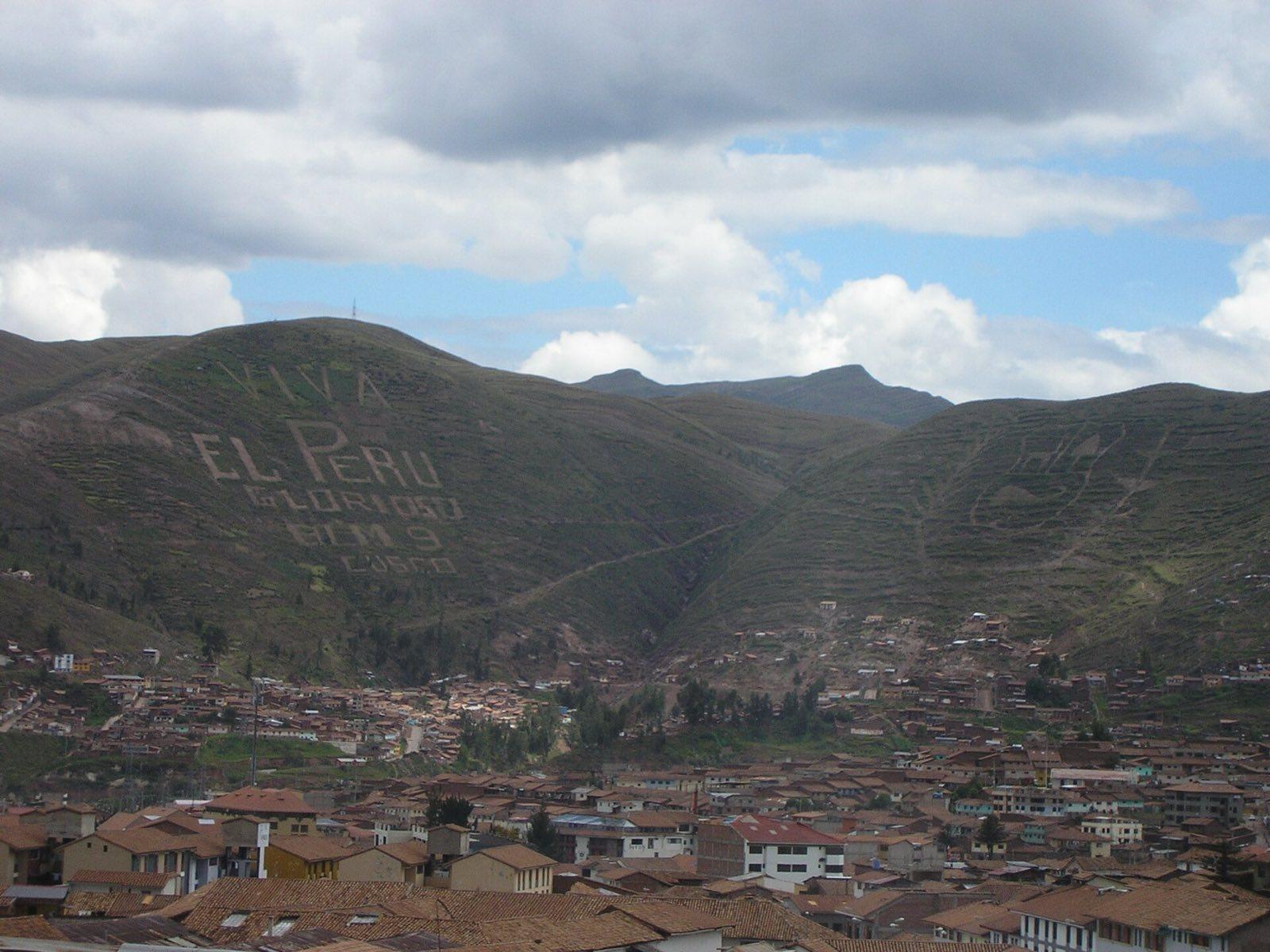
Cusco's rooftops and the hills that ring the old Inca capital Photo: Allyson Hoffman (Allyson Hoffman), Public domain, via Wikimedia Commons (https://commons.wikimedia.org/wiki/File:Cusco_Peru_Hillside.jpg) Jour 2 : Cusco: Sacsayhuaman, San Blas and Qorikancha
Sacsayhuaman, then on foot down through San Blas to the Plaza de Armas and Qorikancha
- Environ 15 min de route
- Petit-déjeuner et repas du midi
- Nuit : Cusco
Détail du jour 2
A slow start. At about 9:30 am we drive ten minutes up to Sacsayhuaman, the Inca complex above the city, where three tiers of zigzag walls of huge fitted stones face a wide grassy esplanade. Starting at the top means the walk back into town is mostly downhill, which matters on the second day at altitude. We go down lanes and steps into San Blas, the artisans' quarter, past the twelve-angled stone on Hatun Rumiyoc street, to the Plaza de Armas. Inside the Cathedral, built over an Inca palace, look for the colonial Last Supper with a roast guinea pig on the table. Lunch is a sit-down meal near the square. Early in the afternoon we visit Qorikancha, the Inca Temple of the Sun, where Dominican friars built their monastery on top of the curved Inca walls. Cusco's old centre has been a UNESCO World Heritage Site since 1983. From about 3 pm the rest of the day is yours: rest, the San Pedro market or the Museum of Pre-Columbian Art.
Compris
- Sacsayhuaman with your guide
- Walk through San Blas and past the twelve-angled stone
- Cusco Cathedral
- Sit-down lunch near the Plaza de Armas
- Qorikancha, the Temple of the Sun
Option plus facile : Take a taxi from Sacsayhuaman to the Plaza de Armas instead of walking down through San Blas.
Temps libre : Afternoon from about 3 pm and evening free
Activité : About 3 hours on foot, mostly downhill on steps and cobbles at about 3,400 m.
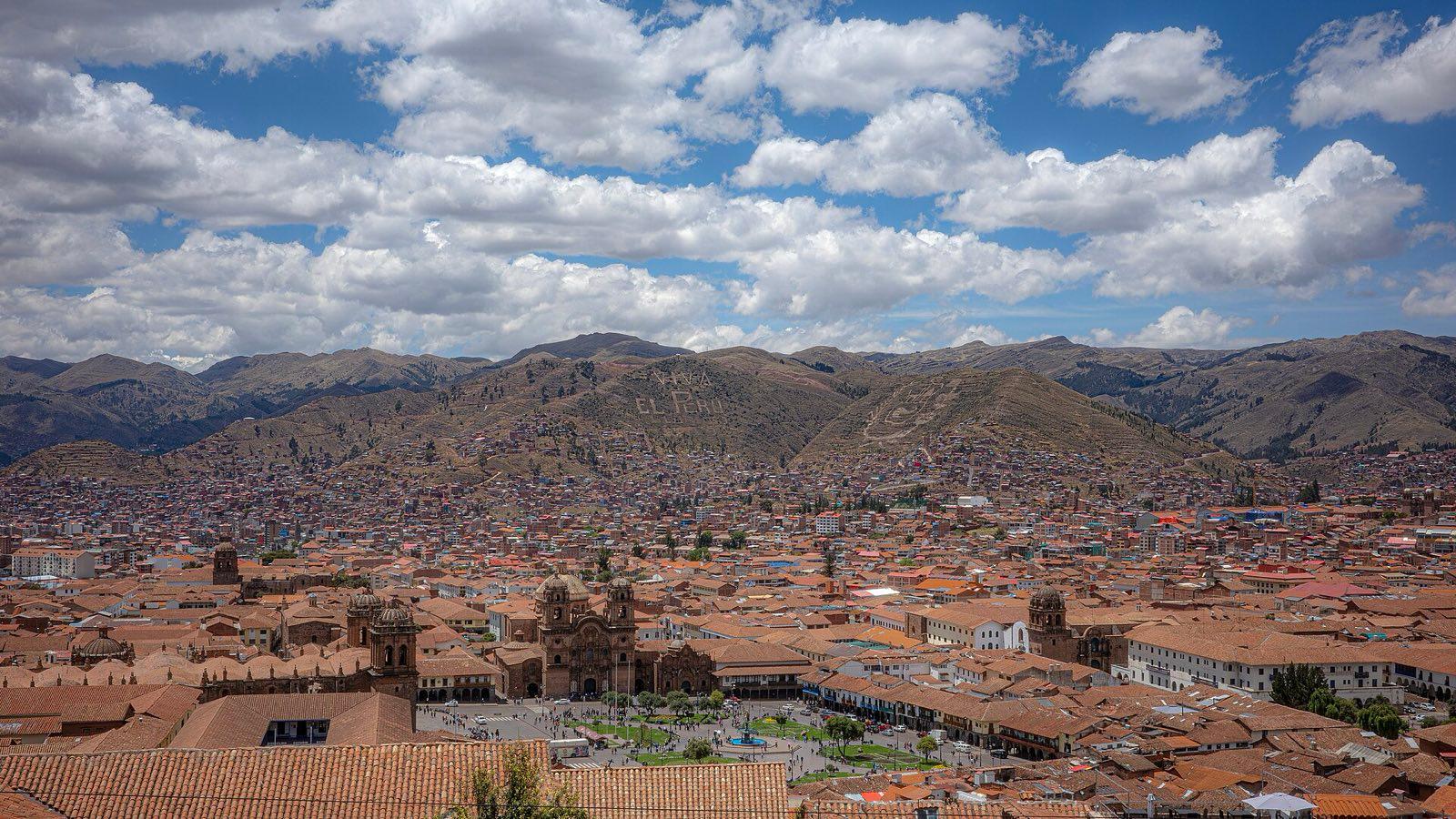
Cusco and its Cathedral on the Plaza de Armas Photo: WMrapids, CC0, via Wikimedia Commons (https://commons.wikimedia.org/wiki/File:Cusco_skyline_-_October_2025.jpg) Jour 3 : The Sacred Valley: Pisac and Ollantaytambo
Cusco to Pisac, then down the Sacred Valley via Urubamba to Ollantaytambo
- Environ 2.5 h de route
- Petit-déjeuner et repas du midi
- Nuit : Ollantaytambo
Détail du jour 3
Your main bag stays at the Cusco hotel, and you take a small bag for two nights. We leave at 8 am and drive about an hour over the hill and down into the Sacred Valley, reaching the Pisac ruins at about 8:45, ahead of most day-tour buses from Cusco. Temples of fitted stone surround a carved ritual rock high above the town, with curved terraces falling to the Urubamba River. Then we walk the market square in Pisac town, busiest on Tuesdays, Thursdays and Sundays, and drive on down the valley to Urubamba for a slow sit-down lunch. In the late afternoon, when the midday wave has left, we climb the terraces of Ollantaytambo to the Temple Hill and its wall of six huge pink stones, hauled from a quarry across the river. In 1537 Manco Inca held off a Spanish force here, one of the few times the Incas beat them in open battle. We sleep in Ollantaytambo, about 600 m lower than Cusco, which most people notice in a better night's sleep.
Compris
- Pisac ruins with your guide
- Pisac market
- Sit-down lunch in Urubamba
- Ollantaytambo ruins and the Temple Hill
Option plus facile : At Pisac, stay in the upper sector near the car park, where the walking is gentle; at Ollantaytambo, climb only the first terraces.
Option plus active : Climb from the Ollantaytambo terraces to the Pinkuylluna storehouses on the slope above the town, about an hour up and down.
Temps libre : Evening free in Ollantaytambo
Activité : About 3 hours on foot on stone steps and terraces, at about 2,800 to 3,000 m.
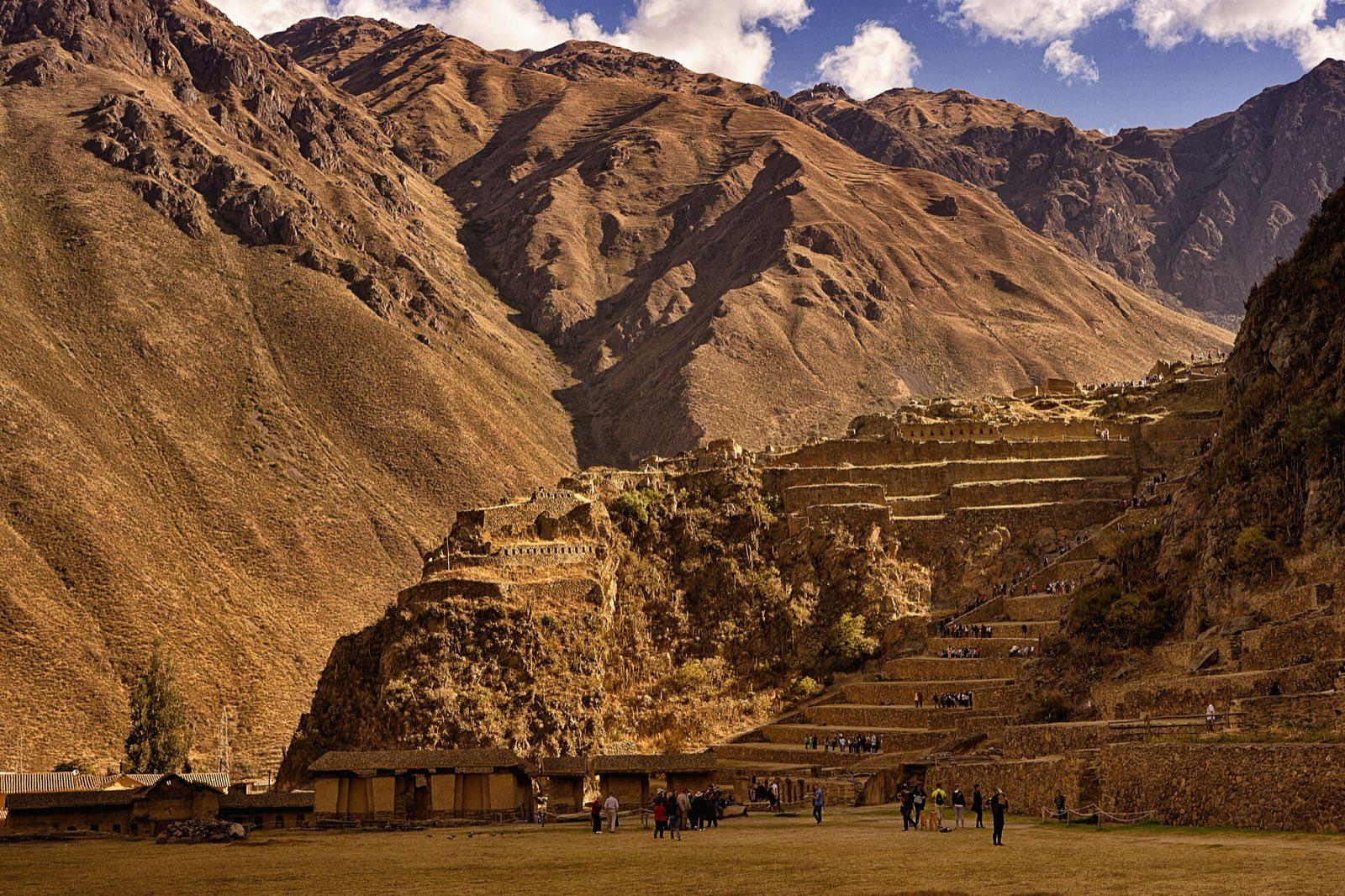
The terraces of Ollantaytambo, where Manco Inca held off the Spanish in 1537 Photo: Tydence Davis, CC BY 2.0, via Wikimedia Commons (https://commons.wikimedia.org/wiki/File:Ruins_at_Ollantaytambo.jpg) Jour 4 : Ollantaytambo on foot, then the train to Aguas Calientes
Ollantaytambo old town, then by train down the Urubamba gorge to Aguas Calientes
- En train
- Petit-déjeuner et repas du soir
- Nuit : Aguas Calientes
Détail du jour 4
A slow morning. After breakfast your guide walks the group through the old town of Ollantaytambo, where families still live on the Inca street grid, inside blocks of stone-walled courtyards, with water channels running beside the lanes. It is one of the few places in Peru where the Inca town plan is still lived in. In the late morning we board the train for about an hour and a half down the Urubamba gorge, from dry hills into green cloud forest, with large windows for the view. Aguas Calientes is a small town wedged in the gorge below Machu Picchu, at about 2,040 m, the lowest night of the trip. Lunch is your choice, and the afternoon is free: soak in the town's hot springs, or walk about 30 minutes along the river to the Manuel Chavez Ballon site museum. We sleep here for one reason: tomorrow's 6 am entry to Machu Picchu. In the evening the group has dinner together, and your guide explains the timings for the morning.
Compris
- Walk through the Inca streets of Ollantaytambo with your guide
- Train from Ollantaytambo to Aguas Calientes
- Dinner in Aguas Calientes
Activités en option
- Hot springs in Aguas Calientes (entry paid locally)
Option plus active : Walk about an hour each way along the railway from Aguas Calientes to the Mandor gardens and waterfall; a small entry is paid there.
Temps libre : Afternoon free in Aguas Calientes
Activité : An easy day. The train allows only a small bag, about 5 kg; your main bag waits at the Cusco hotel.
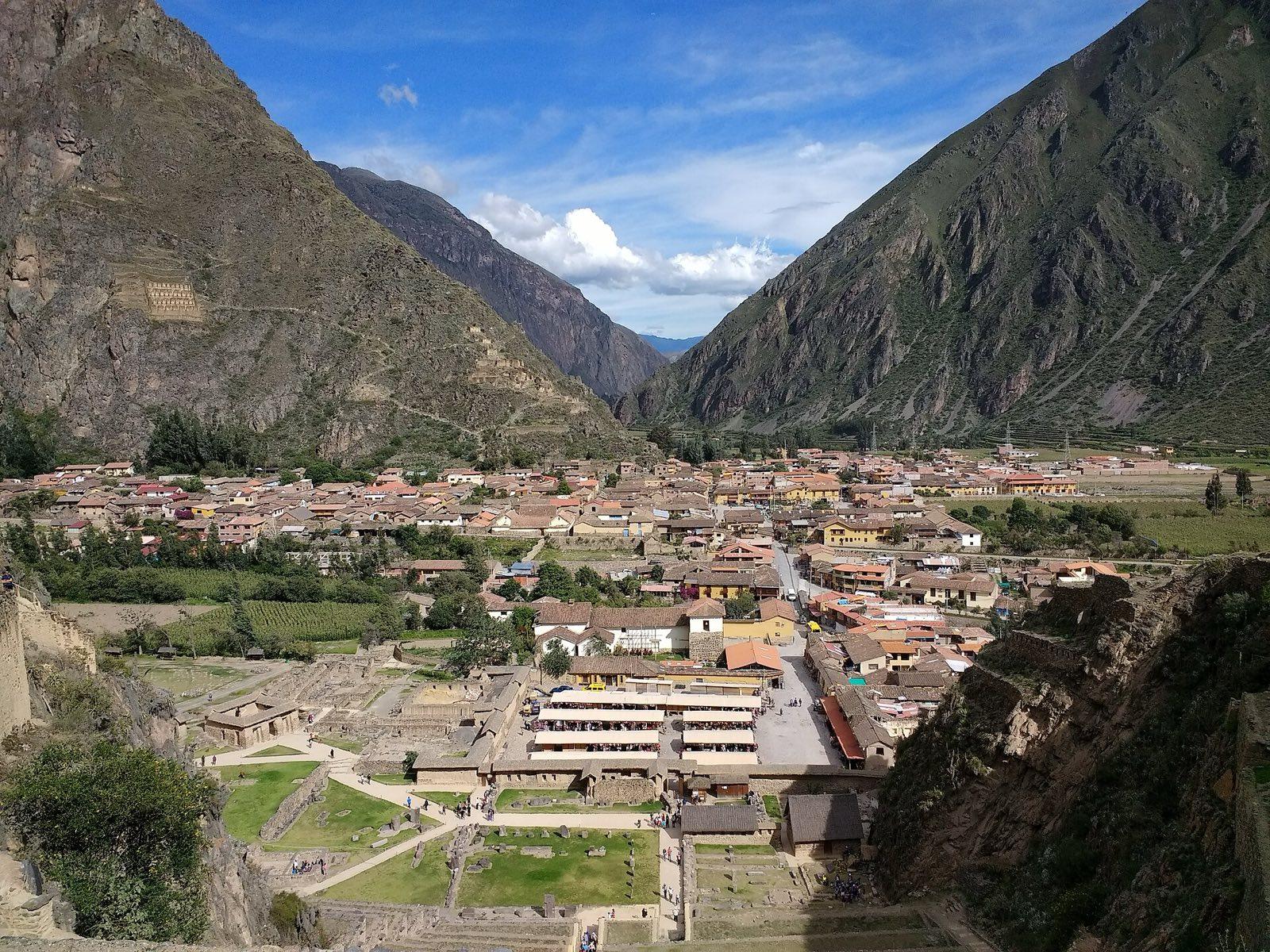
Ollantaytambo, still laid out on its Inca street grid Photo: Mx._Granger, CC0, via Wikimedia Commons (https://commons.wikimedia.org/wiki/File:Town_of_Ollantaytambo.jpg) Jour 5 : Machu Picchu at 6 am, back to Cusco
Aguas Calientes to Machu Picchu and back, then by train to Ollantaytambo and by road to Cusco
- Environ 2 h de route
- Petit-déjeuner et repas du midi
- Nuit : Cusco
Détail du jour 5
This is the one pre-dawn start, and the reason we slept here. We take one of the first buses up the zigzag road, about 25 minutes, and walk in at the 6 am entry, when the site is at its quietest and, in the dry season, the cloud lifts slowly off the peaks. A licensed Machu Picchu guide, required by the site's rules, leads the group on a circuit that passes the upper viewpoint for the classic view over the citadel and Huayna Picchu, then down through temples, plazas and terraces. The Incas built Machu Picchu in the 15th century, and it has been a UNESCO World Heritage Site since 1983. Tickets are sold by circuit and time, so the route depends on the circuit available when we book. We ride down for a sit-down lunch in Aguas Calientes, take the mid-afternoon train back to Ollantaytambo and drive about an hour and three quarters over the Chinchero plateau to Cusco, where your main bag is waiting. The evening is free.
Compris
- Machu Picchu buses up and down
- Machu Picchu entry at 6 am with a licensed site guide
- Sit-down lunch in Aguas Calientes
- Train from Aguas Calientes to Ollantaytambo
- Drive to Cusco
Activités en option
- Huayna Picchu or Machu Picchu Mountain climb, where tickets are available (price shown when you book)
Option plus facile : Walk the lower terraces and plazas with your guide and skip the steps to the upper viewpoint.
Option plus active : Add a Huayna Picchu or Machu Picchu Mountain ticket: steep stone steps, about 2 to 3 hours.
Temps libre : Evening free in Cusco
Activité : About 2.5 to 3 hours on foot at Machu Picchu, about 2,430 m, with many uneven stone steps. If the train runs late, our driver waits at Ollantaytambo.
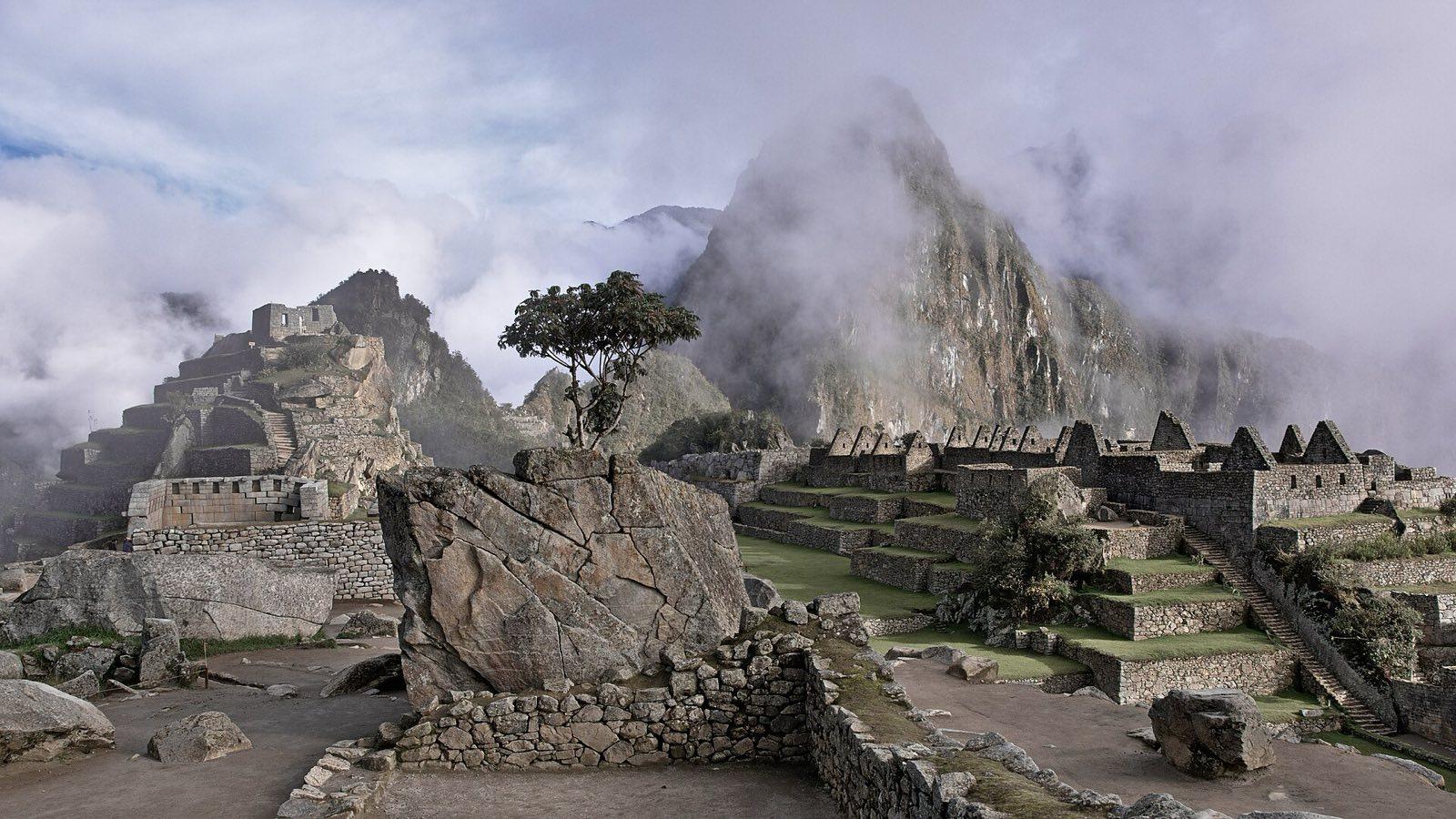
Inside Machu Picchu, built by the Incas in the 15th century Photo: Tomas Sobek tomas_nz, CC0, via Wikimedia Commons (https://commons.wikimedia.org/wiki/File:Ruins_of_Machu_Picchu_(Unsplash).jpg) Jour 6 : Fly to the altiplano: Sillustani and Puno
Cusco to Juliaca by air, then by road via Sillustani to Puno
- Environ 1.5 h de route
- Petit-déjeuner et repas du midi
- Nuit : Puno
Détail du jour 6
The road from Cusco to Puno takes 7 to 10 hours by bus, so we fly instead. After a slow breakfast we drive to the airport for a late-morning flight of about an hour to Juliaca, on the high plain north of Lake Titicaca at about 3,825 m. Our vehicle meets the group and we stop for a sit-down lunch on the way. In the afternoon we reach Sillustani, on a peninsula in Lake Umayo, where the Colla people, and later the Incas, buried their nobles in chullpas: round stone burial towers, some about 12 m high, built of finely cut blocks that widen towards the top. In the late-afternoon light the towers glow against the blue of the lake, and the walk up the hill is short but steep at this height. Then it is about 35 km to Puno, on the shore of Lake Titicaca at about 3,830 m, the highest town of the trip. We give it to you only on day 6, after five days at altitude. The evening is free.
Compris
- Transfer to Cusco airport
- Flight from Cusco to Juliaca
- Sit-down lunch on the way to Sillustani
- Sillustani burial towers with your guide
Option plus facile : Stay on the lower path at Sillustani and see the towers from below.
Option plus active : Walk the full loop of the Sillustani hilltop to the far towers above Lake Umayo, about 30 minutes more.
Temps libre : Evening free in Puno
Activité : About 1.5 hours on foot at Sillustani, a short, steep climb at about 3,900 m. Walk slowly; Puno is the highest town of the trip. Flight times are set by the airline and sent with your final itinerary.
Jour 7 : Lake Titicaca: the Uros and Taquile
Puno by boat to the Uros islands and Taquile, then back to Puno
- En bateau
- Petit-déjeuner et repas du midi
- Nuit : Puno
Détail du jour 7
A full day on the lake, by boat from Puno's port at about 8 am. First, about 30 minutes out, the Uros islands: platforms of totora reeds, built up layer on layer as the bottom rots away, where families live in reed houses and show how the islands are anchored and renewed. We arrive early, before the bigger boats. Then it is about two and a half to three hours across open water to Taquile, an island of stone terraces and farming families who manage their own tourism. Taquile's textile art is recognised by UNESCO as intangible cultural heritage: the men knit, the women spin and weave, and what they wear tells you who is married and who holds office. From the dock we walk up 30 to 40 minutes to the main square, slowly, at about 3,950 m. Lunch is with a local family above the lake, often quinoa soup and lake trout. Then we go down several hundred stone steps to the boat and are back in Puno by about 5 to 6 pm, depending on the lake.
Compris
- Full-day boat trip on Lake Titicaca
- The Uros floating reed islands
- Taquile island with your guide and a local guide
- Lunch on Taquile
Activités en option
- Reed boat ride between two Uros islands (paid locally to the families)
Option plus facile : Walk up from the dock at your own pace with your guide at the back; the boat can wait on the other side of the island, so you only walk down once.
Option plus active : Walk the ridge path across Taquile from the main square to the far dock.
Temps libre : Evening free in Puno
Activité : About 3 hours on foot on Taquile, with a 30 to 40 minute climb and several hundred stone steps down. About 6 to 7 hours in the boat in all: about 30 minutes to the Uros and 2.5 to 3 hours each way between the Uros, Taquile and Puno, depending on the boat and the wind. Bring sun protection and a warm layer; the lake wind is cold.
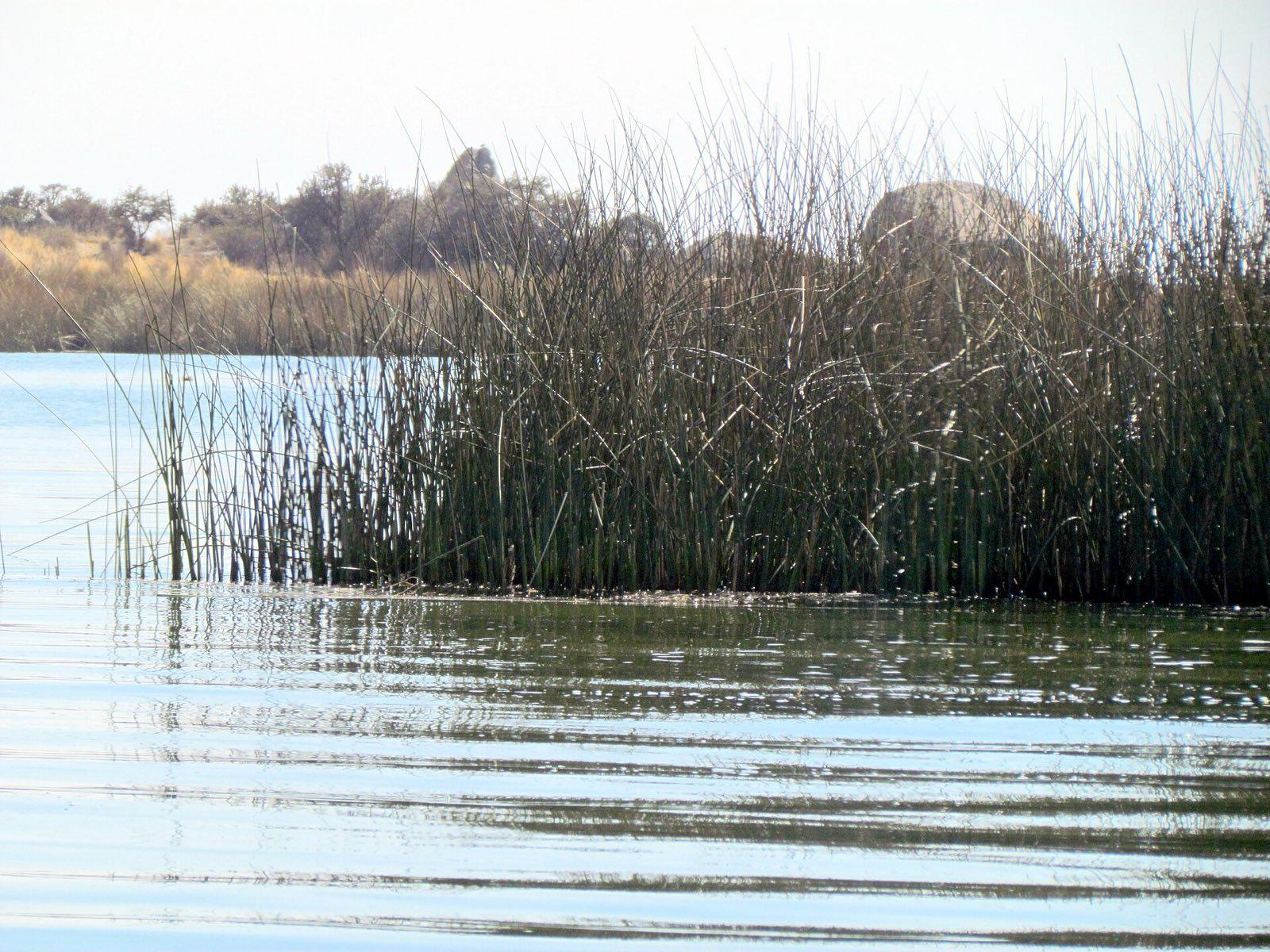
Totora reeds in Lake Titicaca, the material of the Uros islands Photo: bobistraveling, CC BY 2.0, via Wikimedia Commons (https://commons.wikimedia.org/wiki/File:010_Reeds_Lake_Titicaca_Peru_3057_(15158797836).jpg) Jour 8 : Across the border: Copacabana and the Strait of Tiquina
Puno to the Kasani border and Copacabana, then by the Strait of Tiquina to La Paz
- Environ 6 h de route
- Petit-déjeuner et repas du midi
- Nuit : La Paz
Détail du jour 8
The one long road day, about 300 km and 6 hours of driving, 9 to 10 hours with the stops, because there is no shorter way from Puno to La Paz that keeps the lake. We leave at 8 am and follow the shore for about two and a half hours to the Kasani border, where we walk through the Peruvian and Bolivian posts with your guide and meet our Bolivian vehicle and driver. Eight km on is Copacabana, a pilgrimage town on a bay of the lake. Lunch is a sit-down meal of lake trout, then we visit the white Basilica of Our Lady of Copacabana, which keeps a 16th-century image of the Virgin carved by an Indigenous sculptor. At the Strait of Tiquina we cross in a small passenger boat, about 10 minutes, while the van crosses on a wooden barge. The last two and a half hours run across the altiplano with the snow peaks of the Cordillera Real ahead, and we drop into La Paz at about 6 pm. The evening is free.
Compris
- Drive from Puno to La Paz with your guide
- Help at the Kasani border crossing
- Sit-down lunch in Copacabana
- Basilica of Our Lady of Copacabana
- Boat across the Strait of Tiquina
Option plus facile : Skip the basilica visit in Copacabana and rest at the lunch spot by the bay; the boat at Tiquina is short and seated.
Option plus active : Climb Cerro Calvario above Copacabana, about 45 minutes up stone stations of the cross, for the view over the bay, while the others take a longer lunch.
Temps libre : Evening free in La Paz
Activité : A day mostly in the vehicle, broken by the border, lunch and the strait. Keep your passport handy. The border usually takes 30 to 60 minutes.
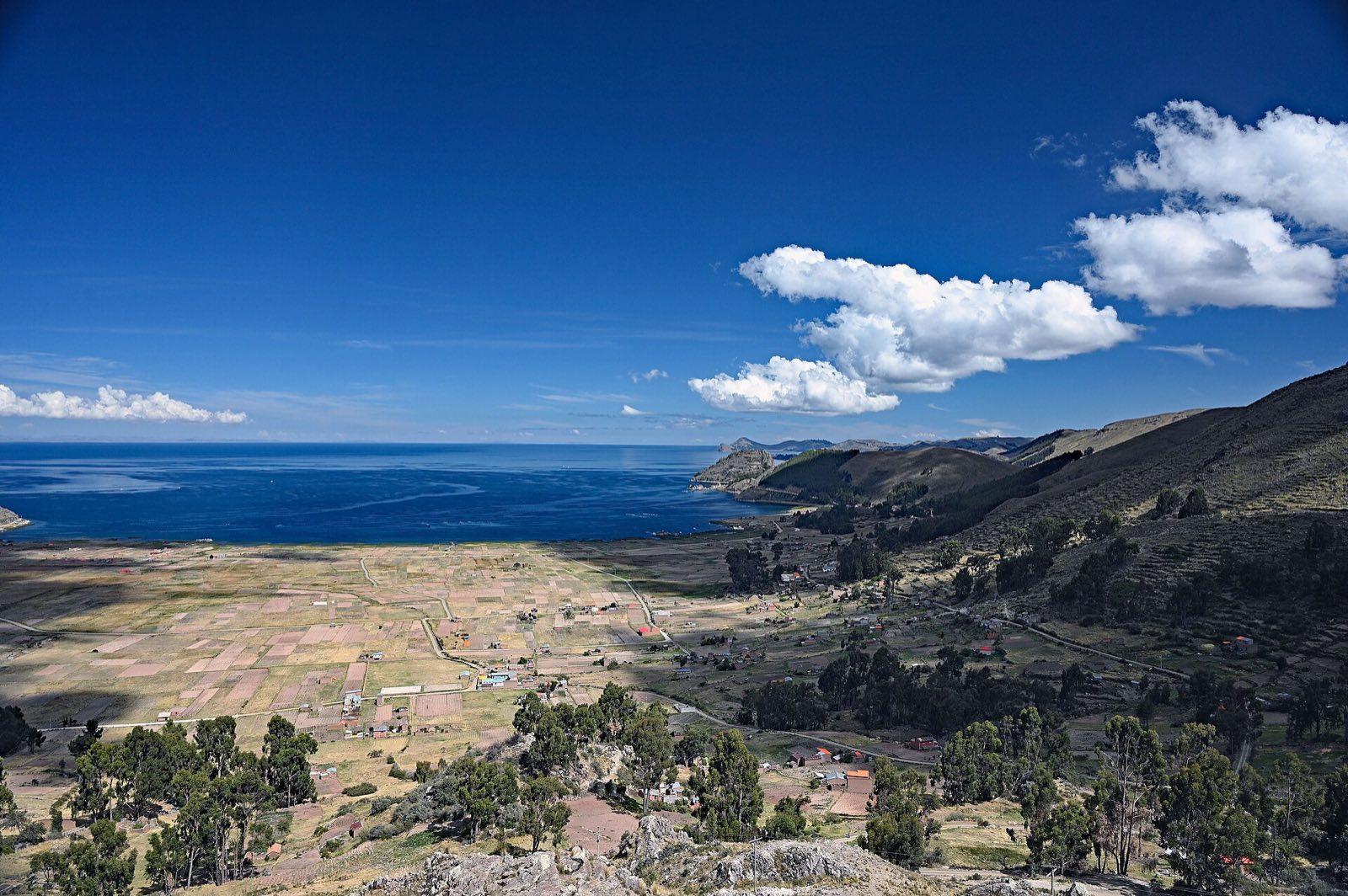
The Bolivian shore of Lake Titicaca Photo: P. Hughes, CC BY 4.0, via Wikimedia Commons (https://commons.wikimedia.org/wiki/File:Bolivia_-_On_the_shores_of_Lake_Titicaca.jpg) Jour 9 : Tiwanaku, then the cable car into La Paz
La Paz to Tiwanaku and back through El Alto, then Mi Teleferico down into the city
- Environ 3 h de route
- Petit-déjeuner et repas du midi
- Nuit : La Paz
Détail du jour 9
After breakfast we drive about an hour and a half up through El Alto and west across the flat altiplano, past adobe farms and grazing llamas, to Tiwanaku, near the southern end of Lake Titicaca. Between about AD 500 and 1000 it was the centre of a state that reached into what are now Peru, Chile and Argentina, and it has been a UNESCO World Heritage Site since 2000. We arrive in the morning, before the midday sun, and a local site guide walks us through the sunken temple with its carved stone heads set into the walls, onto the Kalasasaya platform to the Gate of the Sun, past the eroded Akapana pyramid and on to Puma Punku, where precisely cut stone blocks lie scattered on the ground. The two site museums hold carved pieces from the site; your guide confirms on the day which are open. Lunch is a sit-down meal in Tiwanaku village. On the way back the van leaves us at a cable car station in El Alto, and we ride Mi Teleferico down over the rooftops in the late afternoon light.
Compris
- Tiwanaku with a local site guide: the sunken temple, Kalasasaya and the Gate of the Sun, Akapana and Puma Punku
- Both site museums
- Sit-down lunch in Tiwanaku village
- Cable car ride on Mi Teleferico from El Alto down into La Paz
Option plus facile : See Kalasasaya, the sunken temple and the museums, then wait in the shade while the others walk to Puma Punku.
Option plus active : Ride a second Mi Teleferico line with your guide after the descent, about 30 minutes across the city, for a different view of the valley.
Temps libre : Evening free in La Paz
Activité : About 2 to 3 hours on foot over flat, open ground at about 3,850 m, with strong sun. The cable car is seated and takes about 10 to 15 minutes.
Jour 10 : Valle de la Luna and old La Paz
La Paz to Valle de la Luna, then the old centre on foot
- Environ 1.5 h de route
- Petit-déjeuner
- Nuit : La Paz
Détail du jour 10
At about 9 am we drive 30 to 40 minutes down through the southern suburbs, a few hundred metres lower than the centre, to Valle de la Luna, a small valley where wind and rain have cut the clay and sandstone into a maze of pale spires and gullies. A marked trail with railings and short bridges loops through it in about 45 minutes. Then we drive back up to the old centre for a walk with your guide. Plaza Murillo holds the Cathedral, the Legislative Palace and the old presidential palace; a few blocks away is Calle Jaen, a colonial street lined with small museums. Then we walk to the stone Basilica of San Francisco and the square in front of it. Behind the basilica, the Witches' Market sells herbs, charms and dried llama foetuses for offerings to Pachamama, the earth mother. We finish at about 1 pm. Lunch and the rest of the day are yours, the free afternoon in La Paz before the salt flats.
Compris
- Valle de la Luna with your guide
- Walking tour of old La Paz: Plaza Murillo, Calle Jaen, the Basilica of San Francisco and the Witches' Market
Activités en option
- Mountain bike ride down the Yungas road (the Death Road) with a specialist operator, a full day in place of this programme (price shown when you book)
Option plus facile : Take the short loop at Valle de la Luna, about 20 minutes on a flat path.
Option plus active : Ride the Yungas road by mountain bike with a specialist operator instead of the day's programme.
Temps libre : Afternoon and evening free
Activité : About 2.5 hours on foot, on steep streets at about 3,640 m in the centre.
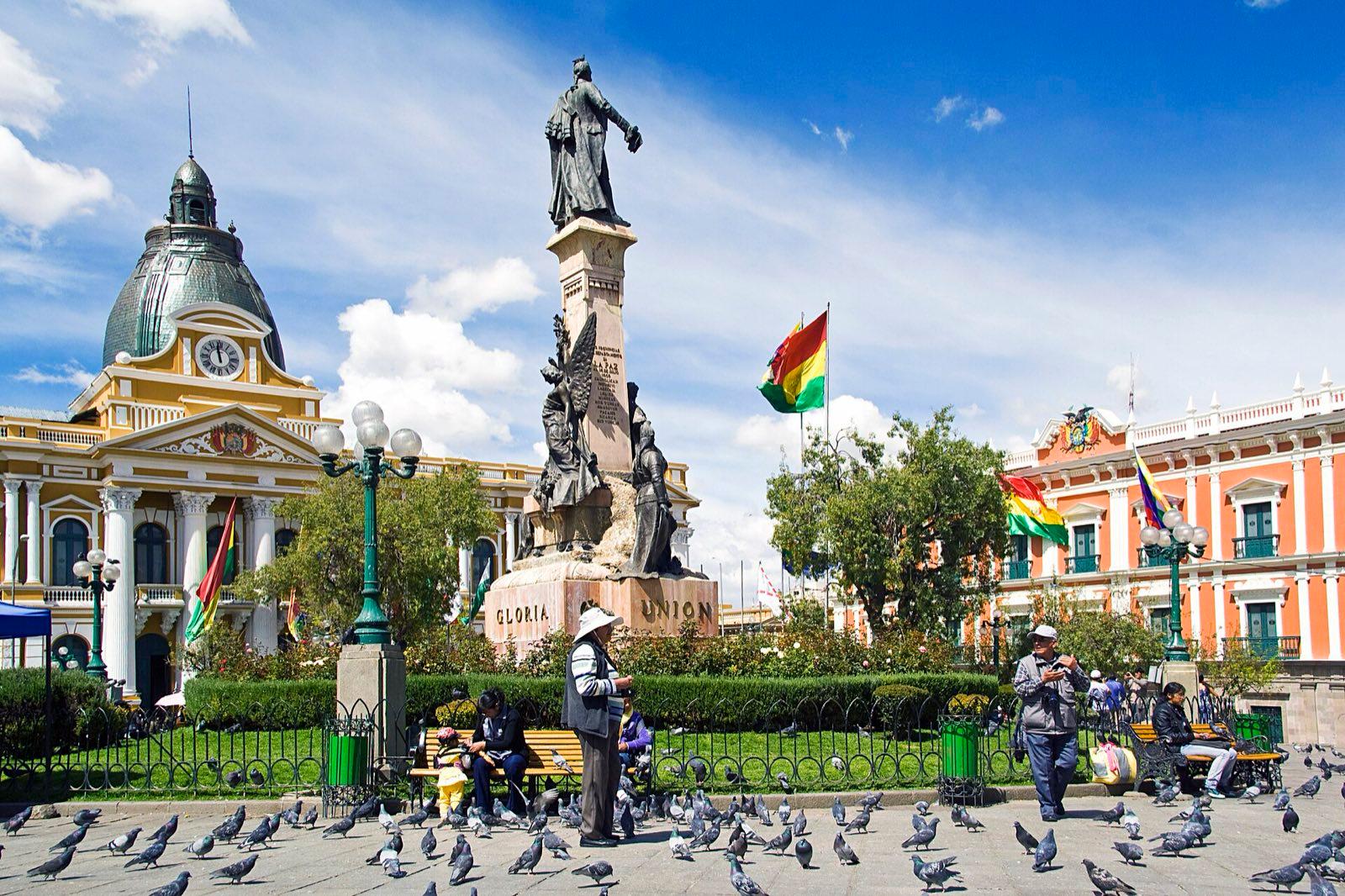
Plaza Murillo, the political heart of La Paz Photo: Dimitry B. from London, CC BY 2.0, via Wikimedia Commons (https://commons.wikimedia.org/wiki/File:Noon,_Plaza_Murillo,_La_Paz,_Bolivia_(14689720998).jpg) Jour 11 : Fly to Uyuni and a first sunset on the salt
La Paz to Uyuni by air, then the Train Cemetery, Colchani and the edge of the salar
- Environ 1.5 h de route
- Petit-déjeuner et repas du midi
- Nuit : Uyuni
Détail du jour 11
A morning flight of about an hour takes us south over the altiplano to Uyuni, a frontier town at about 3,660 m on the edge of the largest salt flat on earth. The flight replaces a road day of 9 to 10 hours. After lunch together and time to check in, we drive a few minutes out of town to the Train Cemetery, where steam engines and wagons from the mining railway era have been left to rust in the desert. In the late afternoon we head about 22 km north to Colchani, where families still dry, grind and pack salt by hand, and on onto the Salar de Uyuni itself. In the dry season the white crust cracks into a pattern of hexagons as far as you can see. We stay out on the salt as the sun goes down and the surface turns pink, then blue, then dark, and the cold comes quickly. Dinner tonight is free in Uyuni. We stay two nights at the same hotel.
Compris
- Transfers to El Alto and Uyuni airports
- Flight from La Paz to Uyuni
- Lunch in Uyuni
- The Train Cemetery
- Colchani salt village
- Sunset on the Salar de Uyuni
Option plus facile : Skip the Train Cemetery and rest at the hotel until the late-afternoon drive to the salt.
Temps libre : Evening free in Uyuni
Activité : Short walks only. The salt is blinding: bring sunglasses, sunscreen and a warm layer for sunset. Flight times are set by the airline and sent with your final itinerary.
Jour 12 : Across the salar to Incahuasi
Uyuni across the Salar de Uyuni to Incahuasi island and back
- Environ 4.5 h de route
- Petit-déjeuner, repas du midi et repas du soir
- Nuit : Uyuni
Détail du jour 12
Today we switch to 4x4s with local drivers, no more than four guests in each so everyone has a window. We leave at about 8:30, cross onto the salar near Colchani and stop at the salt monuments and the Dakar Rally sculpture, then drive west for about two hours across the white crust towards the volcanoes on the horizon. Incahuasi is an island of rock in the middle of the salt, covered in giant columnar cacti, some several metres tall, and in fossil coral from the time the salar was a lake. We arrive before the midday wave of day tours and walk the trail to the top for the view across the salt. Lunch is a sit-down meal at tables set up on the salt beside the island, then there is time for the classic perspective photos. We drive back east in the afternoon, about 200 km and four and a half hours of driving in all, a little over our 4-hour cap because Incahuasi sits far out in the middle of the salar, broken by a stop every 30 to 45 minutes, and reach Uyuni at about 5 pm for a farewell dinner together.
Compris
- 4x4 day on the Salar de Uyuni with local drivers, no more than four guests per vehicle
- Salt monuments and the Dakar Rally sculpture
- Incahuasi island and its summit trail, entry fee included
- Lunch on the salt beside Incahuasi
- Farewell dinner in Uyuni
Option plus facile : Walk the flat path around the base of Incahuasi instead of the climb to the top.
Option plus active : Climb to the summit of Incahuasi, about 45 minutes up and down on rocky steps.
Temps libre : Late afternoon free in Uyuni before dinner
Activité : The Incahuasi trail is steep and rocky at about 3,700 m. The salt is flat and the 4x4 ride is smooth.
Jour 13 : Fly back to La Paz
Uyuni to La Paz by air
- Environ 15 min de route
- Petit-déjeuner
Détail du jour 13
A last breakfast, then a drive of a few minutes to the town's small airport for the morning flight to La Paz, about an hour in the air. The airline sets the departure time, which we send with your final itinerary; on the schedules we have seen it leaves around 9 am, and we leave the hotel about an hour before, so the alarm is no earlier than on a normal day. The flight crosses the altiplano, with the white of the salar falling away behind and, on a clear day, the snow peaks of the Cordillera Real ahead as we come in to El Alto, at about 4,060 m. Your guide flies with you and sees the group to the arrivals hall at El Alto International Airport (LPB), where the trip ends in the late morning. If you fly home today, book an onward flight leaving after about 3 pm: the Uyuni flight is small and is sometimes delayed by wind or weather, and the buffer protects your connection. If you want more time in La Paz, we can book extra nights and the transfer into the city.
Compris
- Transfer to Uyuni airport
- Flight from Uyuni to La Paz
- Arrival at El Alto International Airport (LPB)
Activité : Book an onward flight from La Paz leaving after about 3 pm, or add a night in La Paz. The exact Uyuni flight time is sent with your final itinerary.
Faune et météo : April to October is the dry season across the route: clear skies at Machu Picchu after the morning cloud lifts, a calm lake and a firm white salt crust at Uyuni. Days are sunny and nights are cold, below freezing in Puno, La Paz and Uyuni from June to August. The salar's mirror effect needs the rainy season, about December to March, when we do not run this trip.
12 nuits
Où vous logerez
Vos hôtels sont nommés dans la confirmation de votre voyage.
- Cusco2 nuits
- Ollantaytambo1 nuit
- Aguas Calientes1 nuit
- Cusco1 nuit
- Puno2 nuits
- La Paz3 nuits
- Uyuni2 nuits
Un seul prix
Ce que le prix comprend
Compris
Hébergement
- 12 nights: 3 in Cusco (2 at the start, 1 after Machu Picchu), 1 in Ollantaytambo, 1 in Aguas Calientes, 2 in Puno, 3 in La Paz, 2 in Uyuni at the same hotel
- Central hotels of a 3-star-plus standard with heating; we name each hotel when we confirm your dates
- No camping, homestay or dormitory nights
- Twin rooms, or a single room for a supplement of CAD 830
Transport
- Pick-up at Cusco airport (CUZ) and drop-off at El Alto International Airport (LPB)
- Flights from Cusco to Juliaca (day 6), La Paz to Uyuni (day 11) and Uyuni to La Paz (day 13)
- Trains from Ollantaytambo to Aguas Calientes and back
- Machu Picchu buses up and down
- Our own vehicle and driver in Peru, and a Bolivian vehicle and driver from the border
- Boat day on Lake Titicaca to the Uros islands and Taquile, and the boat across the Strait of Tiquina
- 4x4s with local drivers on day 12, no more than four guests per vehicle
- Cable car ride on Mi Teleferico
Votre guide
- A See Sight Tours guide with the group from day 1 in Cusco to day 13 in La Paz, across the border and on every flight, boat and 4x4
- A licensed site guide at Machu Picchu, a local site guide at Tiwanaku and a local guide on Taquile
Activités
- Cusco: Sacsayhuaman, San Blas, the Cathedral and Qorikancha
- Sacred Valley: Pisac ruins and market, Ollantaytambo ruins and old town
- Machu Picchu entry at 6 am with a guided circuit
- Sillustani burial towers
- Lake Titicaca: the Uros islands and Taquile
- Copacabana and its basilica
- Tiwanaku and its two museums
- La Paz: Valle de la Luna, a walking tour of the old centre and the Witches' Market
- Uyuni: the Train Cemetery, Colchani and sunset on the salar
- Salar de Uyuni by 4x4 and Incahuasi island
- All entry fees for included sights, including the Cusco tourist ticket sites
Repas
- 12 breakfasts
- 9 lunches: Cusco, Urubamba, Aguas Calientes, on the way to Sillustani, Taquile, Copacabana, Tiwanaku, Uyuni and on the salar
- 3 dinners: a welcome dinner in Cusco, dinner in Aguas Calientes and a farewell dinner in Uyuni
Non compris
- International flights, and the flight from Lima to Cusco (we can book it for you)
- A visa, if your passport needs one
- Travel insurance, which must cover travel at altitude
- Meals not listed
- Drinks
- Tips
- Optional activities: Huayna Picchu or Machu Picchu Mountain, the Aguas Calientes hot springs, an Uros reed boat ride and the Yungas road bike ride
- Extra hotel nights before or after the trip
- Personal expenses and laundry
Suppléments
- Chambre individuelle
- CAD 830 (prix estimé)

See Sight Tours offre des services de voyage partout en Amérique du Nord depuis 2006. Présente dans 20 villes au Canada et aux États-Unis, l'entreprise se spécialise dans les tours en petit groupe qui offrent des expériences personnalisées et de grande qualité aux voyageurs.


Liens rapides
Réservez votre tour
Communiquez avec nous
- Sans frais1-888-961-6584
- Local1-289-271-9767
- Courrielinfo@seesight-tours.com


© 2026 See Sight Tours. Tous droits réservés.