Printable itinerary
Peru: Arequipa, the Colca Canyon, Lake Titicaca and Machu Picchu
15 days · Lima to Cusco · up to 12 guests
From CAD 6,330 per person, sharing a room (estimated price. Estimated price. The itinerary, hotels and availability are proposed and subject to confirmation. Your quote will set out the booking conditions; sending a request does not confirm a booking.)
Black Friday offer: 15% off the small-group price for requests received by Dec 1, 2026. From CAD 6,330 per person. Dec 2 to Dec 31: from CAD 6,850. From Jan 1, 2027: from CAD 7,445. The offer ends at 11:59 pm Toronto time and is for the small-group style only.
Day by day
Itinerary
The longest drive is 6.5 h, on day 7.
- Lima2 nights
- Arequipa2 nights
- Colca valley (Chivay)2 nights
- Puno2 nights
- Cusco1 night
- Sacred Valley (Urubamba)2 nights
- Aguas Calientes1 night
- Cusco2 nights
- Overnight stop
- Day trip
- By boat or train
Day 1: Arrive in Lima
Jorge Chávez International Airport (LIM) to your hotel in Miraflores
- Drive about 1 h
- Welcome dinner
- Stay in Lima
Day 1 details
Fly into Lima's Jorge Chávez International Airport (LIM) at any time today. A driver meets you in arrivals for the drive to Miraflores, about 20 km and usually under an hour, longer at rush hour. We stay in Miraflores, on the cliffs above the Pacific, because it is easy to walk in the evening and close to good restaurants. If you land early, follow the Malecón, the clifftop path of parks and gardens, to the Parque del Amor and watch the paragliders ride the sea breeze. At about 6 pm your See Sight Tours guide meets the group to talk through the two weeks ahead: the flight south to Arequipa, how the route climbs slowly so your body can adjust to the altitude, and what to pack for cold nights on the Altiplano. Then we walk to a welcome dinner for a first taste of Peruvian cooking, such as causa, lomo saltado and a pisco sour for those who want one. To join the briefing, plan to land by about 3 pm; later arrivals are briefed at breakfast.
Included
- Pick-up at Jorge Chávez International Airport (LIM)
- Welcome briefing with your guide
- Welcome dinner
Free time: Free until the evening briefing
Day 2: Lima: the old centre and the Larco Museum
Miraflores to the historic centre, the Larco Museum in Pueblo Libre and back
- Drive about 1.5 h
- Breakfast and lunch
- Stay in Lima
Day 2 details
After breakfast we drive about 40 minutes into Lima's historic centre, a UNESCO World Heritage Site since 1988. We walk around the Plaza Mayor, past the Cathedral and the Government Palace, to the Basilica and Convent of San Francisco, with its tiled cloisters, its old library and the catacombs beneath the church, where the city buried its dead until the early 1800s. Late in the morning we cross to Pueblo Libre and the Larco Museum, set in an 18th-century mansion built over a pre-Columbian pyramid. Its galleries of Moche, Nazca, Chimú and Inca pottery, gold and textiles are a clear introduction to the cultures you meet over the next two weeks, from the desert coast to Lake Titicaca. Lunch is ceviche, eaten the way Limeños eat it, at midday. We are back in Miraflores by mid-afternoon, and the rest of the day is free: walk to the murals of Barranco and the Puente de los Suspiros, or rest before tomorrow's morning flight.
Included
- The historic centre of Lima with your guide: the Plaza Mayor, the Cathedral and the Government Palace (outside)
- The Basilica and Convent of San Francisco and its catacombs
- The Larco Museum
- Ceviche lunch
Free time: Late afternoon and evening free
Day 3: Fly south to Arequipa, the White City
Lima to Arequipa by air, then the historic centre on foot
- Drive about 1.5 h
- Breakfast and lunch
- Stay in Arequipa
Day 3 details
An early breakfast, then the flight south to Arequipa, about 1 hour 30 minutes; this is one of the few early starts on the trip. Arequipa sits at about 2,335 metres, high enough to start your body adjusting and low enough to sleep well, which is why we spend two nights here before going higher. Its old centre, a UNESCO World Heritage Site since 2000, is built of sillar, a pale volcanic stone, under the cone of El Misti. After dropping bags at the hotel we sit down to lunch at a picantería, one of the city's traditional lunch houses: try rocoto relleno, a stuffed hot pepper, or chupe de camarones, a river-shrimp chowder. In the afternoon an easy walk with your guide takes in the arcades of the Plaza de Armas, the long white front of the Cathedral and the carved facade and cloisters of La Compañía. The evening is free. Walk slowly, drink plenty of water and go easy on alcohol tonight.
Included
- Flight from Lima to Arequipa
- Lunch at a picantería
- Walk through the historic centre: the Plaza de Armas, the Cathedral (outside) and La Compañía's cloisters
Free time: Evening free
Day 4: Santa Catalina and the Ice Maiden
Arequipa: Santa Catalina Monastery, the Museo Santuarios Andinos and Yanahuara
- Drive about 30 min
- Breakfast
- Stay in Arequipa
Day 4 details
We walk to Santa Catalina Monastery soon after it opens, before the tour groups. Founded in 1579 and opened to visitors only in 1970, it is a walled town inside the city: lanes painted deep blue and red, small cloisters, kitchens blackened by wood smoke and the cells where the nuns lived, some with rooms for their own servants. Allow about two hours; your guide knows the quiet corners. Late in the morning we visit the Museo Santuarios Andinos, which keeps Juanita, an Inca girl offered on the summit of Ampato volcano more than 500 years ago and found by climbers in 1995, preserved by the ice. Visits there are led by the museum's own guides. Lunch is yours: the San Camilo market or a café on the plaza. The afternoon is free. Before sunset we take the short drive across the Chili River to the Yanahuara viewpoint, where white sillar arches frame El Misti as the evening light warms the volcano.
Included
- Santa Catalina Monastery with your guide, entry included
- The Museo Santuarios Andinos and Juanita, entry included
- The Yanahuara viewpoint before sunset
Free time: Lunch and afternoon free
Activity: Juanita is usually rested from about January to April, when the museum shows another offering found on the volcanoes.
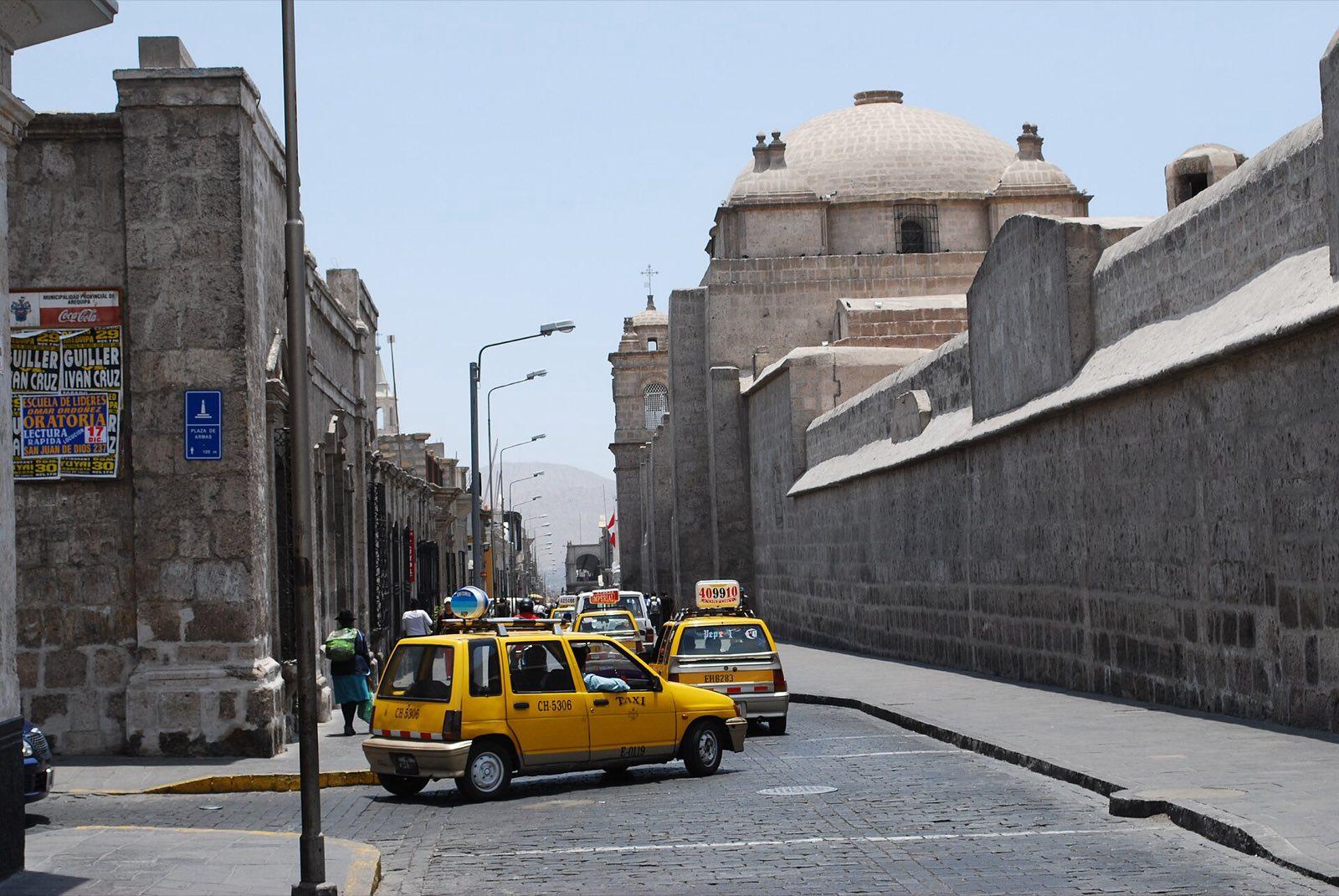
A street in Arequipa's historic centre Photo: Ivan Mlinaric, CC BY 2.0, via Wikimedia Commons (https://commons.wikimedia.org/wiki/File:Street_of_Arequipa.jpg) Day 5: Over the high pass to the Colca valley
Arequipa through the Salinas y Aguada Blanca reserve and over Patapampa to Chivay
- Drive about 4 h
- Breakfast and lunch
- Stay in Colca valley (Chivay)
Day 5 details
We leave Arequipa at 8 am and climb north into the Salinas y Aguada Blanca National Reserve, where wild vicuñas graze the high grassland at Pampa Cañahuas. We stop to watch them, and your guide shows you how to tell them from the llamas and alpacas you see later. The road keeps climbing to the Patapampa pass, over 4,800 metres and the highest point of the trip, where stacked-stone cairns face a line of volcanoes including Ampato and Sabancaya, often trailing smoke. We stay only a few minutes up here, then drop into the Colca valley to Chivay, at about 3,630 metres, for a late sit-down lunch. That is about 165 km and around four hours with the stops. The afternoon is for resting: after a short stroll around Chivay's plaza, our driver takes you to the La Calera hot springs just outside town for a soak in the warm pools beside the river. Coca tea and an early night help with the height.
Included
- Vicuña stop at Pampa Cañahuas in the Salinas y Aguada Blanca National Reserve
- The Patapampa viewpoint
- The Colca tourist ticket
- Sit-down lunch in Chivay
- The La Calera hot springs
Easier option: Stay in the warm vehicle at Patapampa; the volcano view is from the roadside.
Free time: Afternoon free after the hot springs
Activity: Patapampa is over 4,800 metres: walk slowly, stay only a few minutes and tell your guide if you feel unwell.
Day 6: Condors at Cruz del Condor
Chivay along the canyon to Cruz del Condor, then back through Maca and Yanque
- Drive about 2.5 h
- Breakfast and lunch
- Stay in Colca valley (Chivay)
Day 6 details
This is the morning the first week is built around, so we leave at about 6:30 am, one of the few starts before 8 am, and said here up front. The road follows the canyon past the terraced fields of Yanque, Achoma and Maca, farmed since before the Incas, to Cruz del Condor, about an hour and a half from Chivay. We aim to be at the viewpoint by about 8 am, because the Andean condors leave their roosts on the cliffs as the morning air warms and ride the thermals up past the rim, sometimes just above your head. The canyon drops well over 1,000 metres below you here. We stay as long as the birds keep flying, usually until about 9:30, then walk part of the rim path between viewpoints. On the way back we stop at the colonial church in Maca and the plaza in Yanque, then sit down to lunch in the valley. The afternoon is free at the hotel, with no long drive to follow.
Included
- Cruz del Condor with your guide in the early morning
- Walk along the canyon rim between viewpoints
- The churches and plazas of Maca and Yanque
- Sit-down lunch in the Colca valley
Easier option: Stay at the main Cruz del Condor viewpoint while the group walks the rim path; the van collects everyone.
More active option: Walk further along the rim path, about 1.5 hours to a lower viewpoint, with the van waiting at the end.
Free time: Afternoon free
Activity: Condors are wild birds: they fly most mornings in the dry season, but no sighting is certain, and fewer fly in the wet months.
Day 7: Across the Altiplano to Puno
Chivay over Patapampa, past the Lagunillas lakes and Juliaca to Puno
- Drive about 6.5 h
- Breakfast and lunch
- Stay in Puno
Day 7 details
Today is the one long road day of the trip, about 290 km and roughly six to six and a half hours of driving, over the 4-hour limit we set ourselves. No railway or useful flight links the Colca and Lake Titicaca, and splitting the drive would mean a night in a cold roadside town above 4,000 metres, so we drive it in one go and break it up well. We leave at 8 am, a day after the condors rather than the same morning, climb back over Patapampa and cross the high puna, where herders graze alpacas and llamas on the wet grass beside the streams. Mid-morning we stop at the Lagunillas lakes, above 4,000 metres, where flamingos and Andean geese sometimes feed. Lunch is a sit-down meal on the way. We pass Juliaca and reach Puno, on the shore of Lake Titicaca at about 3,830 metres, in the late afternoon. The evening is free; your guide suggests a quiet place for dinner near the lake or on Jirón Lima, the pedestrian street.
Included
- Drive across the Altiplano with your guide, with stops at Patapampa and the Lagunillas lakes
- Sit-down lunch on the way
Optional experiences
- The pre-Inca burial towers of Sillustani by Lake Umayo, a detour of about 1.5 hours before Puno, if the group chooses it on the day (entry paid locally)
Free time: Evening free in Puno
Activity: The longest road day: about 6 to 6.5 hours of driving, broken by stops at Patapampa and the Lagunillas lakes and a sit-down lunch.
Day 8: Lake Titicaca: the Uros and Taquile
Puno by boat to the Uros floating islands and Taquile, then back to Puno
- Drive about 15 min
- Breakfast and lunch
- Stay in Puno
Day 8 details
We are at Puno's port by about 7:30 am, ahead of the main wave of boats, for a full day on Lake Titicaca, which lies at about 3,810 metres and is often called the highest navigable lake in the world. Half an hour out, through channels cut in the reeds, we reach the Uros islands, built by their families from layer on layer of totora reed and topped up with fresh reed as the bottom layers rot. A family shows us how the islands are anchored and how the reed boats are made. Then it is about two hours across open water to Taquile, where the Quechua-speaking islanders' weaving and knitting, the knitting done by the men, is recognised by UNESCO as intangible cultural heritage. We walk up through terraces to the main square, at about 3,950 metres, and sit down to lunch with an island family: quinoa soup and fresh lake trout. Afterwards we walk down the stone stairway to the boat on the far side and are back in Puno around 5 pm.
Included
- Boat day on Lake Titicaca with your guide
- The Uros floating islands, with a visit to a family's island
- Taquile Island and its main square
- Lunch with a family on Taquile
Easier option: Go at your own pace on Taquile; if the climb is too much at this height, stay on the Uros and return to Puno on an earlier boat, arranged on the day.
Free time: Evening free
Activity: About 1.5 hours on foot on Taquile, including a stone stairway of several hundred steps at almost 4,000 metres.
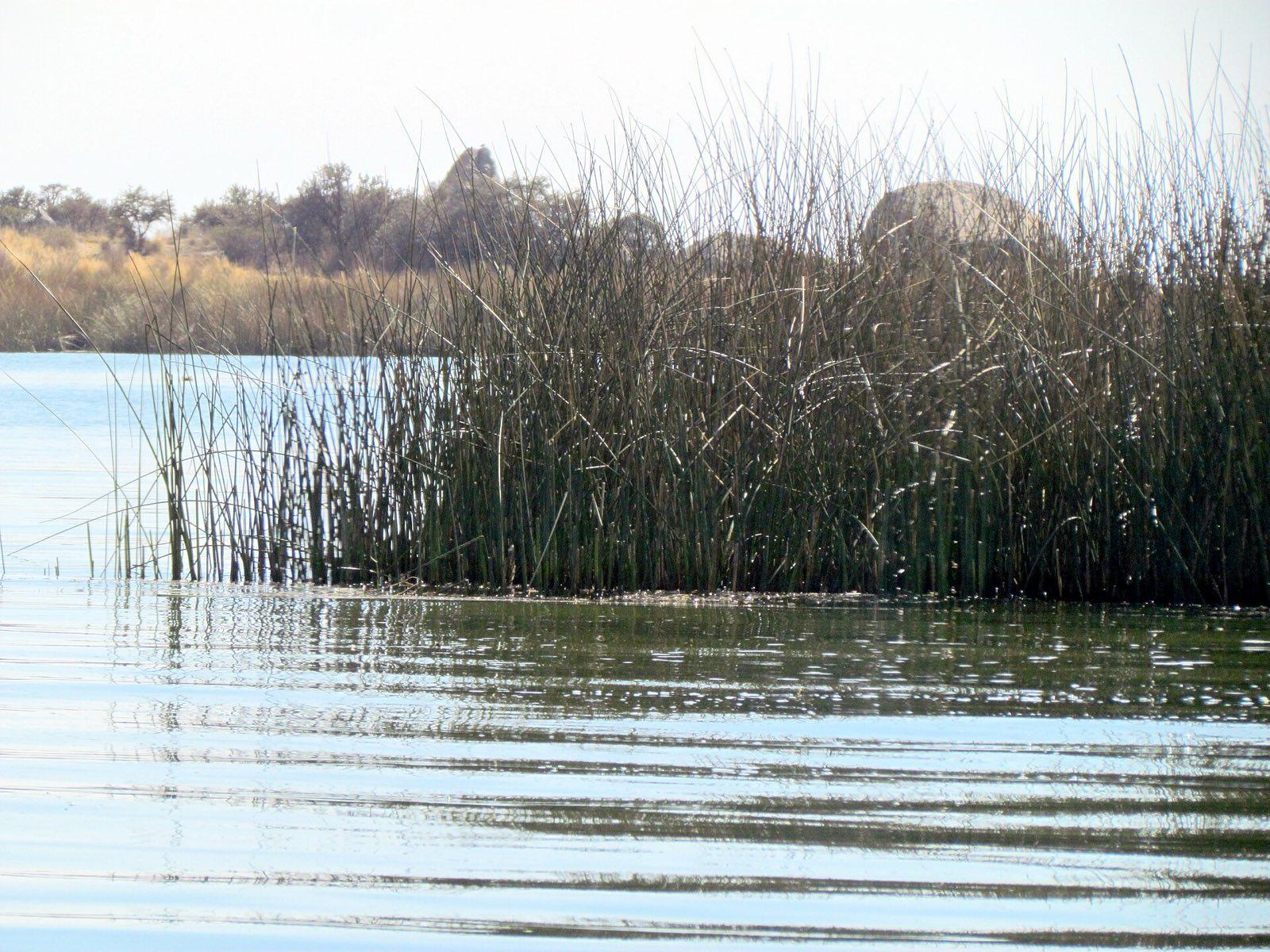
Totora reeds on Lake Titicaca, the material the Uros build their islands and boats from Photo: bobistraveling, CC BY 2.0, via Wikimedia Commons (https://commons.wikimedia.org/wiki/File:010_Reeds_Lake_Titicaca_Peru_3057_(15158797836).jpg) Day 9: The Titicaca train to Cusco
Puno to Cusco by train across the Altiplano and over the La Raya pass
- Drive about 30 min
- Breakfast and lunch
- Stay in Cusco
Day 9 details
Today the train does the work. Puno to Cusco is about 390 km by road, far over our 4-hour daily limit, so instead of a long day in a van we take the Titicaca train, a day service with an observation carriage and lunch served at your seat. It leaves Puno in the morning, after an early breakfast, and reaches Cusco in the early evening, roughly ten and a half hours later. The line runs north across the Altiplano past Juliaca and the market town of Ayaviri, beside rivers where herders water their alpacas, then climbs to the La Raya pass at about 4,320 metres, where the train stops for a few minutes beneath snow-capped peaks. From there it follows the Vilcanota River down into greener valleys of maize fields and adobe villages. Your guide travels with you, with time to read, doze or stand in the open air at the back. In Cusco our driver meets the train for the short ride to your hotel in the historic centre, at about 3,400 metres. It is the hotel we return to on days 13 and 14, so leave anything you will not need in the valley there.
Included
- The Titicaca train from Puno to Cusco, with lunch on board
- The stop at the La Raya pass
- Transfers to the station in Puno and from the station in Cusco
Activity: The Titicaca train runs on set days of the week, and we set departure dates so this day falls on one. If a service is cancelled, we drive the same route in our own vehicle with stops at the Inca temple of Raqchi and the painted church of Andahuaylillas, about 7 hours on the road.
Day 10: Chinchero, Moray and the Maras salt pans
Cusco over the Chinchero plateau to Moray and Maras, then down to Urubamba
- Drive about 2.5 h
- Breakfast and lunch
- Stay in Sacred Valley (Urubamba)
Day 10 details
A 9 am start. We drive up out of Cusco onto the Chinchero plateau, about 45 minutes, with the snow peaks of the Urubamba range ahead on a clear morning. Chinchero, at about 3,760 metres, is a weaving town built on Inca terraces, and its adobe church, raised on Inca foundations, has a painted interior. A local weaving group shows how wool is washed with a root soap, dyed with plants and cochineal insects and woven on backstrap looms; buying is entirely up to you. From there farm roads cross the plateau to Moray, rings of Inca terraces set into natural hollows, where many archaeologists believe the Incas tested crops at different temperatures. Then the Maras salt pans: thousands of small pools stepped down a hillside, fed by a salty spring and worked by local families for centuries, seen from a path above. We drop to the valley floor for a late lunch and reach our hotel near Urubamba, at about 2,870 metres, by mid-afternoon.
Included
- Chinchero's church and Inca terraces, with a weaving demonstration
- Moray terraces with your guide
- The Maras salt pans, community entry fee included
- Sit-down lunch in the Sacred Valley
Easier option: Watch Moray from the rim instead of walking down to the lower terraces.
More active option: Walk down from the salt pans to the valley floor on a footpath, about an hour, with the van waiting below.
Free time: Evening free
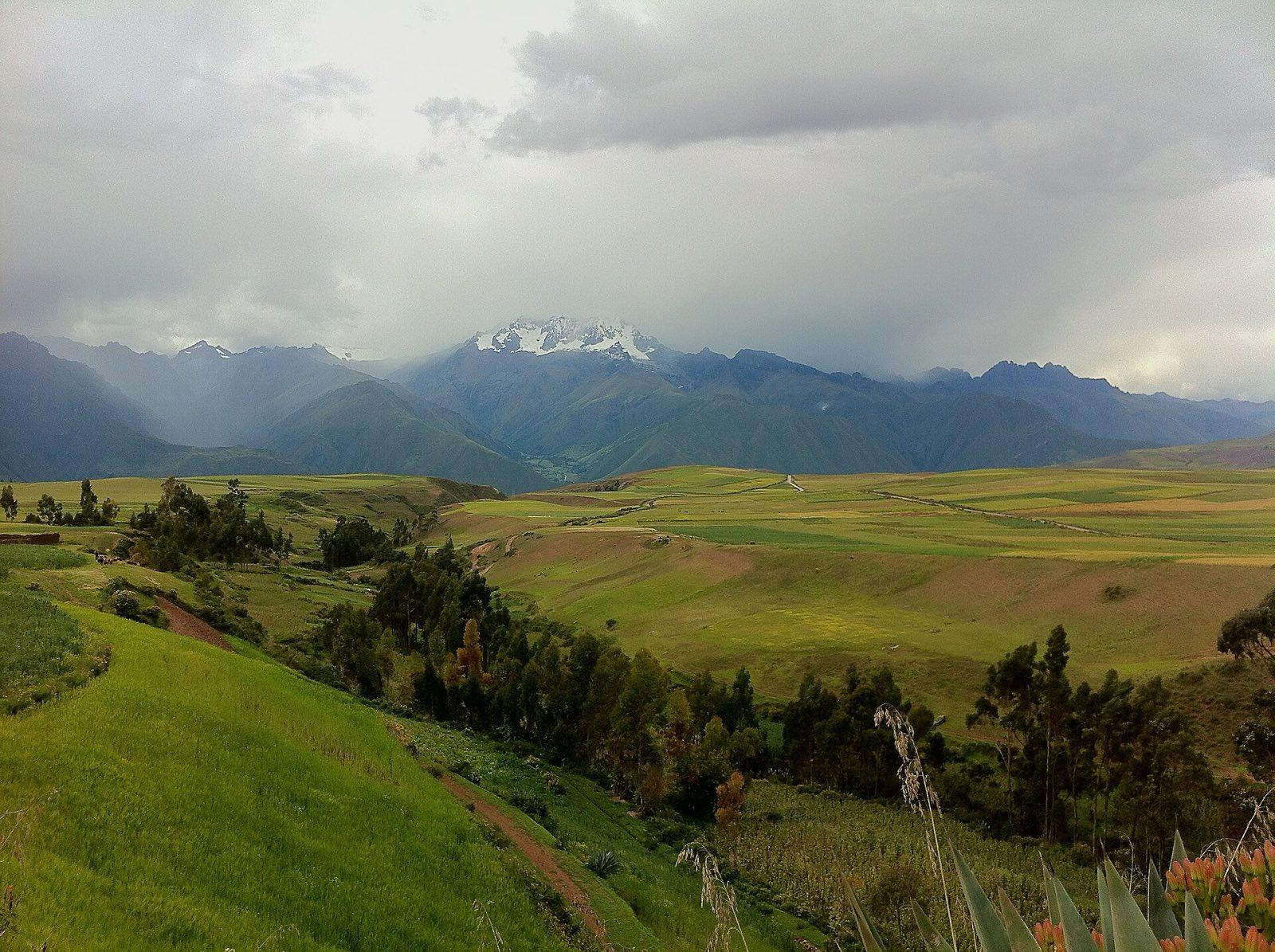
Farmland on the road from Cusco to the Sacred Valley, with the snow peak of Sawasiray behind Photo: McKay Savage from London, UK, CC BY 2.0, via Wikimedia Commons (https://commons.wikimedia.org/wiki/File:Peru_-_Cusco_Sacred_Valley_%26_Incan_Ruins_044_(7094847945).jpg) Day 11: Pisac in the morning, a free afternoon
Urubamba to the Pisac ruins and town, then back down the valley
- Drive about 2 h
- Breakfast and lunch
- Stay in Sacred Valley (Urubamba)
Day 11 details
We leave the hotel at about 7:30 am and drive an hour up the valley to the Pisac archaeological site, aiming to arrive around 8:30, before most of the day-tour buses from Cusco. The ruins sit on a ridge high above the town. Your guide walks you through the Intihuatana sector, some of the finest Inca stonework outside Machu Picchu, with curved terraces dropping steeply to the Urubamba River and hundreds of tombs cut into the cliff across the gorge. Late in the morning we come down to Pisac town for time in the market square, busiest on Tuesdays, Thursdays and Sundays, when families from the hill villages come down to sell, and then a sit-down lunch. We are back at the hotel by about 3 pm. The rest of the day is free: read in the garden, walk by the river or simply rest, because tomorrow brings the train and the day after starts early.
Included
- Pisac archaeological site with your guide
- Time in the Pisac market square
- Sit-down lunch in Pisac
Easier option: Stay in the upper sector of the ruins with the guide, then ride the van down to town.
More active option: Walk down from the ruins to Pisac town on the old Inca path, about 1.5 hours on steep stone steps, with the van waiting below.
Free time: Afternoon free
Day 12: Ollantaytambo, then the train to Aguas Calientes
Urubamba to Ollantaytambo, then the train down the Urubamba gorge to Aguas Calientes
- Drive about 30 min
- Breakfast, lunch and dinner
- Stay in Aguas Calientes
Day 12 details
We pack once and drive about 30 minutes down the valley to Ollantaytambo, reaching the ruins at about 8:30 am, ahead of most day tours from Cusco. Terraces climb steeply to the Temple Hill and its wall of six huge pink stone blocks, hauled from a quarry across the river. In 1537 Manco Inca held off a Spanish force here, one of the few Inca victories in open battle. Below the ruins, families still live on the Inca street grid, with stone water channels running beside the lanes, and we walk it before lunch in town. Your main bag goes on to Cusco in our vehicle, and you take an overnight bag. In the early afternoon we board the train for about an hour and a half down the Urubamba gorge, from dry hills into cloud forest, with windows in the carriage roof. Aguas Calientes is a small town wedged in the gorge below Machu Picchu. The late afternoon is free for the hot springs or the site museum, then we have dinner together.
Included
- Ollantaytambo archaeological site with your guide
- Walk through Ollantaytambo's Inca town
- Lunch in Ollantaytambo
- Train to Aguas Calientes
- Dinner in Aguas Calientes
Optional experiences
- The Aguas Calientes hot springs
Easier option: Stay on the lower terraces and in the old town while the group climbs to the Temple Hill.
More active option: Climb the path to the Pinkuylluna storehouses on the hill opposite the ruins, about an hour up and back.
Free time: Late afternoon free
Day 13: Machu Picchu at 6 am
Aguas Calientes to Machu Picchu, then the train to Ollantaytambo and the road to Cusco
- Drive about 2 h
- Breakfast and lunch
- Stay in Cusco
Day 13 details
This is the early start the second week builds to, and the reason we sleep in Aguas Calientes. We take one of the first buses up the zigzag road and walk in at 6 am, when the site is at its quietest and, in the dry season, the cloud lifts off the peaks as the sun reaches them. Built in the mid-1400s, most likely for the Inca ruler Pachacuti, and listed by UNESCO in 1983, Machu Picchu sits at about 2,430 metres on a saddle between two peaks. A licensed Machu Picchu guide, required by the site's rules, leads the visit on a circuit that passes the upper viewpoint for the classic view over the citadel and Huayna Picchu, then down through temples, plazas, houses and terraces. Tickets are sold by circuit and time, each allowing one entry, so the route is fixed before we go. We ride down for lunch in Aguas Calientes, take the mid-afternoon train back to Ollantaytambo and drive about an hour and three quarters to Cusco, arriving early in the evening.
Included
- Machu Picchu entry at 6 am with a licensed site guide
- The buses between Aguas Calientes and Machu Picchu
- Lunch in Aguas Calientes
- Train to Ollantaytambo, then our vehicle to Cusco
Easier option: Take an early bus down after the guided visit and rest in Aguas Calientes before lunch.
More active option: Add a Huayna Picchu or Machu Picchu Mountain ticket, if you ask when you book; daily numbers are small.
Activity: About 2 to 3 hours on foot inside Machu Picchu, on stone steps without handrails.
Day 14: Cusco: Sacsayhuamán, the Cathedral and Qorikancha
Sacsayhuamán, San Blas, the Plaza de Armas and Qorikancha
- Drive about 15 min
- Breakfast and dinner
- Stay in Cusco
Day 14 details
A slower start after yesterday. At about 9:30 am we drive ten minutes up to Sacsayhuamán, above the city, where zigzag walls of fitted stone blocks, the largest estimated at well over 100 tonnes, face a wide grassy esplanade. After almost two weeks of slowly gaining height, the walk back down through San Blas, the artisans' quarter, feels easy. We pass the twelve-angled stone on Hatun Rumiyoc street on the way to the Plaza de Armas. Inside the Cathedral, built over an Inca palace, look for the colonial painting of the Last Supper with a roast guinea pig on the table. Lunch is your choice: the counters of the San Pedro market or a quiet café. After lunch we visit Qorikancha, the Inca Temple of the Sun, a separate entry from the Cathedral and, like it, included, where Dominican friars built their church and monastery on top of the curved Inca walls. Cusco's old centre has been a UNESCO World Heritage Site since 1983. The rest of the afternoon is free, and in the evening we meet for a farewell dinner.
Included
- Sacsayhuamán with your guide
- Walk through San Blas and past the twelve-angled stone
- Cusco Cathedral, entry included
- Qorikancha, the Temple of the Sun, entry included
- Farewell dinner
Easier option: Ride the van down from Sacsayhuamán to the Plaza de Armas instead of walking.
Free time: Afternoon free
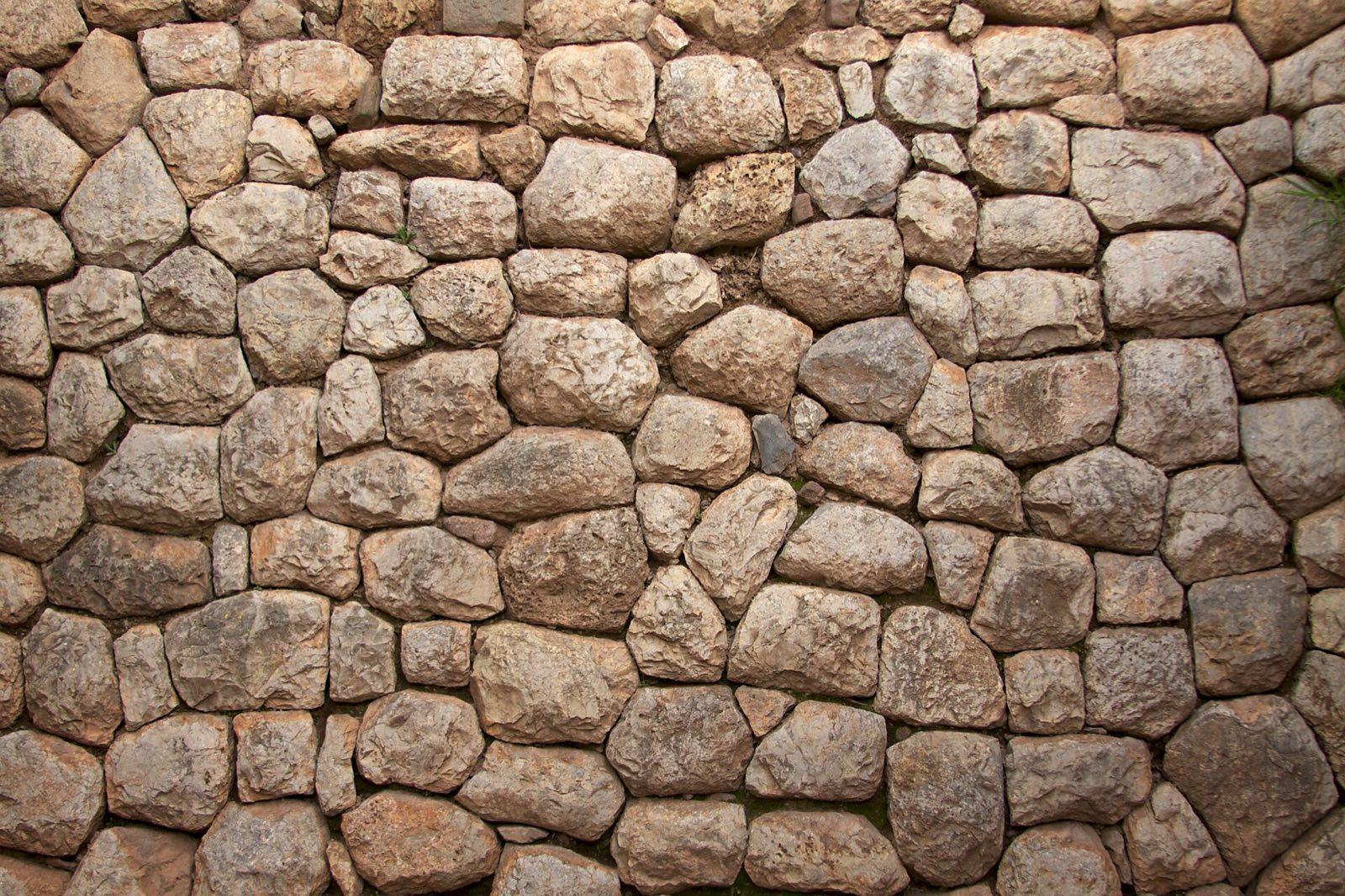
Fitted stone walls in Cusco's old centre Photo: McKay Savage from London, UK, CC BY 2.0, via Wikimedia Commons (https://commons.wikimedia.org/wiki/File:Peru_-_Cusco_015_-_stone_walls_(7084755961).jpg) Day 15: Cusco, then home
Cusco to Alejandro Velasco Astete International Airport (CUZ)
- Drive about 30 min
- Breakfast
Day 15 details
The last morning is free. Walk to the San Pedro market for a fresh juice at one of the long counters, visit the Museum of Pre-Columbian Art in a colonial mansion on the Plaza de las Nazarenas, or sit in the Plaza de Armas and watch the city start its day. Your hotel keeps your bags until the transfer. Cusco's airport is about 5 km from the centre, around 20 minutes by road, and our driver takes you there in time for your flight, with your guide checking your connection before saying goodbye. Most international flights leave from Lima, so you fly from Cusco to Lima first, about 1 hour 20 minutes, and connect there. Book a Cusco departure after about 11 am, and leave at least four hours between landing in Lima and your international flight. We can book the Cusco to Lima flight with your trip if you ask, and add extra nights in Cusco or Lima if you want to stay on.
Included
- Drop-off at Cusco airport (CUZ)
Free time: Morning free
Activity: Book a Cusco flight leaving after about 11 am.
Wildlife and weather: May to September brings dry, sunny days and frosty nights in the Colca and on the Altiplano; condors fly most reliably in these months and flamingos are sometimes on the Lagunillas lakes. April, October and November are quieter, with some showers. From December to March the rains bring cloud, fewer condors and the odd train disruption.
14 nights
Where you'll stay
Your hotels are named in your trip confirmation.
- Lima2 nights
- Arequipa2 nights
- Colca valley (Chivay)2 nights
- Puno2 nights
- Cusco1 night
- Sacred Valley (Urubamba)2 nights
- Aguas Calientes1 night
- Cusco2 nights
One price
What's in the price
Included
Accommodation
- 14 nights: 2 in Lima (Miraflores), 2 in Arequipa, 2 in the Colca valley, 2 in Puno, 3 in central Cusco (1 after the train and 2 at the end), 2 in one Sacred Valley hotel near Urubamba, 1 in Aguas Calientes
- Central hotels of at least a 3-star-plus standard, named when we confirm your dates
- Rooms shared, or your own for a supplement
Transport
- Pick-up at Lima airport (LIM) and drop-off at Cusco airport (CUZ)
- The flight from Lima to Arequipa
- Our own vehicle and driver in Lima, from Arequipa through the Colca valley to Puno, and in Cusco and the Sacred Valley
- Boats on Lake Titicaca to the Uros and Taquile
- The Titicaca train from Puno to Cusco, with lunch on board
- The train from Ollantaytambo to Aguas Calientes and back
- The buses between Aguas Calientes and Machu Picchu
Your guide
- A See Sight Tours guide for the whole trip, including on the train
- A licensed Machu Picchu guide inside the site and the museum's guide at the Museo Santuarios Andinos, as the rules require, and local guides where other sites require them
Activities
- Lima: the historic centre, the Basilica and Convent of San Francisco with its catacombs, and the Larco Museum
- Arequipa: the Plaza de Armas and La Compañía, Santa Catalina Monastery, the Museo Santuarios Andinos and the Yanahuara viewpoint
- Colca: the Colca tourist ticket, the vicuña stop at Pampa Cañahuas, Patapampa, the La Calera hot springs, Cruz del Condor and the churches of Maca and Yanque
- Lake Titicaca: the Uros floating islands and Taquile
- Sacred Valley: the Cusco tourist ticket, covering Chinchero, Moray, Pisac, Ollantaytambo and Sacsayhuamán, plus the Maras salt pans and a weaving demonstration in Chinchero
- Machu Picchu: a 6 am entry with a licensed guide
- Cusco: Sacsayhuamán, the Cathedral and Qorikancha
Meals
- 14 breakfasts
- 11 lunches: Lima, an Arequipa picantería, Chivay, the Colca valley, on the road to Puno, with a family on Taquile, on the Titicaca train, the Sacred Valley and Pisac, Ollantaytambo and Aguas Calientes
- 3 dinners: welcome in Lima, Aguas Calientes and farewell in Cusco
Not included
- International flights to Lima and home, including the Cusco to Lima flight on day 15
- Visa, if your passport needs one
- Travel insurance, with medical evacuation cover for altitude
- Meals not listed: 4 lunches (days 1, 4, 14 and 15) and 12 dinners
- Drinks
- Tips for your guides, drivers and boat crews
- Huayna Picchu or Machu Picchu Mountain tickets
- Optional activities, such as the Sillustani burial towers and the Aguas Calientes hot springs
- Personal expenses
Extras
- Room of your own
- CAD 1,265 (estimated price)

See Sight Tours has been providing travel services across North America since 2006. Operating in 20 cities across Canada and the USA, the company specializes in small group tours that offer personalized, high-quality experiences for travelers.


Book your Tour
Get in Touch
- Toll Free1-888-961-6584
- Local1-289-271-9767


© 2026 See Sight Tours. All rights reserved.