Printable itinerary
Nepal: Upper Mustang and Lo Manthang by jeep
12 days · Round trip from Kathmandu · up to 12 guests
Day by day
Itinerary
- Kathmandu2 nights
- Pokhara1 night
- Jomsom1 night
- Kagbeni1 night
- Ghami1 night
- Lo Manthang3 nights
- Tetang1 night
- Kathmandu1 night
- Overnight stop
- Day trip
- By boat or train
Day 1: Arrive in Kathmandu
Tribhuvan International Airport to your hotel in central Kathmandu
- Dinner
- Stay in Kathmandu
Day 1 details
Fly into Tribhuvan International Airport (KTM) on the eastern edge of Kathmandu. Check the visa rules before you fly; if you buy a visa on arrival, allow time for the queue before immigration. A driver meets you outside arrivals and takes you about 30 minutes across the city to a central hotel within walking distance of Thamel. Kathmandu sits at about 1,400 m, the first and gentlest step of the altitude ladder this trip climbs. Rest after the flight, or walk to the Garden of Dreams for a quiet hour. At about 6 pm your See Sight Tours guide meets the group for a first briefing: the permit, the flights to Jomsom and why they leave early, the jeeps, the lodges and how to pace yourself at about 3,800 m. Then we sit down together to a welcome dinner of dal bhat and Newari dishes at a local restaurant.
Included
- Pick-up at Tribhuvan International Airport (KTM)
- Welcome briefing with your guide
- Welcome dinner
Free time: Free until the evening briefing
Activity: Plan to land by about 3 pm to reach the briefing; later arrivals are met and join the group at dinner or the next morning.
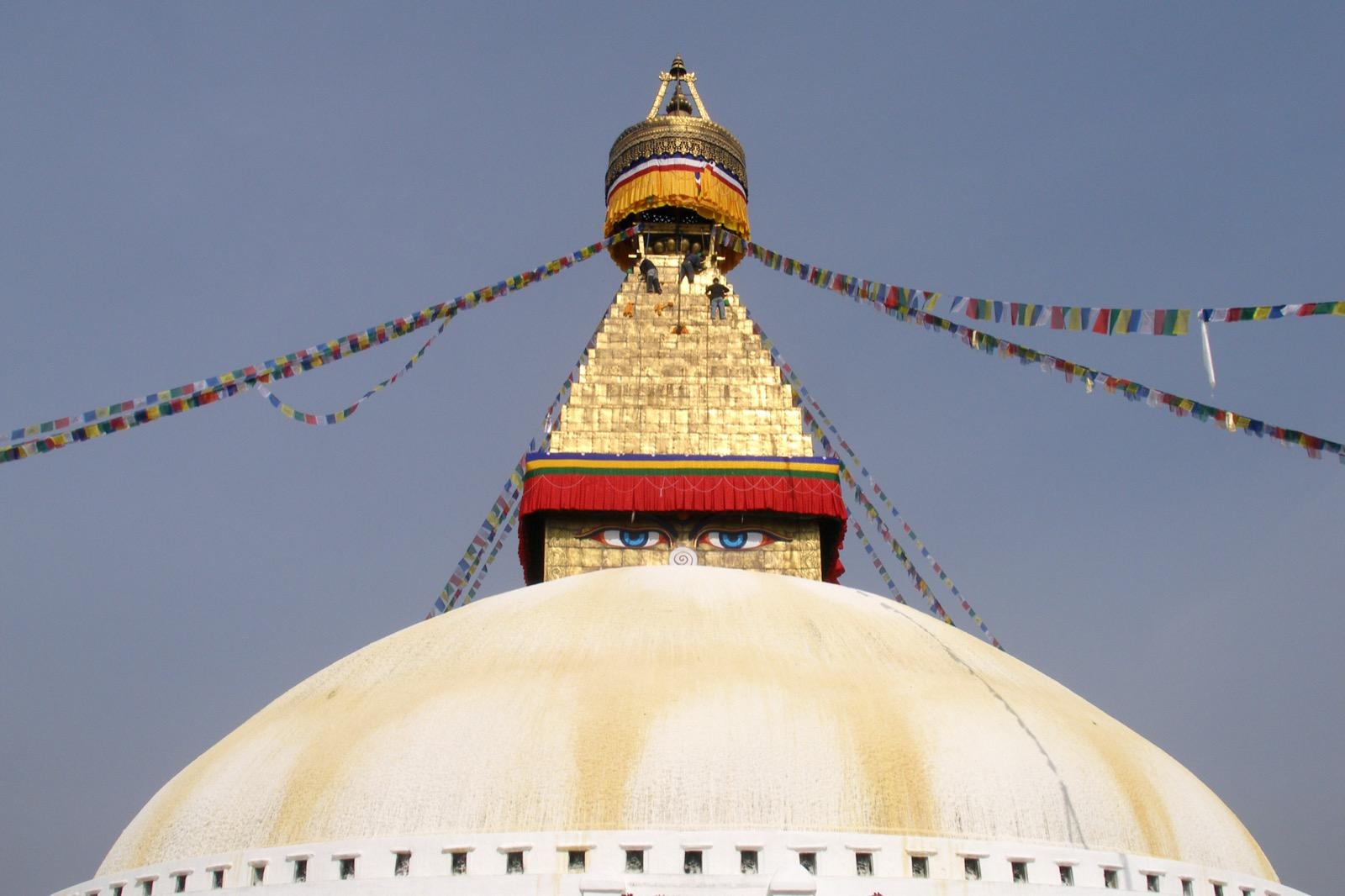
Boudhanath stupa, photographed in December 2007 Photo: Vyacheslav Argenberg, CC BY 4.0 (https://creativecommons.org/licenses/by/4.0/), via Wikimedia Commons, resized (https://commons.wikimedia.org/wiki/File:Boudhanath_Stupa_2,_Kathmandu,_Nepal.jpg) Day 2: Swayambhunath, Boudhanath and the permit
Swayambhunath to Kathmandu Durbar Square, then Boudhanath
- Drive about 1.5 h
- Breakfast and lunch
- Stay in Kathmandu
Day 2 details
We start early at Swayambhunath, the stupa on a wooded hill west of the city, before the tour groups arrive. Climb the long eastern stairway to the white dome and the painted eyes of the Buddha. Then into the old city for Kathmandu Durbar Square with a local guide and a sit-down lunch nearby. Meanwhile a registered agency would file your Upper Mustang permit at the Department of Immigration, which is why we ask for your passport at breakfast; we aim to return it the same day. In the late afternoon we go to Boudhanath, the great stupa at the heart of Kathmandu's Tibetan community, and walk the kora clockwise with pilgrims as the butter lamps are lit. The prayer flags, monasteries and chanting here are a good first look at the Tibetan Buddhist culture of Lo, the old kingdom of Upper Mustang. Dinner is free.
Included
- Swayambhunath early in the morning
- Kathmandu Durbar Square with a local guide
- Sit-down lunch in the old city
- Boudhanath stupa and the evening kora
- Upper Mustang restricted-area permit and Annapurna Conservation Area permit filed through a registered agency (fees as published, passed through at cost)
Easier option: Drive up to the western entrance of Swayambhunath and skip most of the stairway.
Free time: Dinner free around Boudhanath or back in Thamel
Activity: About 3 to 4 hours on foot on brick paving and temple steps. Hand your passport to the guide at breakfast for the permit.
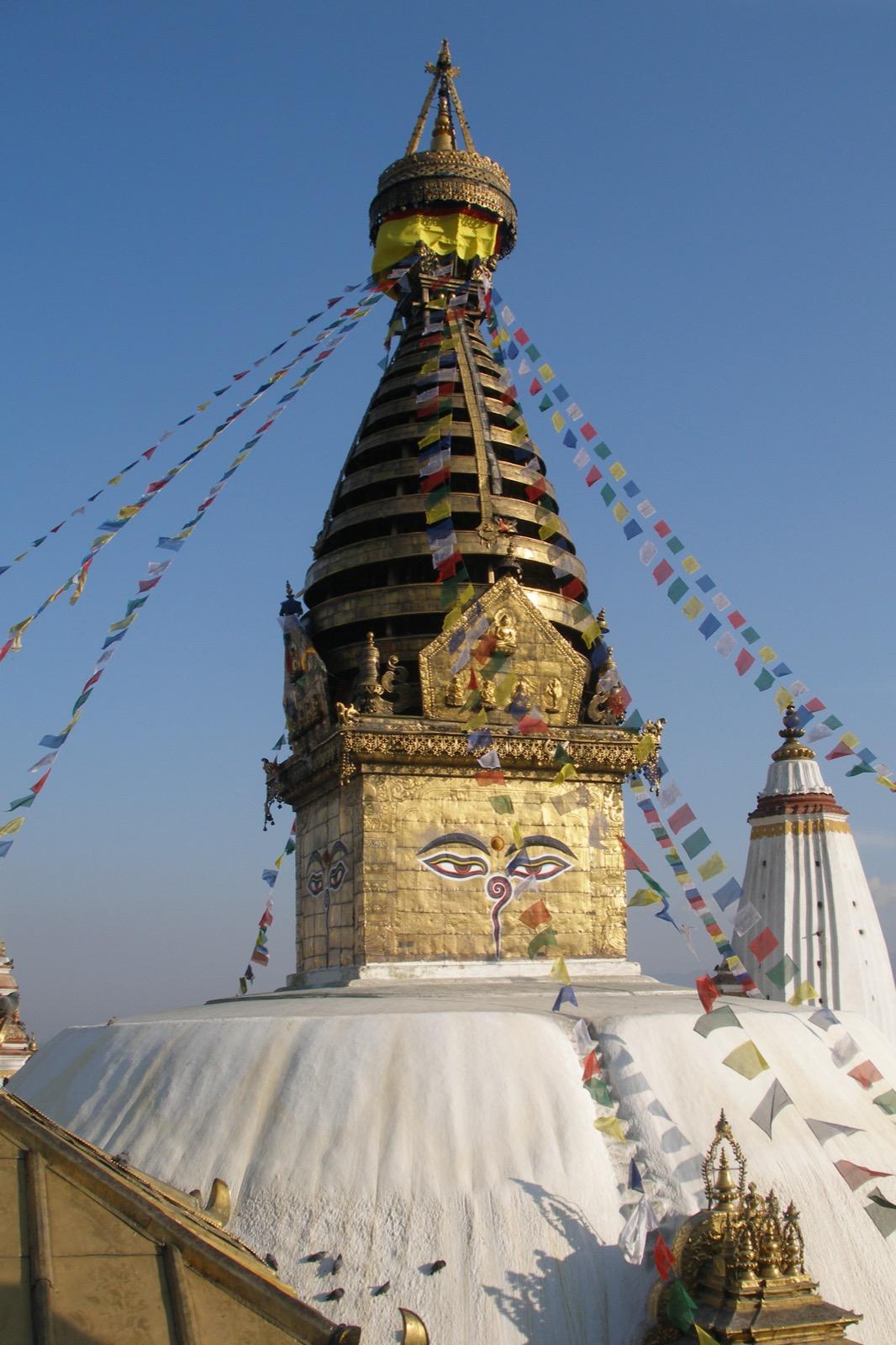
Swayambhunath stupa, photographed in December 2007 Photo: Vyacheslav Argenberg, CC BY 4.0 (https://creativecommons.org/licenses/by/4.0/), via Wikimedia Commons, resized (https://commons.wikimedia.org/wiki/File:Swayambhunath_Stupa_by_day,_Kathmandu,_Nepal.jpg) Day 3: Fly to Pokhara
Kathmandu to Pokhara by air, then Phewa Lake
- By plane
- Breakfast and lunch
- Stay in Pokhara
Day 3 details
A mid-morning flight takes us west to Pokhara in about 25 minutes; on a clear day the Himalaya runs along the right-hand windows. Pokhara, at about 820 m, is the base for the Jomsom flight, which leaves early tomorrow, so tonight is a short, deliberate stop. We check in at Lakeside and have a sit-down lunch by the water. In the afternoon we take a wooden rowing boat out on Phewa Lake to the two-tiered pagoda of Tal Barahi on its small island, with Machhapuchhre, the fishtail peak, above the hills when the cloud allows. Back on shore your guide repacks with you: the small planes to Jomsom take only a small checked-bag allowance set by the airline, so anything you will not need in Mustang stays in the hotel's store until day 11. The evening is free at Lakeside, and it is worth an early night.
Included
- Flight from Kathmandu to Pokhara with airport transfers
- Sit-down lunch at Lakeside
- Boat on Phewa Lake with a stop at Tal Barahi temple
- Bag repack and luggage storage for Mustang
Optional experiences
- Tandem paragliding from Sarangkot, if time and weather allow
Free time: Evening free at Lakeside
Activity: Pack for Mustang in a soft bag; heavy items stay in Pokhara.
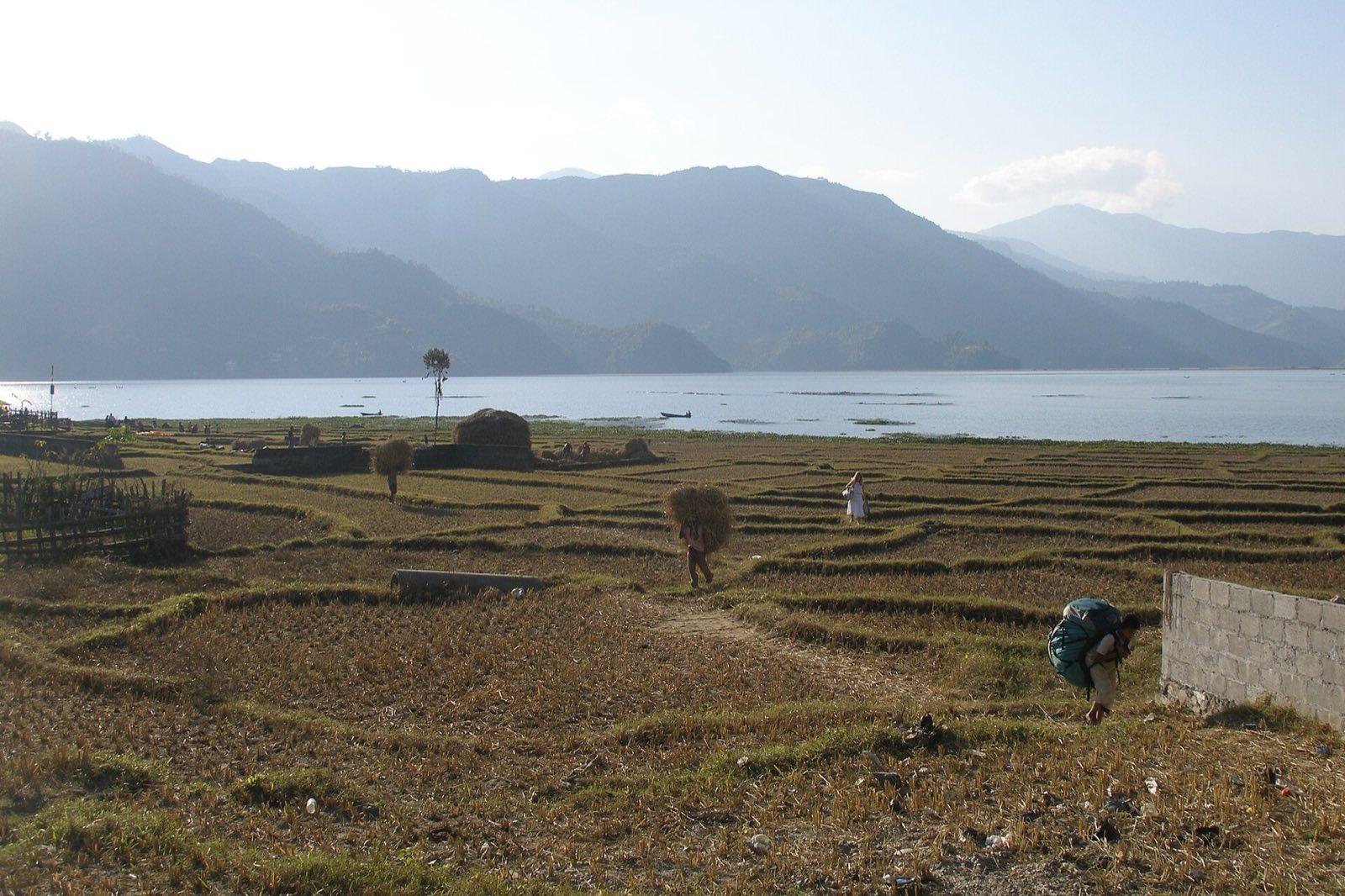
Fields on the shore of Phewa Lake, Pokhara, photographed in November 2007 Photo: Vyacheslav Argenberg, CC BY 4.0 (https://creativecommons.org/licenses/by/4.0/), via Wikimedia Commons, resized (https://commons.wikimedia.org/wiki/File:Pokhara,_Phewa_Lake,_Nepal.jpg) Day 4: Fly to Jomsom and walk in Marpha
Pokhara to Jomsom by air, then Marpha and back
- Drive about 30 min
- Breakfast, lunch and dinner
- Stay in Jomsom
Day 4 details
Jomsom flights leave early, before the wind rises in the Kali Gandaki valley, so we are at Pokhara airport soon after dawn. The flight lasts about 20 minutes and threads the gorge between Dhaulagiri and the Annapurna range; sit on the left for Dhaulagiri. Jomsom, at about 2,720 m, is the district headquarters of Mustang. After breakfast at the lodge we rest for an hour to let the altitude settle, then drive about 15 minutes down the valley to Marpha, a Thakali village of whitewashed stone houses, flat roofs stacked with firewood and narrow flagstone lanes. We walk up to its monastery above the village, through apple orchards, and have lunch in Marpha, where apple pie and dried apples are local specialities. The afternoon is free back in Jomsom. If cloud keeps the plane in Pokhara, we wait for a later morning slot or, if the road is open, drive north on the Beni road.
Included
- Flight from Pokhara to Jomsom
- Walk through Marpha village to its monastery and orchards
- Lunch in Marpha
- Dinner at the lodge
Optional experiences
- Apple brandy tasting at a Marpha distillery
Easier option: Stay in the lower village and its main lane rather than climbing the steps to the monastery.
More active option: Walk the riverside trail back from Marpha to Jomsom, about 6 km and 2 hours.
Free time: Afternoon free in Jomsom
Activity: First day above about 2,500 m: walk slowly, drink plenty of water and skip alcohol tonight.
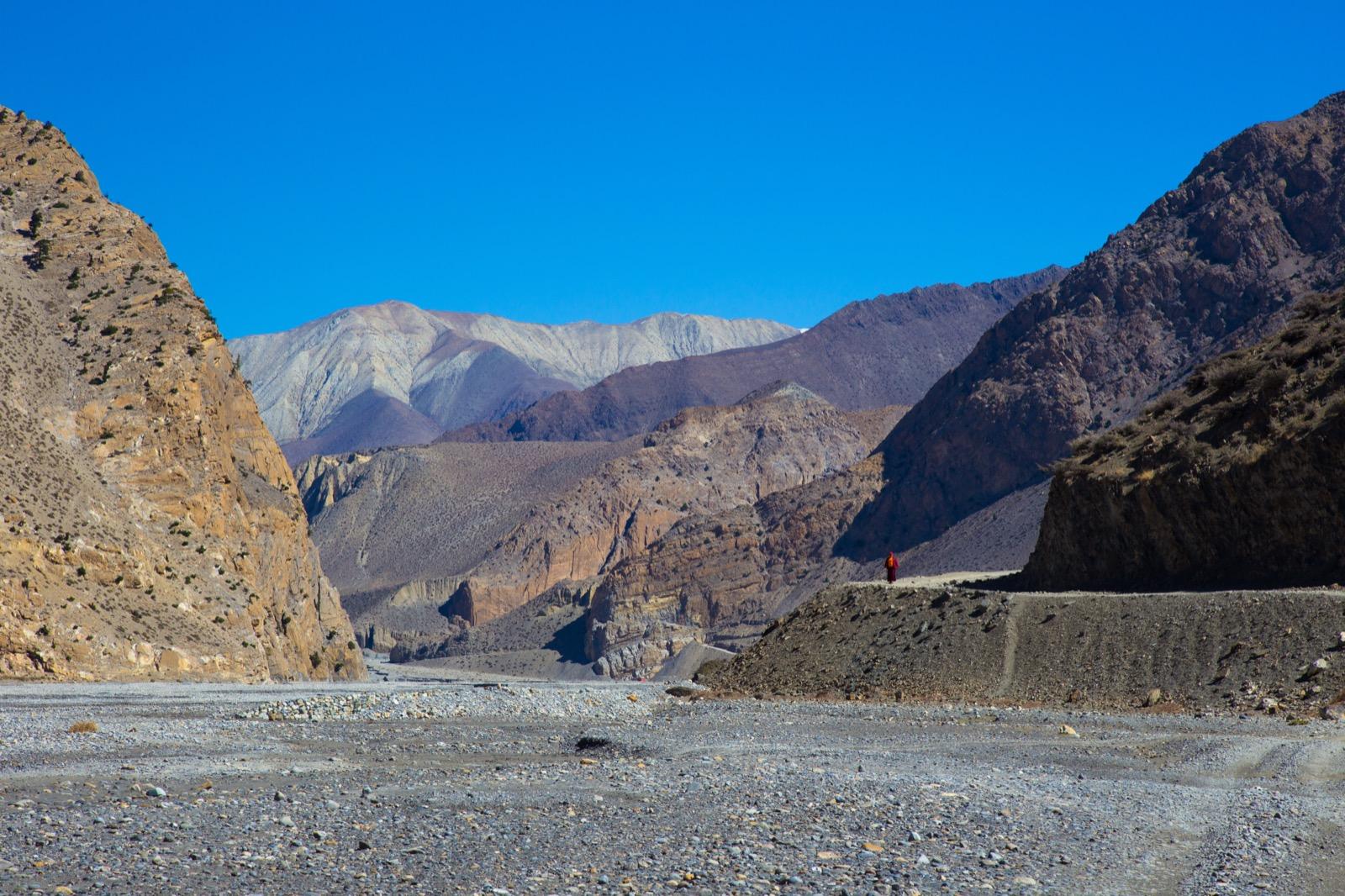
The Kali Gandaki river bed and gorge north of Jomsom, photographed in October 2014 Photo: Jean-Marie Hullot from France, CC BY 2.0 (https://creativecommons.org/licenses/by/2.0/), via Wikimedia Commons, resized (https://commons.wikimedia.org/wiki/File:The_Kali_Gandaki_Gorge_after_Jomsom_(15539300939).jpg) Day 5: Kagbeni and Muktinath
Jomsom to Kagbeni, then Muktinath and back
- Drive about 2.5 h
- Breakfast, lunch and dinner
- Stay in Kagbeni
Day 5 details
A short morning drive up the wide gravel bed of the Kali Gandaki brings us to Kagbeni, at about 2,810 m, where the river from Upper Mustang meets the Jhong Khola. The village is a knot of mud-brick houses, dark alleys and chortens around the red monastery of Kag Chode, with clay guardian figures at the edges of the village. We leave bags at the lodge and drive up to Muktinath, at about 3,700 m, a shrine sacred to both Hindus and Buddhists: a Vishnu temple with 108 water spouts and a Buddhist gompa where a small natural gas flame burns beside a spring. Going this high and coming back down to sleep lower is a common way to prepare for Lo Manthang. Lunch is in Muktinath. In the late afternoon we walk Kagbeni with the guide and visit Kag Chode. North of the village a sign marks the edge of the restricted area, where we enter tomorrow.
Included
- Drive from Jomsom to Kagbeni by 4x4
- Muktinath temple and gompa
- Lunch in Muktinath
- Kagbeni village walk and Kag Chode monastery
- Dinner at the lodge
Easier option: Skip the climb up the steps at Muktinath and rest in Kagbeni after lunch.
More active option: Walk from Jomsom to Kagbeni along the river in the morning, about 11 km and 3 hours, and join the jeeps there.
Free time: Evening free in Kagbeni
Activity: About 2 hours on foot in all; the Muktinath steps are slow going at 3,700 m.
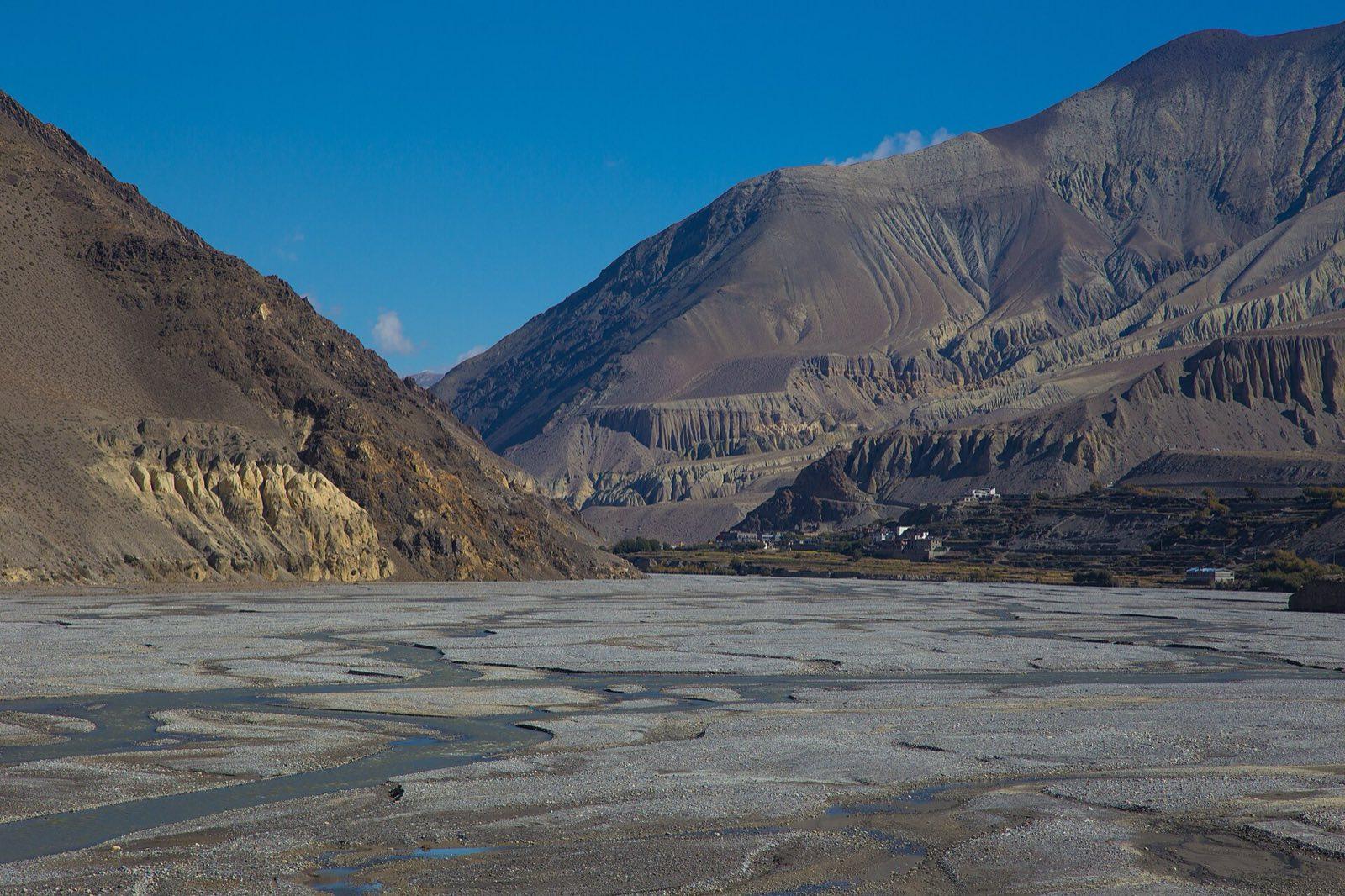
Kagbeni and the Kali Gandaki valley, the gateway to Upper Mustang, photographed in October 2014 Photo: Jean-Marie Hullot from France, CC BY 2.0 (https://creativecommons.org/licenses/by/2.0/), via Wikimedia Commons, resized (https://commons.wikimedia.org/wiki/File:Kagbeni,_the_door_to_Upper_Mustang_(15579500640).jpg) Day 6: Into Upper Mustang to Ghami
Kagbeni to Chele and Samar, then over the passes to Ghami
- Drive about 4 h
- Breakfast, lunch and dinner
- Stay in Ghami
Day 6 details
We show our permits at the checkpoint north of Kagbeni and enter Upper Mustang in 4x4 jeeps. The road follows the Kali Gandaki north past the cave-riddled cliffs of Chhusang, where you can see the openings of man-made caves high above the river, then climbs to Chele and Samar through a landscape of ochre, grey and red eroded rock. Lunch is at a lodge in Samar or Syangbochen. In the afternoon the road crosses passes of about 4,000 m, the highest point of the trip, with views back to the Annapurnas and Nilgiri on a clear day, before dropping to Ghami, at about 3,520 m. Allow roughly four hours, broken by short stops for photos and the lunch break; distance and time are to be confirmed at quoting. In the late afternoon walk along the long mani wall below the village, its stones carved with prayers, then rest. Tonight is the first night above about 3,500 m.
Included
- Upper Mustang permit check at Kagbeni
- Drive from Kagbeni to Ghami by 4x4 with photo stops at Chhusang and Chele
- Lunch at Samar or Syangbochen
- Walk along the Ghami mani wall
- Dinner at the lodge
Easier option: Stay at the lodge after arrival and see the mani wall from the village edge.
Free time: Late afternoon free in Ghami
Activity: A rough, dusty road with long drops on some sections; bring a buff and sunglasses. Tell the guide at once about any headache or breathlessness.
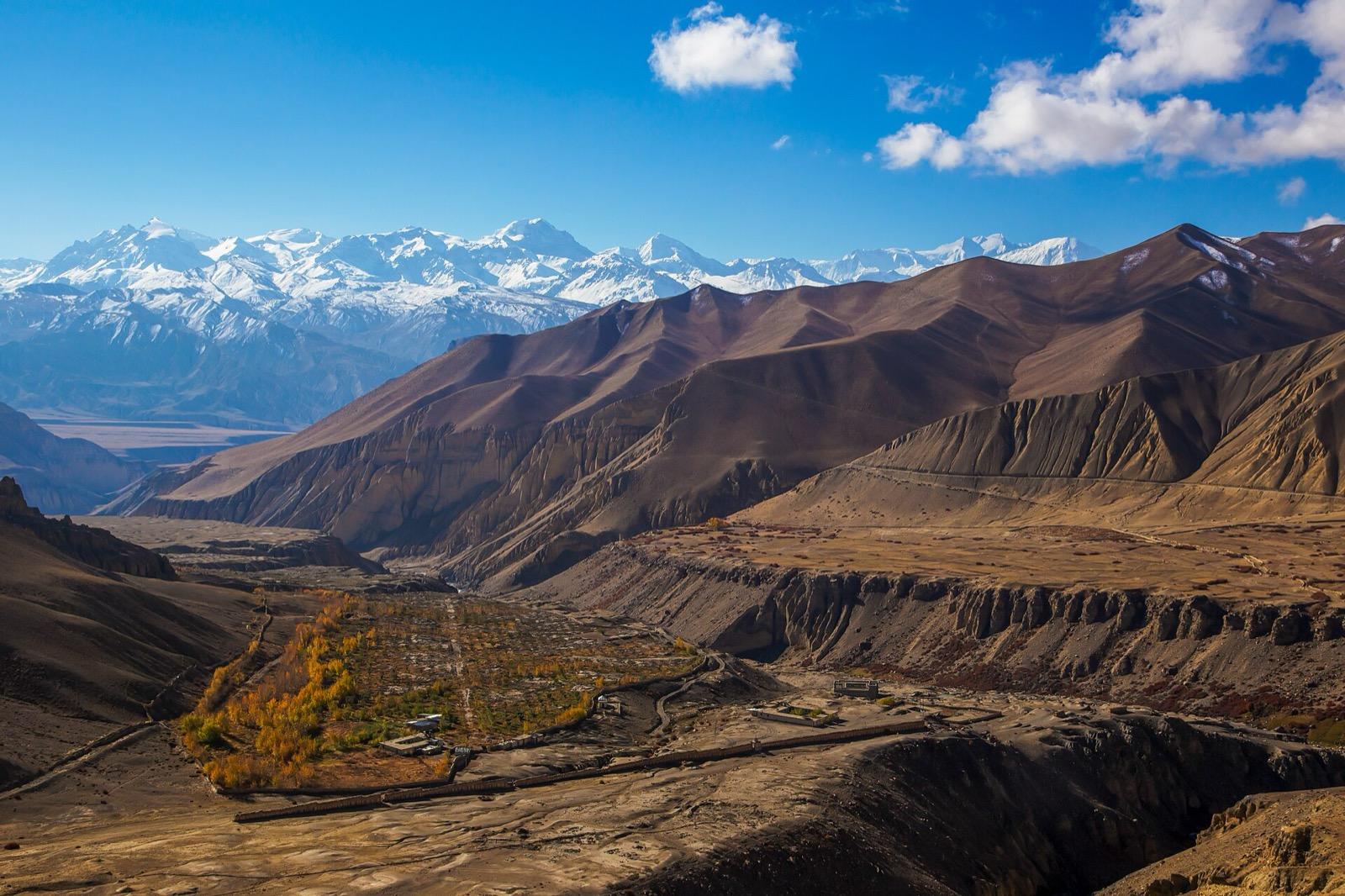
Ghami and its long mani wall, photographed in October 2014 Photo: Jmhullot, CC BY 3.0 (https://creativecommons.org/licenses/by/3.0/), via Wikimedia Commons, resized (https://commons.wikimedia.org/wiki/File:Mani_Wall_Ghami.jpg) Day 7: Ghar Gompa and into Lo Manthang
Ghami to Drakmar and Ghar Gompa, then to Lo Manthang
- Drive about 2 h
- Breakfast, lunch and dinner
- Stay in Lo Manthang
Day 7 details
A short drive, roughly two hours in all with the stops and to be confirmed at quoting, brings us to Drakmar, below a wall of red, fluted cliffs that local legend links to the defeat of a demon. From there the jeeps take a side road to Ghar Gompa, also called Lo Gekar, a small monastery that tradition says Padmasambhava founded in the 8th century; inside, the walls are lined with painted carved stones. We walk around it with the caretaker before driving on over a last pass of about 3,950 m. The road drops onto a wide plain and Lo Manthang appears: a walled town at about 3,800 m, the old capital of the kingdom of Lo, its whitewashed houses and red monasteries inside one earthen wall. We check in for three nights, have lunch at the lodge and spend the afternoon resting, then walk part of the way around the outside of the wall at sunset with the guide.
Included
- Drakmar and its red cliffs
- Ghar Gompa (Lo Gekar) with the caretaker
- Arrival in Lo Manthang for three nights
- Lunch and dinner at the lodge
- Sunset walk around the town wall
Easier option: Rest at the lodge through the afternoon and skip the sunset walk.
Free time: Afternoon free in Lo Manthang
Activity: Take the first afternoon slowly; altitude headaches often come on the first night at a new height.
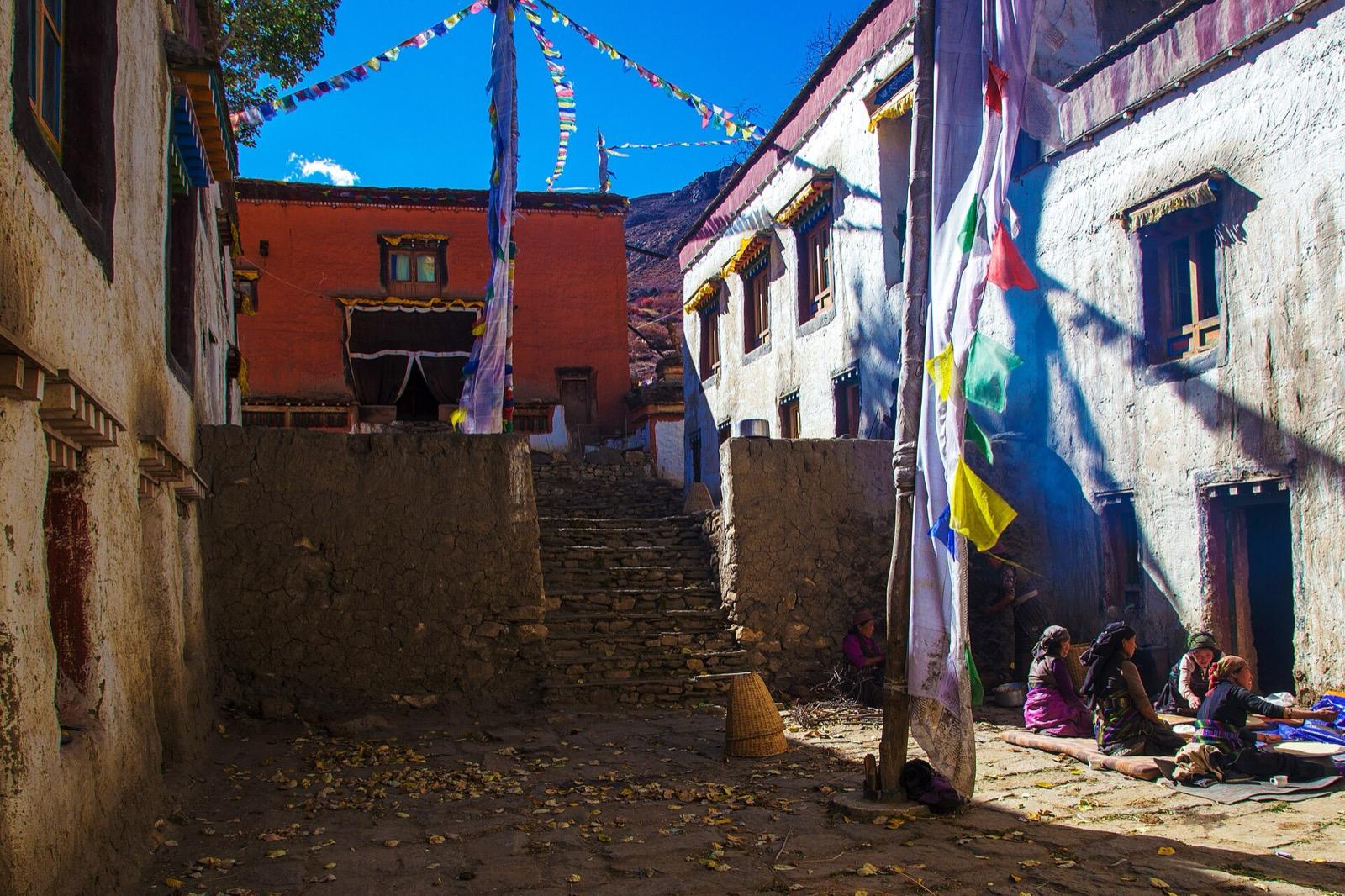
Ghar Gompa, photographed in October 2014 Photo: Jean-Marie Hullot from France, CC BY 2.0 (https://creativecommons.org/licenses/by/2.0/), via Wikimedia Commons, resized (https://commons.wikimedia.org/wiki/File:Ghar_Gompa_(16068644652).jpg) Day 8: The walled town of Lo Manthang
Lo Manthang on foot
- Breakfast, lunch and dinner
- Stay in Lo Manthang
Day 8 details
A day on foot inside the walls with our licensed local guide. Caretakers hold the monastery keys, and access is arranged on the day. We start in the morning at Jampa Lhakhang, the oldest of the town's temples, built in the 15th century around a large statue of Maitreya, the future Buddha, with mandala paintings on the walls. Next door is Thubchen, a tall red assembly hall of the same period with painted wooden pillars and murals. We then visit Chhoede Gompa, the active monastery, where novice monks study, and, reportedly, a small museum. Lunch is at the lodge. In the afternoon we see the outside of the royal palace, the tall building at the centre of town where the former kings of Lo lived, and an amchi school, which operators report teaches traditional Tibetan medicine. The rest of the afternoon is free.
Included
- Jampa Lhakhang, Thubchen and Chhoede Gompa with a licensed local guide
- Monastery entries and donations
- The royal palace from outside
- An amchi (Tibetan medicine) school
- Lunch and dinner at the lodge
Optional experiences
- Horse ride to Tingkhar village and Namgyal Gompa on the ridge west of town
Easier option: See Jampa Lhakhang and Thubchen in the morning and rest after lunch.
More active option: Walk up to Namgyal Gompa on its ridge in the afternoon, about 2 hours return, for a view over the walled town.
Free time: Afternoon free in Lo Manthang
Activity: About 2 to 3 hours on foot inside the walls, with steep wooden stairs in the monasteries. Bring a torch for the dark halls; photography inside is often not allowed.
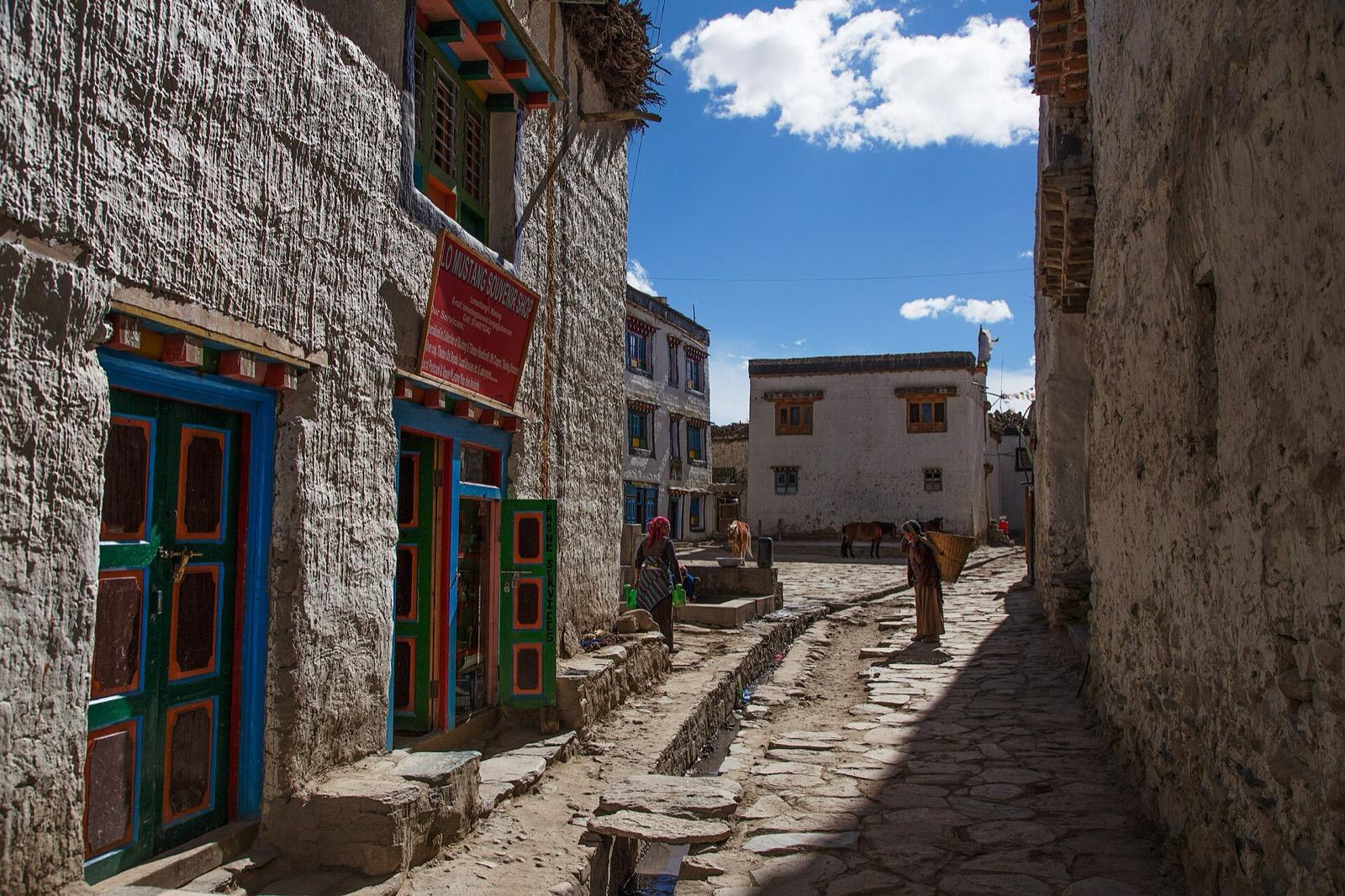
A lane inside the walls of Lo Manthang, photographed in October 2014 Photo: Jean-Marie Hullot from France, CC BY 2.0 (https://creativecommons.org/licenses/by/2.0/), via Wikimedia Commons, resized (https://commons.wikimedia.org/wiki/File:Inside_the_walled_city_of_Lo_Manthang_(15988238142).jpg) Day 9: The caves of Chhoser and Garphu
Lo Manthang to Chhoser and Garphu, then back
- Drive about 1.5 h
- Breakfast, lunch and dinner
- Stay in Lo Manthang
Day 9 details
After breakfast the jeeps take us north up the valley toward the Tibetan border to Chhoser, at about 3,600 m, where the soft cliffs are honeycombed with caves cut by people centuries ago. We climb into the Jhong cave, a cave dwelling of several storeys with dozens of small rooms linked by passages and notched ladders, where the views from the window openings run down the valley. Then we visit the Nyiphu monastery, built into the cliff face, and cross to the small Garphu monastery on the other side of the river. Lunch is a picnic or at a village house in Chhoser. We are back in Lo Manthang by mid-afternoon, with the rest of the day free to walk the lanes again, buy a carpet or a thangka, or sit on the lodge roof and watch the light change on the wall. This is the last evening in the town.
Included
- Drive to Chhoser by 4x4
- The Jhong cave dwelling
- Nyiphu and Garphu monasteries
- Lunch in Chhoser
- Dinner at the lodge
Easier option: Stay at the foot of the Jhong cave while the group climbs inside; the monasteries need only a short walk.
More active option: Walk back from Chhoser to Lo Manthang along the valley, about 9 km and 3 hours, with the jeep alongside.
Free time: Afternoon free in Lo Manthang
Activity: The cave has narrow passages, low ceilings and notched log ladders; skip it if you dislike heights or tight spaces.
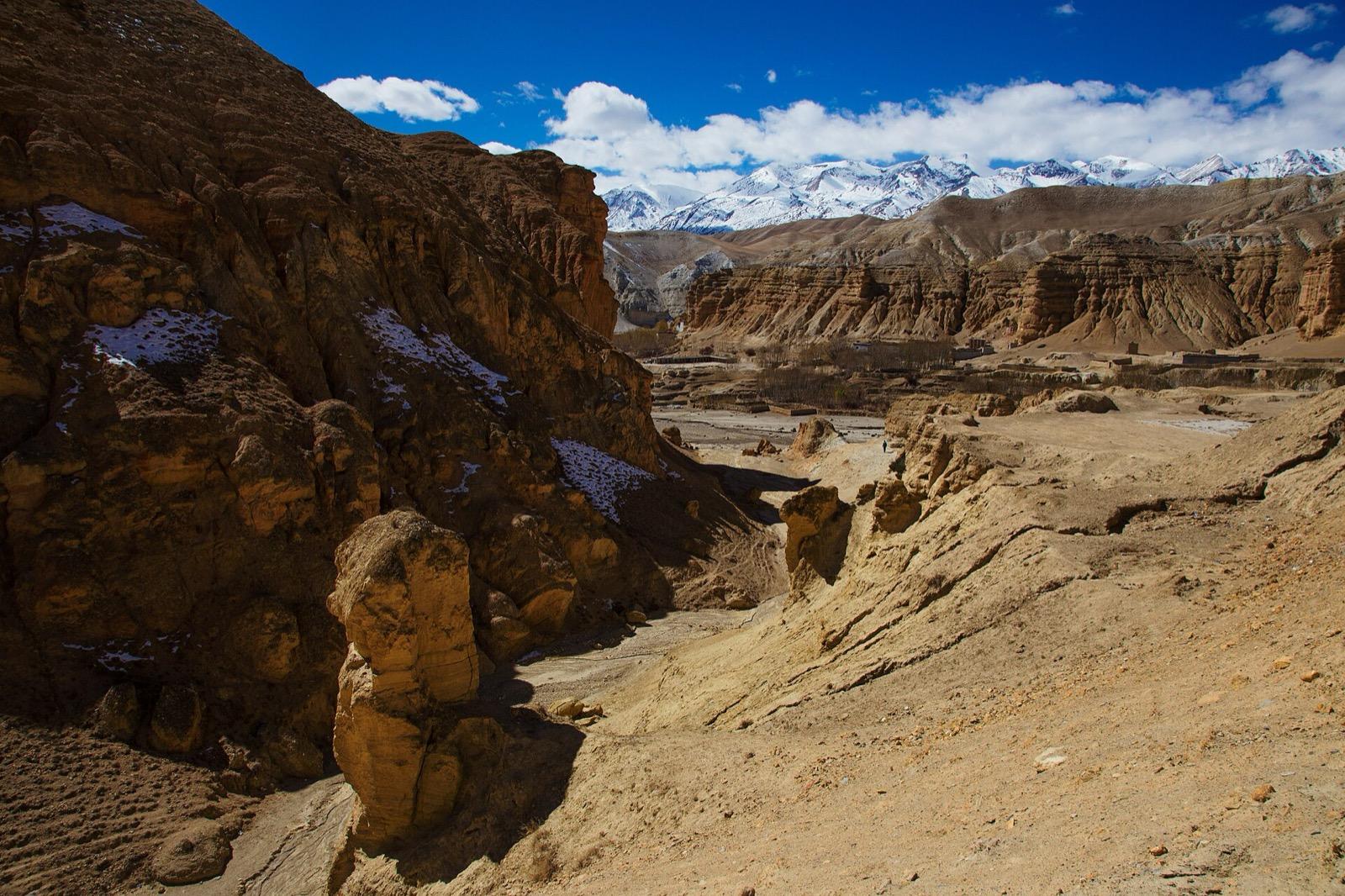
The view from Jhong Cave at Chhoser, photographed in October 2014; patches of snow on the cliffs Photo: Jean-Marie Hullot from France, CC BY 2.0 (https://creativecommons.org/licenses/by/2.0/), via Wikimedia Commons, resized (https://commons.wikimedia.org/wiki/File:View_from_Jhong_Cave_(16047157191).jpg) Day 10: Down to Tetang
Lo Manthang to Ghami and Chele, then to Tetang
- Drive about 4.5 h
- Breakfast, lunch and dinner
- Stay in Tetang
Day 10 details
Today is the long drive back south, a long day of about four and a half hours in the jeeps, to be confirmed at quoting. Splitting it would mean another night at altitude and another permit day, so we break it into two halves with lunch at a lodge in Ghami and a stop below the cliff caves at Chhusang. We leave Lo Manthang after breakfast, retrace the road over the passes with the light now behind us, and descend toward the Kali Gandaki. At Chhusang a side road crosses to Tetang, at about 3,040 m, a compact village where the houses are joined by covered passages and tunnels against the wind that blows up the valley every afternoon. After a cup of tea we walk through the village with the guide. Dropping about 800 m from Lo Manthang, many people sleep better tonight. Dinner is at the lodge.
Included
- Drive from Lo Manthang to Tetang by 4x4
- Lunch in Ghami
- Stop below the cliff caves at Chhusang
- Tetang village walk
- Dinner at the lodge
Free time: Late afternoon free in Tetang
Activity: A long, bumpy day; take something for motion sickness if you need it and ask for a seat in the middle of the jeep.
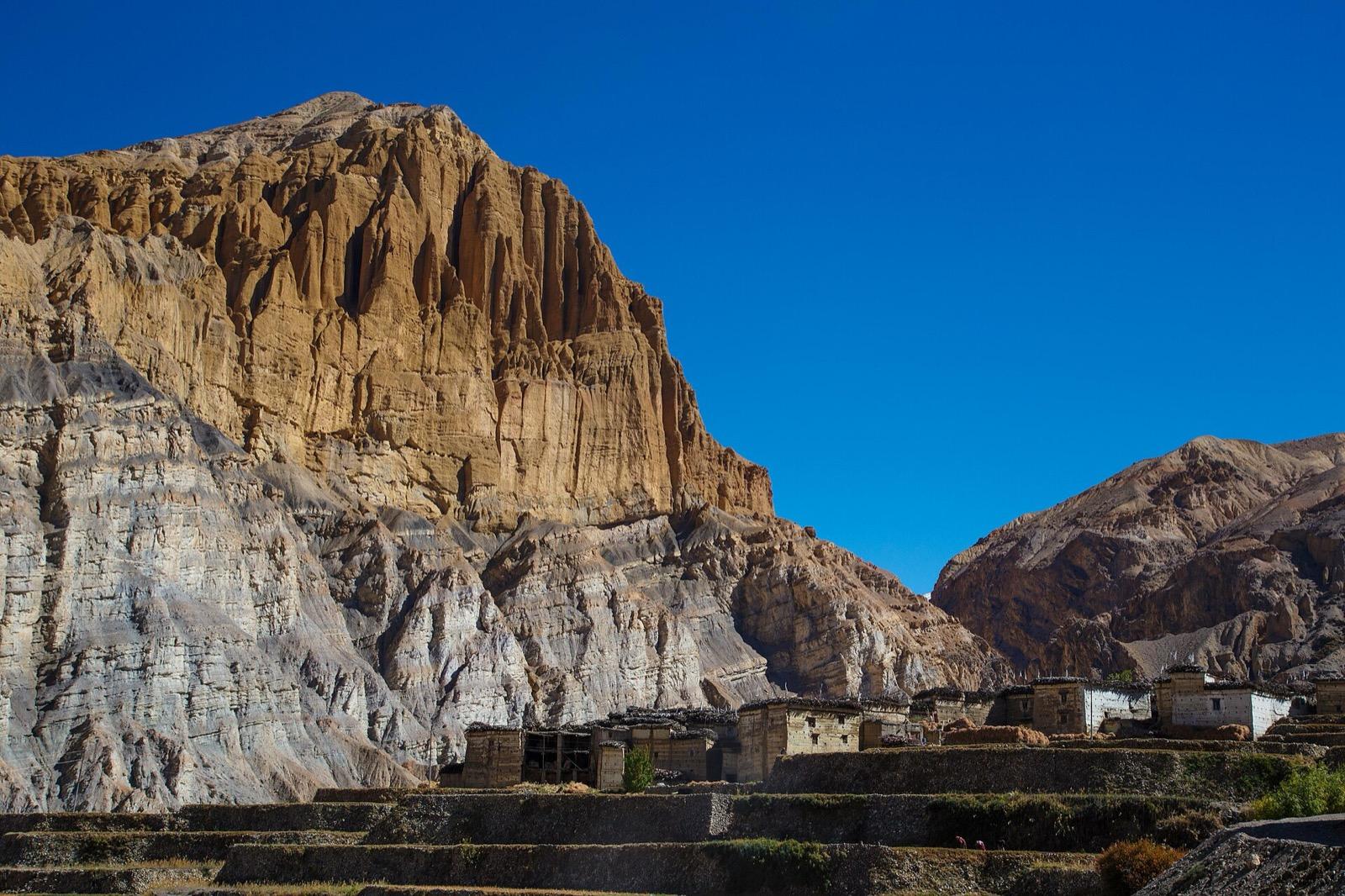
Tetang below its cliff, photographed in October 2014 Photo: Jmhullot, CC BY 3.0 (https://creativecommons.org/licenses/by/3.0/), via Wikimedia Commons, resized (https://commons.wikimedia.org/wiki/File:Tetang,_Mustang.jpg) Day 11: Fly out to Pokhara and Kathmandu
Tetang to Jomsom by 4x4, then by air to Pokhara and Kathmandu
- Drive about 1.5 h
- Breakfast and dinner
- Stay in Kathmandu
Day 11 details
An early start, the only one before 8 am on this trip: Jomsom flights leave in the morning before the wind rises, so we leave Tetang at about 6:30 am, pass Kagbeni and reach Jomsom in about an hour and a half. We hand in our permits at the checkpoint on the way. The flight to Pokhara takes about 20 minutes; we collect your stored bags, have some free time for lunch at Lakeside, and take an afternoon flight to Kathmandu. If wind or cloud ground the Jomsom planes, we would drive if the Beni road is open, which can be a very long day and was cut by flooding in autumn 2026, or wait for a later flight, and then fly Pokhara to Kathmandu on the morning of day 12; this is why we ask you to book your flight home for the evening of day 12 or later. On a normal day we are at a central Kathmandu hotel by late afternoon, and the group meets for a farewell dinner.
Included
- Drive from Tetang to Jomsom by 4x4
- Flights from Jomsom to Pokhara and from Pokhara to Kathmandu
- Airport transfers in Pokhara and Kathmandu
- Farewell dinner
Free time: Free time for lunch at Lakeside in Pokhara
Activity: If the weather changes the plan, your guide rebooks the flights and the Kathmandu hotel for you.
Day 12: Depart from Kathmandu
Your hotel to Tribhuvan International Airport
- Breakfast
Day 12 details
The trip ends after breakfast. This last day is also the buffer for the Jomsom flights, so book your international flight for the evening or later; if day 11 went to plan, the day is yours. A driver takes you to Tribhuvan International Airport, about 30 minutes in light traffic and longer at rush hour, timed to reach the airport three hours before an international flight. The hotel can usually hold your luggage after check-out. With a free morning, walk to Asan Tole, the old market crossroads where spice, brass and textile sellers trade from tiny shopfronts, or take the optional Everest scenic flight at dawn, weather permitting. Our overland trip between Lhasa and Kathmandu is a way to see more of the Tibetan world. Your guide says goodbye at the hotel.
Included
- Drop-off at Tribhuvan International Airport (KTM)
Optional experiences
- Everest scenic flight in the early morning
Free time: Morning free
Activity: Book your flight home for the evening of day 12 or later; allow three hours at the airport for international departures.
Wildlife and weather: May and June are dry and clear in Mustang, with strong afternoon wind; the Tiji festival in Lo Manthang follows the Tibetan lunar calendar and moves each year. From July to September Upper Mustang stays mostly dry in the rain shadow of the Annapurnas, but the flights and roads to its south are disrupted more often. September and October bring clear skies and harvest in the fields; nights at 3,800 m drop below freezing by late October.
11 nights
Where you'll stay
Your hotels are named in your trip confirmation.
- Kathmandu2 nights
- Pokhara1 night
- Jomsom1 night
- Kagbeni1 night
- Ghami1 night
- Lo Manthang3 nights
- Tetang1 night
- Kathmandu1 night
One price
What's in the price
Included
Accommodation
- 11 nights: 2 in central Kathmandu, 1 at Lakeside in Pokhara, 1 in Jomsom, 1 in Kagbeni, 1 in Ghami, 3 in Lo Manthang, 1 in Tetang, 1 more in central Kathmandu
- Central hotels in Kathmandu and Pokhara and simple teahouse lodges in Mustang, to be selected at quoting, with attached bathrooms where they exist
- Rooms shared, or your own for a supplement
Transport
- Pick-up and drop-off at Tribhuvan International Airport (KTM)
- Four domestic flights: Kathmandu to Pokhara, Pokhara to Jomsom, Jomsom to Pokhara and Pokhara to Kathmandu, with airport transfers
- 4x4 jeeps with local drivers from Jomsom to Lo Manthang and back
- A private vehicle and driver in Kathmandu
- The boat on Phewa Lake
- Overland transport to Pokhara if the Jomsom flights are grounded and the road is open and the road is open
Your guide
- A See Sight Tours guide for the whole trip
- A government-licensed local guide in Upper Mustang, as the restricted-area permit requires, and a local guide at Kathmandu Durbar Square
Activities
- Permits: the Upper Mustang restricted-area permit and the Annapurna Conservation Area permit, arranged through a registered agency; fees as published, passed through at cost in the quote
- Kathmandu: Swayambhunath, Kathmandu Durbar Square and Boudhanath
- Pokhara: Phewa Lake boat and Tal Barahi temple
- Marpha: village walk, monastery and orchards
- Kagbeni and Muktinath: Kag Chode monastery, Muktinath temple and gompa
- Ghami and Drakmar: the mani wall, the red cliffs and Ghar Gompa
- Lo Manthang: Jampa Lhakhang, Thubchen and Chhoede Gompa with entries and donations, the royal palace from outside, an amchi school
- Chhoser and Garphu: the Jhong cave, Nyiphu and Garphu monasteries
- Tetang: village walk
Meals
- Breakfast daily (11)
- Lunch on days 2 to 10 (9)
- Welcome and farewell dinners in Kathmandu and every dinner from Jomsom to Tetang (9)
Not included
- International flights to and from Kathmandu
- Nepal tourist visa (check current rules and fees)
- Travel insurance, which should cover altitudes up to 4,000 m and helicopter evacuation
- Meals not listed, including lunch on day 11
- Drinks, including bottled water and hot showers or charging where lodges charge for them
- Tips for drivers and local guides
- Optional activities: horse ride to Tingkhar, Marpha brandy tasting, paragliding and the Everest scenic flight
- Personal expenses
- Excess baggage on domestic flights
- Extra nights and permit days if weather extends the trip
Extras
- Room of your own
- Price on request

See Sight Tours has been providing travel services across North America since 2006. Operating in 20 cities across Canada and the USA, the company specializes in small group tours that offer personalized, high-quality experiences for travelers.


Book your Tour
Get in Touch
- Toll Free1-888-961-6584
- Local1-289-271-9767


© 2026 See Sight Tours. All rights reserved.