Printable itinerary
Nairobi to Zanzibar: the Masai Mara, the Serengeti and the coast by land
12 days · Nairobi to Zanzibar · up to 12 guests
From CAD 8,285 per person, sharing a room (estimated price. Estimated price. The itinerary, hotels and availability are proposed and subject to confirmation. Your quote will set out the booking conditions; sending a request does not confirm a booking.)
Day by day
Itinerary
- Nairobi1 night
- Masai Mara2 nights
- Arusha1 night
- Tarangire1 night
- Ngorongoro1 night
- Serengeti2 nights
- Stone Town1 night
- Nungwi2 nights
- Zanzibarend
- Overnight stop
- Day trip
- By boat or train
Day 1: Arrive in Nairobi
Jomo Kenyatta International Airport to your hotel in Nairobi
- Drive about 45 min
- Dinner
- Stay in Nairobi
Day 1 details
Land at Jomo Kenyatta International Airport (NBO), about 18 km south-east of central Nairobi. Our driver meets you in arrivals with your name on a board and takes you straight to the hotel, never to a shuttle stop or bus station; allow 45 minutes or more in rush-hour traffic. Kenya has no visa on arrival, so have your eTA approved before you fly. If you are in by lunchtime, the afternoon is free: the Nairobi National Museum or the Karen Blixen Museum are an easy taxi ride, and the hotel desk can arrange one. In the early evening your See Sight Tours guide meets the group for a briefing on the twelve days: why we start early in the parks, how the window seats rotate, the 15 kg soft-bag limit on the small planes, and the papers to keep in your day bag for the Namanga border on day 4. Then we sit down to a welcome dinner together. Repack into a soft bag tonight; tomorrow we fly.
Included
- Pick-up at Jomo Kenyatta International Airport (NBO)
- Welcome briefing with your guide
- Welcome dinner
Free time: Free until the evening briefing
Activity: Plan to land by about 3 pm to make the briefing. If your flight lands late, your guide catches you up at breakfast.
Day 2: Fly over the Rift Valley to the Masai Mara
Wilson Airport in Nairobi to an airstrip in the Masai Mara, then a game drive to camp
- Drive about 30 min
- Breakfast, lunch and dinner
- Stay in Masai Mara
Day 2 details
The Mara is about 270 km and five to six hours from Nairobi by road, more than our four-hour limit, so we fly in. After breakfast it is half an hour across town to Wilson Airport, Nairobi's small-plane airport, for a scheduled flight of 45 minutes to an hour, sometimes with a stop at another airstrip. Below you the land drops away into the Great Rift Valley, then rises to the rolling grass of the Mara. Our Kenyan driver-guides wait at the airstrip with the 4x4s: at most six guests in each, every seat a window, and a pop-up roof to stand under for photos. We game drive to camp, a permanent tented camp in or close to the reserve with proper beds and a private bathroom, for two nights. Lunch is at camp, then a rest through the heat. At about four we head out again as the light softens, looking for lions, elephants, topi and giraffe, and are back at dusk for dinner.
Included
- Flight from Wilson Airport, Nairobi, to the Masai Mara
- Game drive from the airstrip to camp
- Late-afternoon game drive in the Masai Mara National Reserve
- Masai Mara National Reserve fees
Easier option: Skip the late-afternoon drive and settle in at camp.
Free time: Early afternoon free at camp
Activity: Light-aircraft baggage limit of about 15 kg per person in a soft bag.
Day 3: A full day in the Mara and a Maasai village
Dawn-to-afternoon game drive in the Masai Mara National Reserve, then a Maasai village near camp
- Breakfast, lunch and dinner
- Stay in Masai Mara
Day 3 details
We roll out at about 6:30 am with coffee in a flask and breakfast packed, because the first hours are when the cats are moving and the light is low and gold. The Masai Mara is the Kenyan end of the Serengeti ecosystem, about 1,500 square kilometres of grassland cut by the Mara and Talek rivers. From about July the wildebeest and zebra herds are usually here, and a crossing of the Mara River is possible, though nobody can say when or where. The driver-guides share sightings by radio, and we wait at a crossing point only as long as the group wants. We picnic under an acacia and are back at camp by about two for a shower and a rest. At about half past four we drive a few minutes to a Maasai village, an enkang of homes inside a thorn fence, where your hosts show you their houses, explain cattle and family life and talk about school and land. The visit fee goes to the community; beadwork is for sale without pressure.
Included
- Dawn-to-afternoon game drive in the Masai Mara National Reserve
- Picnic lunch in the reserve
- Maasai village visit with a local host
- Sundowner at camp
Optional experiences
- Hot-air balloon flight at dawn with a bush breakfast. Booked in advance; you rejoin the group after breakfast.
Easier option: Return to camp at midday with one vehicle, when the group agrees, and skip the village.
More active option: Swap the village visit for a guided walk of about an hour and a half with a Maasai guide and an armed ranger on community land outside the reserve.
Free time: Mid-afternoon free at camp
Activity: A long morning in the vehicle on bumpy tracks. Bring a warm layer for the dawn start.
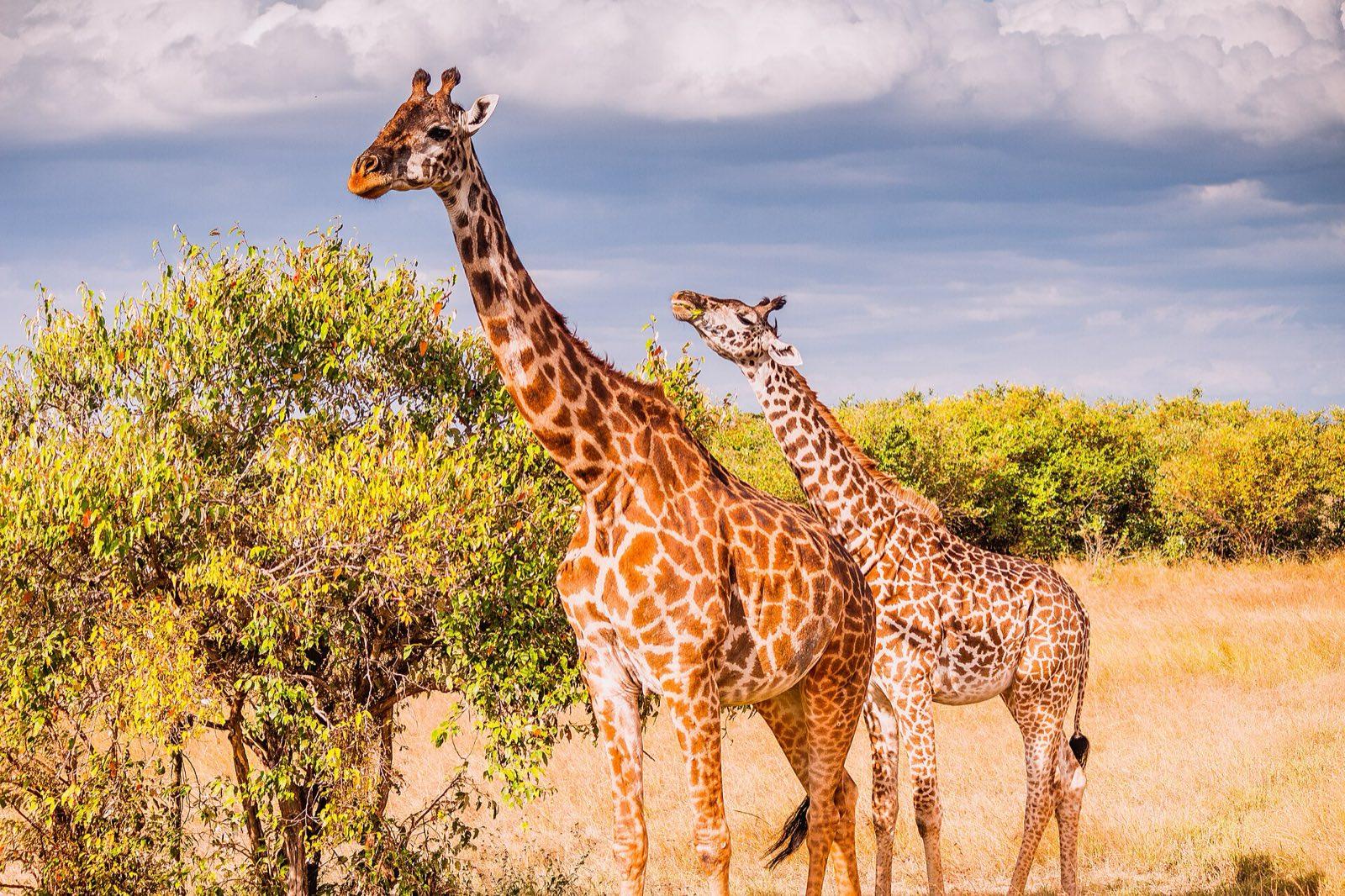
Masai giraffes in the Maasai Mara Photo: Ray in Manila, CC BY 2.0, via Wikimedia Commons (https://commons.wikimedia.org/wiki/File:Masai_Giraffe,_Maasai_Mara_(46364250252).jpg) Day 4: Back to Nairobi and over the Namanga border to Arusha
Masai Mara airstrip to Wilson Airport, then by road south through Kajiado and the Namanga border to Arusha
- Drive about 4.5 h
- Breakfast, lunch and dinner
- Stay in Arusha
Day 4 details
This is the land crossing that gives the trip its shape, and the one day over our four-hour driving limit, so here is why. The Mara and the Serengeti touch, but the crossing between them is closed to visitors; the other road border, Isebania, is about ten hours to the Serengeti. So we game drive to the airstrip, take the earliest flight we can book back to Wilson Airport, usually mid-morning, and sit down to lunch in Nairobi. Then it is about 165 km south through Athi River and Kajiado to Namanga, with a coffee stop on the way, roughly two and a half hours. Namanga is a one-stop border post: Kenyan exit and Tanzanian entry happen in one building, usually in about an hour, and your guide walks you through it with passport, e-visa and yellow fever certificate in hand. Our Tanzanian driver-guides meet us on the far side. The last 110 km, about two hours, run past Mount Meru into Arusha on the main tarmac highway, the only road we drive in Tanzania after dark. Expect to arrive in the early evening, around 7 pm and often after dark. Dinner at the hotel, then bed.
Included
- Game drive to the airstrip
- Flight from the Masai Mara to Wilson Airport, Nairobi
- Road transfer from Nairobi to Arusha by the Namanga border
- Help through Kenyan exit and Tanzanian entry at Namanga
Free time: Late evening free in Arusha
Activity: The long day: about 4.5 hours of road plus about an hour at the border, after a morning flight, broken by lunch in Nairobi and a coffee stop, arriving in Arusha around 7 pm, often after dark, on the main highway. Keep your passport, Tanzanian e-visa and yellow fever certificate in your day bag. Flight times are set when we book your dates.
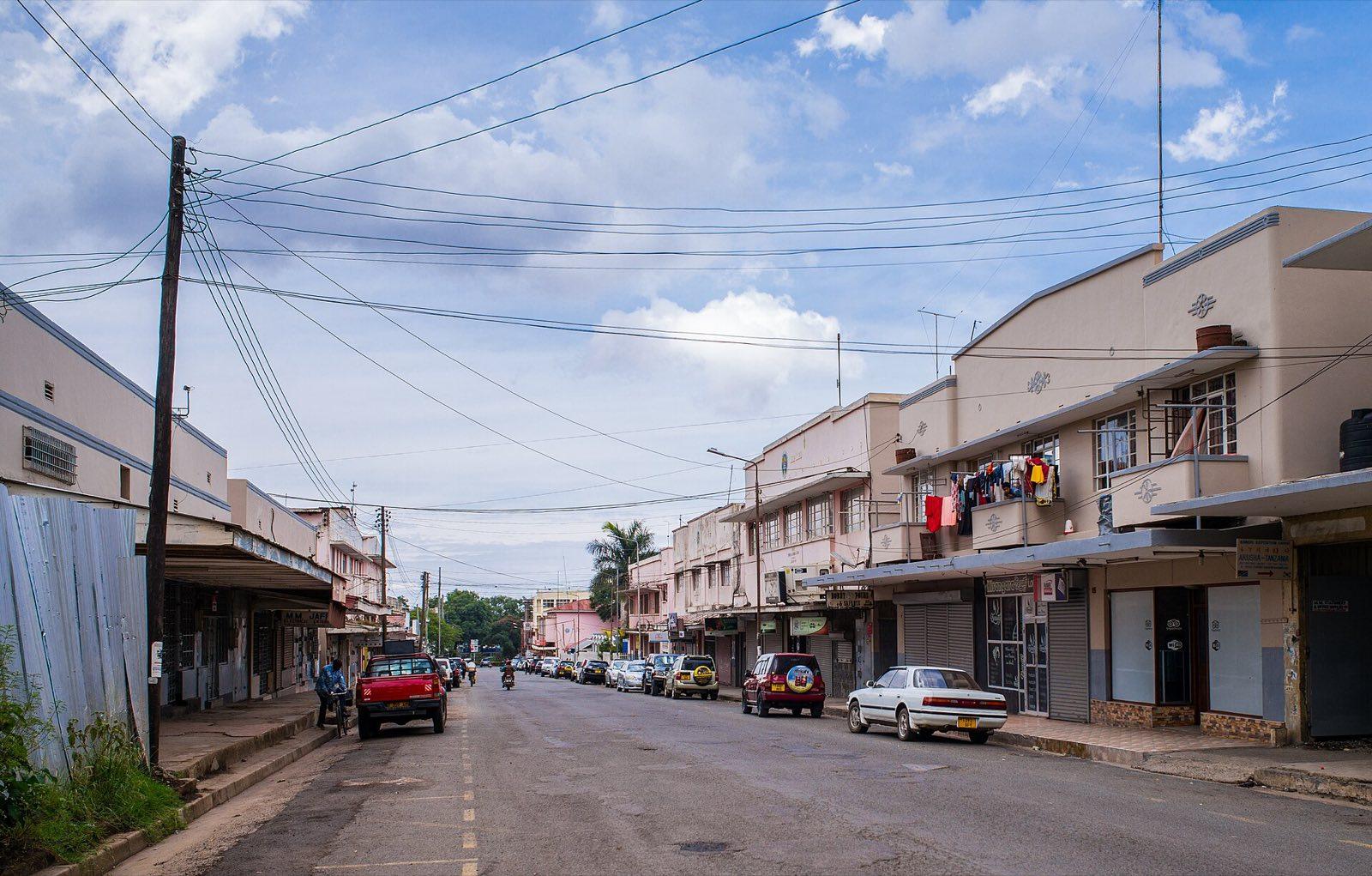
A street in central Arusha Photo: Roman Boed from The Netherlands, CC BY 2.0, via Wikimedia Commons (https://commons.wikimedia.org/wiki/File:Arusha,_Tanzania_(Explored)_-_Flickr_-_romanboed.jpg) Day 5: Tarangire, elephants on the river
Arusha to Tarangire National Park by Makuyuni, then an afternoon game drive
- Drive about 2 h
- Breakfast, lunch and dinner
- Stay in Tarangire
Day 5 details
A slow start after yesterday: breakfast at the hotel and away at about 8:30. It is roughly two hours west on good tarmac through Maasai grazing land to Makuyuni, then south to the gate of Tarangire National Park. In the dry months from June to October the Tarangire River is the only water for miles, so elephants come to it in large family herds, alongside zebra, wildebeest, giraffe and buffalo. The park is also known for its baobabs, swollen grey trunks that can be many centuries old, and for its birds. We game drive to our camp, inside the park or on its boundary, for lunch and a rest through the heat of the day. At about four we head out along the river, where the sandy banks are cut into low cliffs and the herds come down to drink in the late light. Lions and leopards live here too, though the long grass hides them well. Back at dusk for dinner. One night here is deliberate: it breaks the drive to the crater into two short days.
Included
- Game drive from the gate to camp
- Late-afternoon game drive along the Tarangire River
- Tarangire National Park fees
Easier option: Skip the late-afternoon drive and rest at camp.
Free time: Early afternoon free at camp
Day 6: Tarangire at dawn, up to the Ngorongoro rim
Dawn game drive in Tarangire, then via Mto wa Mbu and Karatu to the Ngorongoro Crater rim
- Drive about 4 h
- Breakfast, lunch and dinner
- Stay in Ngorongoro
Day 6 details
Out at about 6:30 am, when elephants are walking to the river and the low sun lights up the baobabs. Back at camp for a late breakfast and the bags, then we leave the park and drive north-west for about two hours to Mto wa Mbu, a market town at the foot of the Rift Valley wall, where banana groves and rice paddies are fed by springs from the escarpment. Lunch is local food in town. Then we climb the escarpment above Lake Manyara and cross the red-soil farmland around Karatu, where coffee and wheat grow. At the Lodoare gate we enter the Ngorongoro Conservation Area, a UNESCO World Heritage Site since 1979, and climb through cloud forest to the crater rim at about 2,300 metres, arriving in the late afternoon after about 190 km. We sleep one night on the rim so we can be at the descent gate when it opens. The air is cool up here, so have a warm layer ready for the view down into the crater as the sun goes.
Included
- Dawn game drive in Tarangire National Park
- Lunch in Mto wa Mbu
- Ngorongoro Conservation Area fees
Easier option: Sleep in and skip the dawn drive; we collect you for a late breakfast.
More active option: Walk the Mto wa Mbu market and the banana and rice fields with a local guide for an hour before lunch.
Free time: Evening free on the crater rim
Activity: About 3 hours of road, broken by lunch. The rim sits at about 2,300 m and is cold at night.
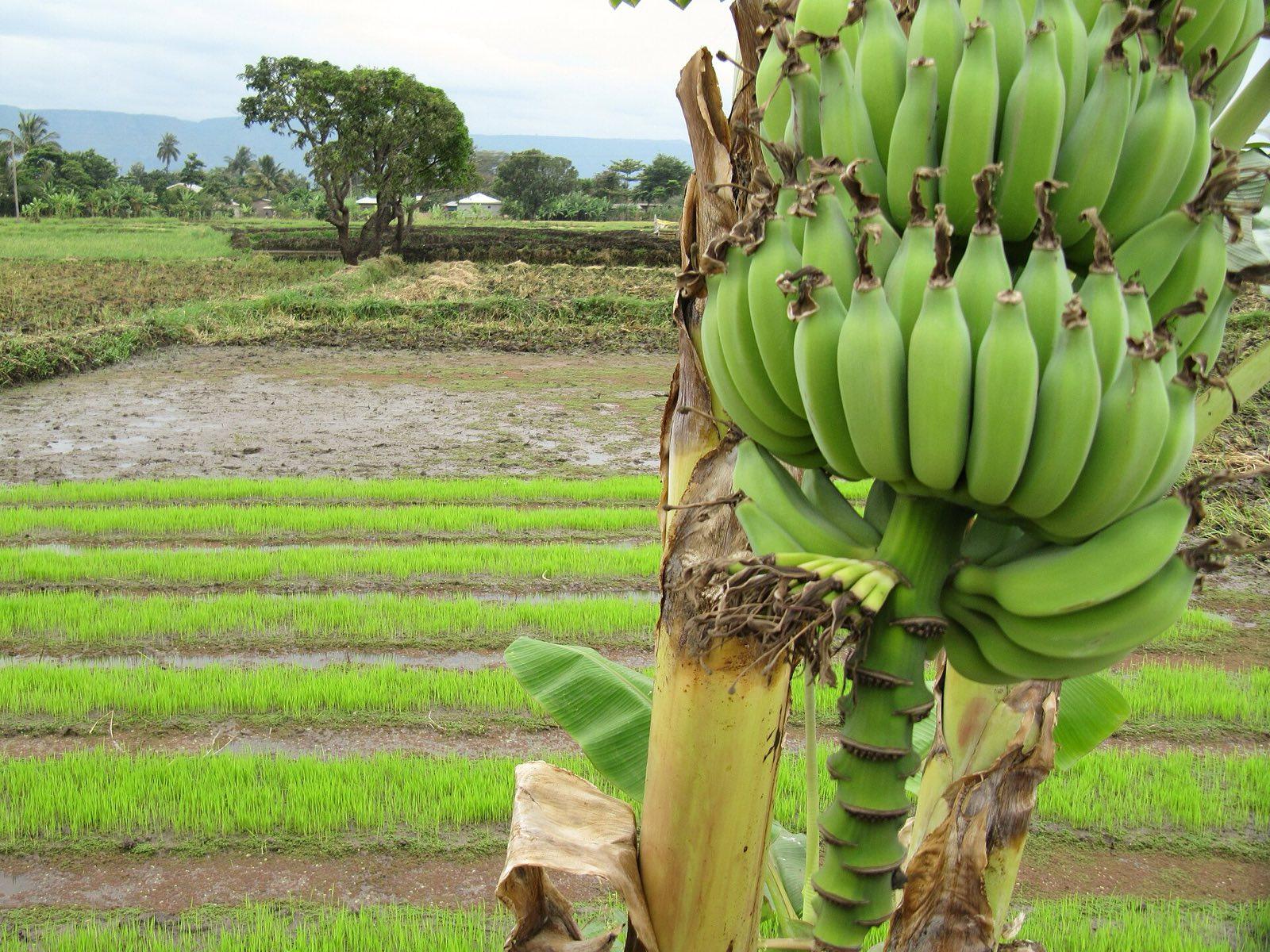
Banana plants and rice fields at Mto wa Mbu Photo: lecucurbitacee, CC BY 2.0, via Wikimedia Commons (https://commons.wikimedia.org/wiki/File:Pousse_de_riz_Mto_Wa_Mbu.jpg) Day 7: Ngorongoro Crater at gate opening, on to the Serengeti
Ngorongoro Crater floor, then Olduvai Gorge and Naabi Hill to Seronera in the central Serengeti
- Drive about 4 h
- Breakfast, lunch and dinner
- Stay in Serengeti
Day 7 details
This is the second-longest day: the crater from dawn, then about four hours of road, broken by Olduvai and lunch. We leave the lodge in the dark with breakfast packed and reach the descent road as the gate opens, around 6 am, so we drop to the floor through morning mist among the first vehicles. Ngorongoro is a collapsed volcano about 600 metres deep, its floor some 260 square kilometres of grass, swamp, forest and the soda lake Magadi. Lions, hyenas, buffalo, zebra and wildebeest live here all year, and it is the best chance on the trip of a black rhino, though they are few and often far off. We eat breakfast at a picnic site on the floor and climb out at about ten, as the vehicles build up. Then west to Olduvai Gorge, where a small museum tells how Mary Leakey found a hominin skull about 1.75 million years old in 1959. Picnic lunch there, then on to the Naabi Hill gate of the Serengeti and a game drive across the short-grass plains to camp near Seronera, our base for two nights.
Included
- Ngorongoro Crater game drive from gate opening, with the crater fee
- Picnic breakfast on the crater floor
- Olduvai Gorge museum
- Game drive from Naabi Hill to camp
- Serengeti National Park fees
Activity: About 4 hours from the rim to Seronera on rough roads, broken by Olduvai and lunch, with the last part a game drive. Cold at dawn on the rim: bring a warm layer and a hat.
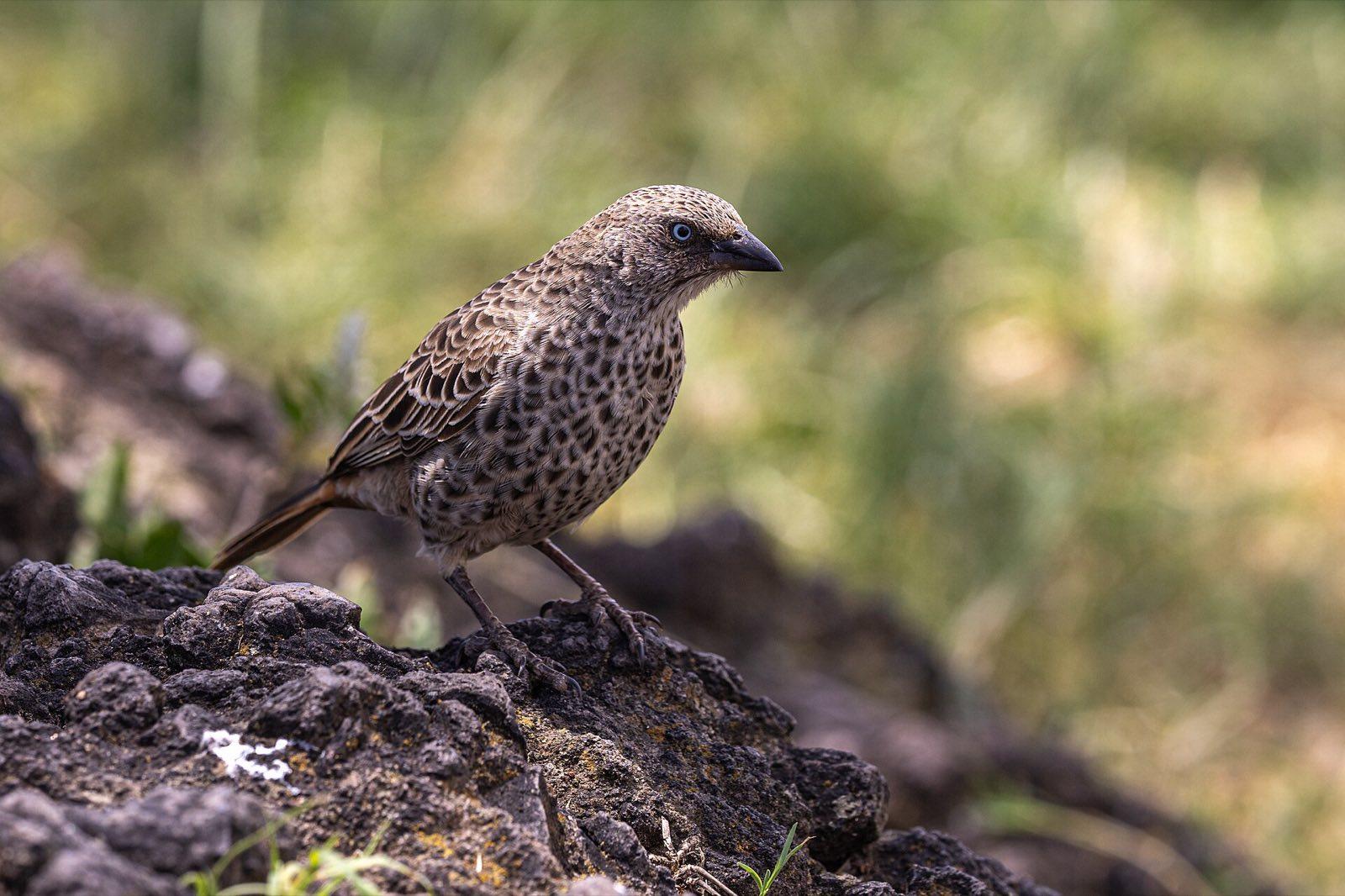
A rufous-tailed weaver, a bird seen in Ngorongoro Crater Photo: Hobbyfotowiki, CC0, via Wikimedia Commons (https://commons.wikimedia.org/wiki/File:Rufous-tailed_weaver_(Histurgops_ruficauda),_Ngorongoro_Crater,_Tanzania.jpg) Day 8: A full day in the Serengeti
Dawn and full-day game drives in the Serengeti, planned around the herds
- Breakfast, lunch and dinner
- Stay in Serengeti
Day 8 details
Out before sunrise, which near the equator comes at about half past six all year, with coffee in a flask and breakfast packed. The Serengeti covers about 14,750 square kilometres and has been a UNESCO World Heritage Site since 1981. Around Seronera the river holds water and shade through the dry season, so the area keeps resident game: lions on the granite outcrops called kopjes, leopards draped in sausage trees, cheetahs on the open grass. From July to October most of the wildebeest and zebra are in the far north and across the border in the Mara, so the driver-guides read the radio and the day and decide whether to stay central for the predators or head north towards stragglers. In June the herds can still be moving through the western and central areas. We picnic in the bush, stop at a hippo pool, and take time at good sightings instead of racing between them. A sundowner on the way back closes the last full day of the safari.
Included
- Dawn game drive with packed breakfast
- Full-day game drive with picnic lunch
- Hippo pool stop
- Sundowner on the evening drive
Optional experiences
- Hot-air balloon flight at dawn with a bush breakfast. Approximate; booked in advance.
Easier option: Return to camp at midday with one vehicle, when the group agrees, and rest through the afternoon.
Free time: Midday rest at camp for those who return early
Activity: A long day in the vehicle on rough tracks.
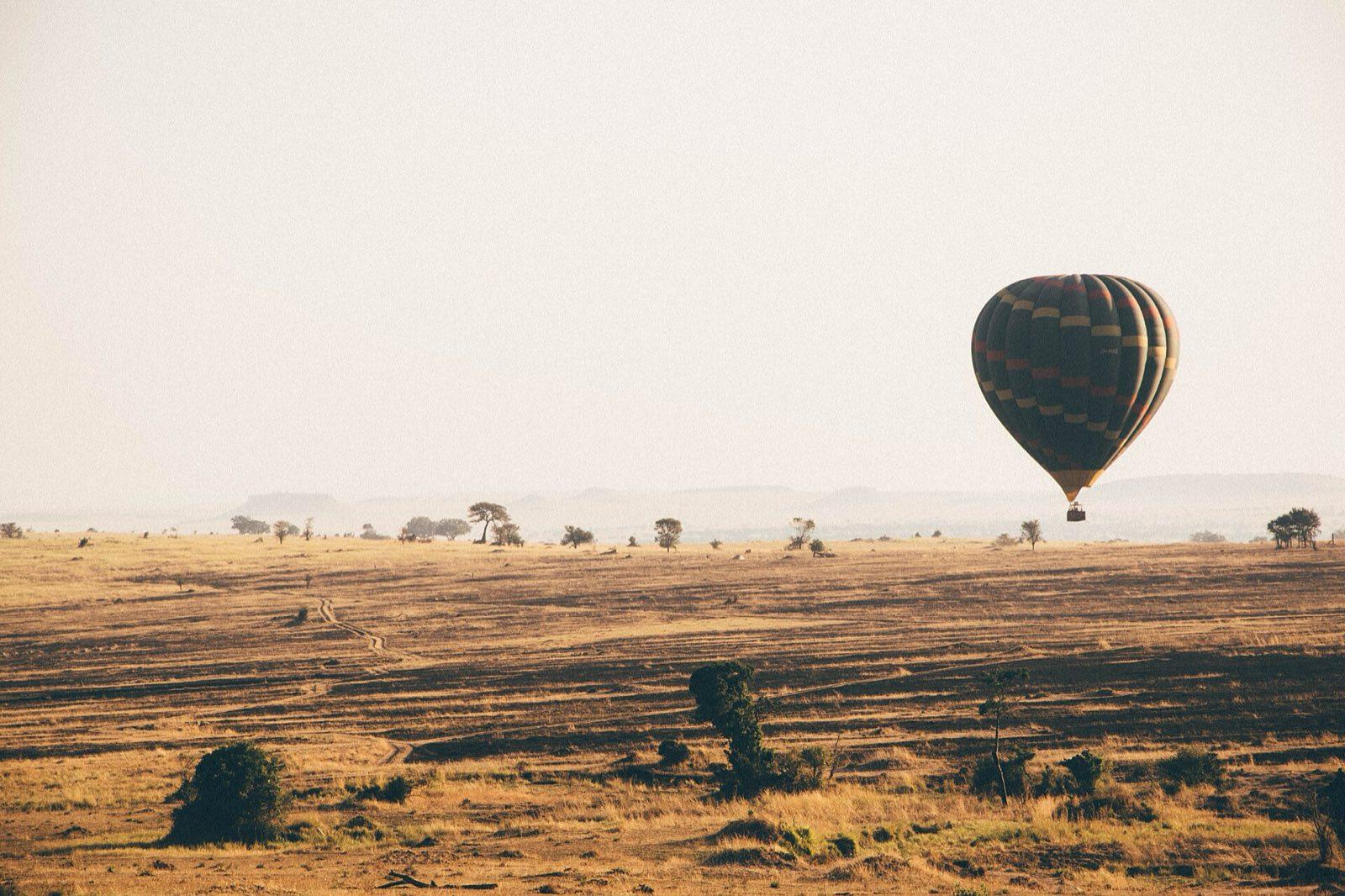
Optional extra: a dawn balloon over the Serengeti plains Photo: Ryan Al Bishri rybkstudio, CC0, via Wikimedia Commons (https://commons.wikimedia.org/wiki/File:Serengeti,_Tanzania_(Unsplash_HZrraBFLS20).jpg) Day 9: Serengeti sunrise, then fly to Zanzibar
Dawn game drive in the Serengeti, flight from Seronera to Zanzibar with a stop, then Stone Town
- Drive about 18 min
- Breakfast and lunch
- Stay in Stone Town
Day 9 details
Where the overland trucks spend two or three days driving to Dar es Salaam and taking the ferry, we fly. One last drive at first light, then breakfast and the bags into the 4x4s, and a game drive to the Seronera airstrip for a late-morning scheduled light-aircraft flight to Zanzibar. It usually stops at Arusha or Lake Manyara on the way and takes about three hours in all, with a packed lunch in hand. Say goodbye to the Tanzanian driver-guides at the airstrip; your See Sight Tours guide flies on with you. The plains give way to the Rift Valley and then the green coast and the pale blue of the Zanzibar Channel. Our van meets us at Zanzibar's airport, a short drive from Stone Town, the old trading town on the island's west coast and a UNESCO World Heritage Site since 2000. We check into a hotel inside the old town in the middle of the afternoon. The evening is free: walk to the Forodhani Gardens, where stalls grill seafood at sunset.
Included
- Dawn game drive in the Serengeti
- Flight from Seronera to Zanzibar
- Transfer from Zanzibar airport to Stone Town
Easier option: Skip the dawn drive and have breakfast at camp before the airstrip.
Free time: Evening free in Stone Town
Activity: A travel day of about 6 hours from camp to Stone Town. Baggage limit about 15 kg in a soft bag. Dinner tonight is your own, at the Forodhani stalls or a rooftop restaurant. Small-plane schedules can change. If the Zanzibar flight is moved or rerouted, we rearrange the day around it and keep the Stone Town night; the flight stop and times are confirmed with your dates.
Day 10: Stone Town on foot, a spice farm and the north coast
Stone Town walk, a spice farm in the island's interior, then north to Nungwi or Kendwa
- Drive about 1.5 h
- Breakfast and lunch
- Stay in Nungwi
Day 10 details
We start walking at 8:30, before the heat and the day-trip groups. A local guide leads us through Stone Town's narrow lanes: the carved wooden doors with brass studs, the Old Fort on the seafront, the crowded Darajani market, and the Anglican cathedral built on the site of the last open slave market in East Africa, with a memorial and an underground chamber that stay with you. About two and a half hours on foot, with a coffee stop. Then we drive out to a spice farm in the green interior, where the farmer cuts open a nutmeg, peels cinnamon bark and shows how cloves, vanilla and pepper grow, and lunch is cooked with what we have just seen. In the afternoon it is about an hour north to Nungwi or Kendwa, where the tide moves far less than on the east coast and the sea is swimmable most of the day. Check in to the beach hotel for two nights; the evening is yours on the sand.
Included
- Guided Stone Town walk with a local guide
- Spice farm visit with lunch
- Transfer to the north coast
Easier option: Take the short version of the Stone Town walk, about an hour, and wait at a seafront cafe.
Free time: Evening free on the beach. The spice farm is optional: skip it and go straight to the north coast after the walk for a free afternoon.
Activity: About two and a half hours on foot on uneven lanes in the heat. Cover shoulders and knees in Stone Town and the villages.
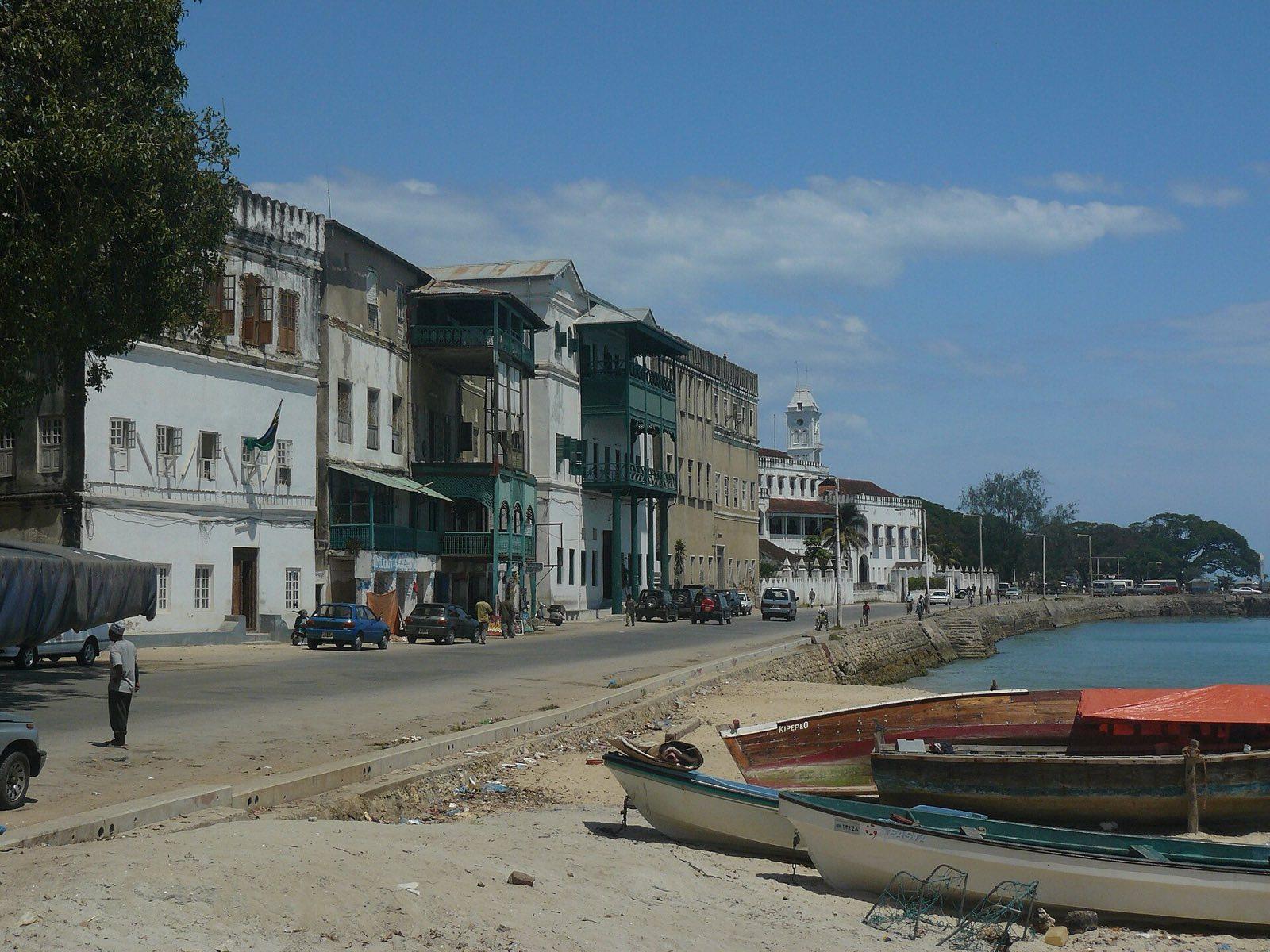
The Stone Town seafront Photo: Freestylerob, Public domain, via Wikimedia Commons (https://commons.wikimedia.org/wiki/File:StonetownF.JPG) Day 11: A free day on Zanzibar's north coast
Free day at Nungwi or Kendwa
- Breakfast and dinner
- Stay in Nungwi
Day 11 details
No alarm. After ten days of dawn starts and long drives, this day is yours and nothing is planned until the farewell dinner. Swim, read in the shade, or walk the beach towards Nungwi village, where dhow builders still shape wooden boats by hand on the sand. If you want more, your guide can book a boat out to the reef around Mnemba Island to snorkel among reef fish and often dolphins, or a sunset sail in a traditional dhow along the coast. Both are optional, priced up front and booked only if you ask, never sold in the vehicle. The north coast faces west, so the sun goes down over the sea, and in the evening the group gathers on the beach for a farewell dinner of seafood and Swahili dishes, swapping stories from the Mara, the border, the crater and the reef. Bring reef-safe sunscreen, and keep swimwear to the beach out of respect for the villages along the shore.
Included
- Farewell dinner on the beach
Optional experiences
- Snorkelling trip to the reef at Mnemba Island. Booked the day before.
- Sunset dhow sail along the north coast. Booked the day before.
More active option: Snorkel the Mnemba reef in the morning.
Free time: Free all day
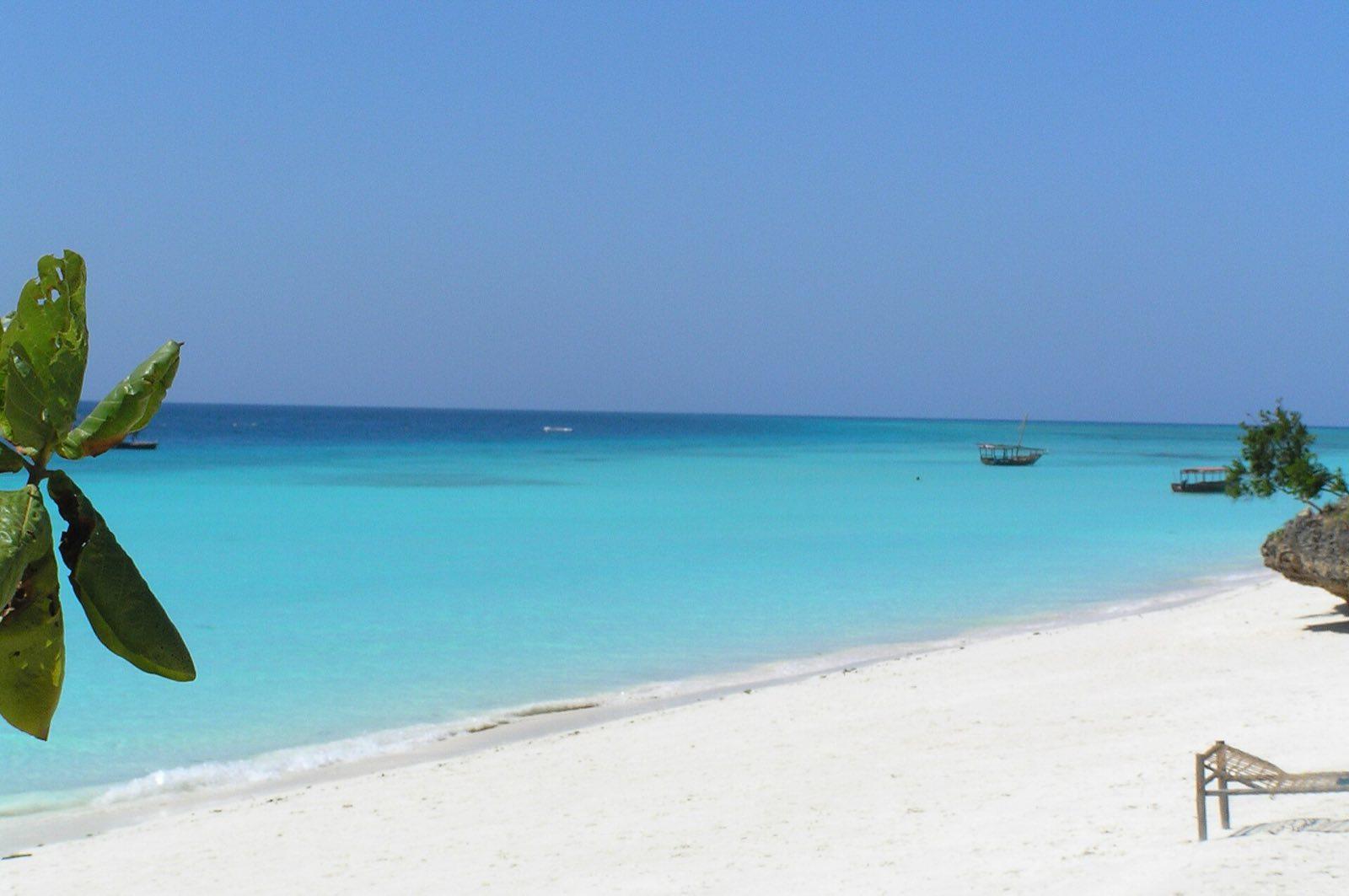
The beach at Nungwi Photo: Jang Woo Lee, CC BY 3.0, via Wikimedia Commons (https://commons.wikimedia.org/wiki/File:Nungwi,Zanzibar_-_panoramio.jpg) Day 12: Leave from Zanzibar
Nungwi or Kendwa to Abeid Amani Karume International Airport (ZNZ)
- Drive about 1.5 h
- Breakfast
Day 12 details
A slow morning: breakfast facing the sea and a last swim if you like. We time your transfer to your flight. Abeid Amani Karume International Airport (ZNZ) is about 65 km south of the north coast, roughly an hour and a half by road through villages and plantations, so we usually leave three hours or more before an international departure. Your guide sees the group off and checks each flight before saying goodbye, so nobody is left at a roadside or a bus stand. Zanzibar has direct flights to the Gulf, to some European cities on certain days, and to Nairobi, Dar es Salaam and Addis Ababa, which connect onward to Canada and the United States; plan on at least one change. Book a flight after about 1 pm if you want the morning on the beach; any time works, and the transfer is included whenever you go. If you would like to stay on, we can book extra beach nights at the same hotel.
Included
- Drop-off at Abeid Amani Karume International Airport (ZNZ)
Free time: Morning free on the beach
Activity: Book a flight leaving after about 1 pm to keep the morning free.
Wildlife and weather: We run only from June to October, the dry season. Days are warm and sunny, nights and dawns cool, and cold on the Ngorongoro rim. Grass is short and animals gather near water, which makes them easier to find. From about July the wildebeest and zebra herds are usually in the Masai Mara and the northern Serengeti, and Mara River crossings are possible, though never on a schedule. Tarangire is at its best now, with elephants on the river. Zanzibar is dry and less humid than at other times of year.
11 nights
Where you'll stay
Your hotels are named in your trip confirmation.
- Nairobi1 night
- Masai Mara2 nights
- Arusha1 night
- Tarangire1 night
- Ngorongoro1 night
- Serengeti2 nights
- Stone Town1 night
- Nungwi2 nights
One price
What's in the price
Included
Accommodation
- 11 nights: 1 in Nairobi, 2 at a permanent tented camp in or near the Masai Mara, 1 in Arusha, 1 in or beside Tarangire, 1 on or near the Ngorongoro Crater rim, 2 at a camp near Seronera in the Serengeti, 1 in Stone Town's old town, 2 at a beach hotel on the sand at Nungwi or Kendwa
- Lodges and permanent tented camps with proper beds and private bathrooms in the parks, no camping; hotels of at least a 3-star-plus standard in Nairobi, Arusha, Stone Town and on the beach, named when we confirm your dates
- Rooms shared, or your own for a supplement
Transport
- Pick-up at Jomo Kenyatta International Airport (NBO) on day 1
- Drop-off at Abeid Amani Karume International Airport (ZNZ) on day 12
- Light-aircraft flights from Wilson Airport, Nairobi, to the Masai Mara and back
- Road transfer from Nairobi to Arusha across the Namanga border
- Light-aircraft flight from Seronera in the Serengeti to Zanzibar
- 4x4 Land Cruisers with a pop-up roof and a driver-guide, at most 6 guests per vehicle, in Kenya and in Tanzania
- A private van with driver on Zanzibar
- Bottled or filtered water in the vehicles
Your guide
- A See Sight Tours guide with the group for the whole trip, including every flight, the border and the Zanzibar days
- Licensed Kenyan and Tanzanian driver-guides in every 4x4
- A Maasai host at the village visit, a local guide in Stone Town and the farmer at the spice farm
Activities
- Masai Mara: an afternoon game drive on arrival, a dawn-to-afternoon game drive with a picnic lunch, and the drive back to the airstrip
- Masai Mara: a Maasai village visit, with the fee paid to the community
- Tarangire: an afternoon drive along the river and a dawn drive
- Ngorongoro Crater game drive from gate opening
- Olduvai Gorge museum
- Serengeti: the game drive in from Naabi Hill, a full day and a final dawn drive
- Stone Town: a guided walking tour of the old town
- Zanzibar: a spice farm visit with lunch
- All park, reserve and conservation fees, including the Masai Mara reserve fee and the Ngorongoro crater fee
- A tipping pool for driver-guides, camp and lodge staff and local guides
Meals
- Breakfast daily (11)
- 9 lunches, days 2 to 10, with picnics on full game-drive days
- 9 dinners: a welcome dinner in Nairobi, all dinners from day 2 to day 8 and a farewell dinner on the beach
Not included
- International flights to Nairobi and from Zanzibar
- Kenya eTA and Tanzanian e-visa fees
- Zanzibar's inbound insurance (about USD 44) and any mainland Tanzania visitor insurance
- Yellow fever vaccination and malaria tablets
- Travel insurance
- Lunch on days 1, 11 and 12; dinner on days 9, 10 and 12
- Drinks, except water in the vehicles
- Tips for your See Sight Tours guide
- Optional balloon flights, snorkelling and dhow trips
- Laundry and personal expenses
- Excess baggage on the light-aircraft flights
Extras
- Room of your own
- CAD 1,410 (estimated price)

See Sight Tours has been providing travel services across North America since 2006. Operating in 20 cities across Canada and the USA, the company specializes in small group tours that offer personalized, high-quality experiences for travelers.


Book your Tour
Get in Touch
- Toll Free1-888-961-6584
- Local1-289-271-9767


© 2026 See Sight Tours. All rights reserved.