Printable itinerary
Tanzania: Kilimanjaro by the Machame Route and the Serengeti
13 days · Moshi to Arusha · up to 12 guests
From CAD 7,995 per person, sharing a room (estimated price. Estimated price. The itinerary, hotels and availability are proposed and subject to confirmation. Your quote will set out the booking conditions; sending a request does not confirm a booking.)
Day by day
Itinerary
- Moshi1 night
- Machame Camp1 night
- Shira Camp1 night
- Barranco Camp1 night
- Karanga Camp1 night
- Barafu Camp1 night
- Mweka Camp1 night
- Moshi1 night
- Tarangire1 night
- Serengeti2 nights
- Ngorongoro1 night
- Arushaend
- Overnight stop
- Day trip
- By boat or train
Day 1: Arrive in Moshi
Kilimanjaro International Airport to Moshi
- Drive about 1 h
- Dinner
- Stay in Moshi
Day 1 details
We meet you at Kilimanjaro International Airport, whatever time you land, and drive about an hour east to Moshi, a market town at about 800 metres on the southern foot of the mountain. On a clear morning or evening Kibo's snow cap shows above the town; much of the day it hides in cloud. Check in, rest and walk into the centre for coffee grown on these slopes. At about 5 pm your lead mountain guide and See Sight Tours trip leader hold the briefing: how the climb works, how we watch for altitude sickness, what happens if someone turns back, and how the safari follows. We check your kit piece by piece, hand out sleeping bags and poles, and pack two bags: the duffel the porters carry, and the safari bag that waits at the hotel. Then a welcome dinner and an early night.
Included
- Pick-up at Kilimanjaro International Airport (JRO)
- Climb briefing and kit check with your lead mountain guide
- Sleeping bag, mat and walking poles handed out
- Welcome dinner
Free time: Afternoon free in Moshi
Activity: Arriving a day earlier is wise if your flights are long or tight; we can book an extra night at the same hotel.
Day 2: Machame Gate and the rainforest
Moshi to Machame Gate, then on foot to Machame Camp
- Drive about 1 h
- Breakfast, lunch and dinner
- Stay in Machame Camp
Day 2 details
After breakfast we drive about an hour west through banana and coffee farms to Machame Gate, at about 1,800 metres. Registration takes a while: rangers check passports and permits, and the porters weigh every load so nobody carries more than the park allows. We meet the whole crew here. The trail climbs steadily through montane rainforest under tall trees hung with moss, where blue monkeys and black-and-white colobus are sometimes seen and the path can be muddy after rain. Lunch is on the trail. The forest thins into giant heather just before Machame Camp, at about 2,835 metres, roughly 11 kilometres and 5 to 7 hours from the gate. The tents are up when you arrive, with warm water for washing, tea and popcorn, then dinner in the mess tent.
Included
- Transfer to Machame Gate
- Kilimanjaro National Park entry, camping and rescue fees
- Machame Gate to Machame Camp with licensed mountain guides, porters and cooks
Free time: Late afternoon at camp
Activity: About 11 km and 5 to 7 hours, climbing about 1,000 metres. Walk slowly from the first step: pole pole, slowly slowly.
Day 3: Up to the Shira Plateau
Machame Camp to Shira Camp
- Breakfast, lunch and dinner
- Stay in Shira Camp
Day 3 details
A short, steep day out of the trees. From camp the path climbs a rocky ridge through giant heather and moorland, with a few easy hands-on steps, and the views open behind you over the cloud to the plains. Ahead, the Shira Plateau is the collapsed crater of the oldest of Kilimanjaro's three volcanoes. We reach Shira Camp, at about 3,750 metres, around lunchtime, roughly 5 kilometres and 4 to 6 hours from Machame Camp, and lunch is hot at camp. The afternoon is for resting, drinking water and letting the body adjust. In the evening the cloud often clears: Kibo stands behind the camp, and Mount Meru, about 70 kilometres west, floats on the cloud as the sun goes down. Your guides take the first evening oxygen and pulse readings here.
Included
- Machame Camp to Shira Camp
- Oxygen and pulse checks morning and evening from tonight
Easier option: Rest in camp all afternoon.
More active option: A short acclimatisation walk above camp with a guide, up and back in about an hour.
Free time: Afternoon at camp
Activity: About 5 km and 4 to 6 hours, climbing about 900 metres. Headaches are common tonight; tell your guide.
Day 4: Lava Tower, then down to Barranco
Shira Camp via Lava Tower to Barranco Camp
- Breakfast, lunch and dinner
- Stay in Barranco Camp
Day 4 details
The day that does the most for your acclimatisation. We walk east across the high desert under Kibo, climbing gradually to Lava Tower, a plug of volcanic rock at about 4,630 metres, the highest you have been so far. Lunch is here, packed and eaten in the shelter of the rock, and it is normal to feel slow and short of breath. Then the path drops about 700 metres into the Barranco Valley, past stands of giant groundsels, tree-like plants found only on East Africa's high mountains, often in mist by afternoon. Barranco Camp sits at about 3,960 metres under the Barranco Wall and the Breach Wall glaciers. Climbing high and sleeping lower is what makes summit night possible. Roughly 10 kilometres and 6 to 8 hours today.
Included
- Shira Camp to Lava Tower (about 4,630 m)
- Lava Tower to Barranco Camp
Activity: About 10 km and 6 to 8 hours, up about 900 metres and down about 700. The longest day before the summit.
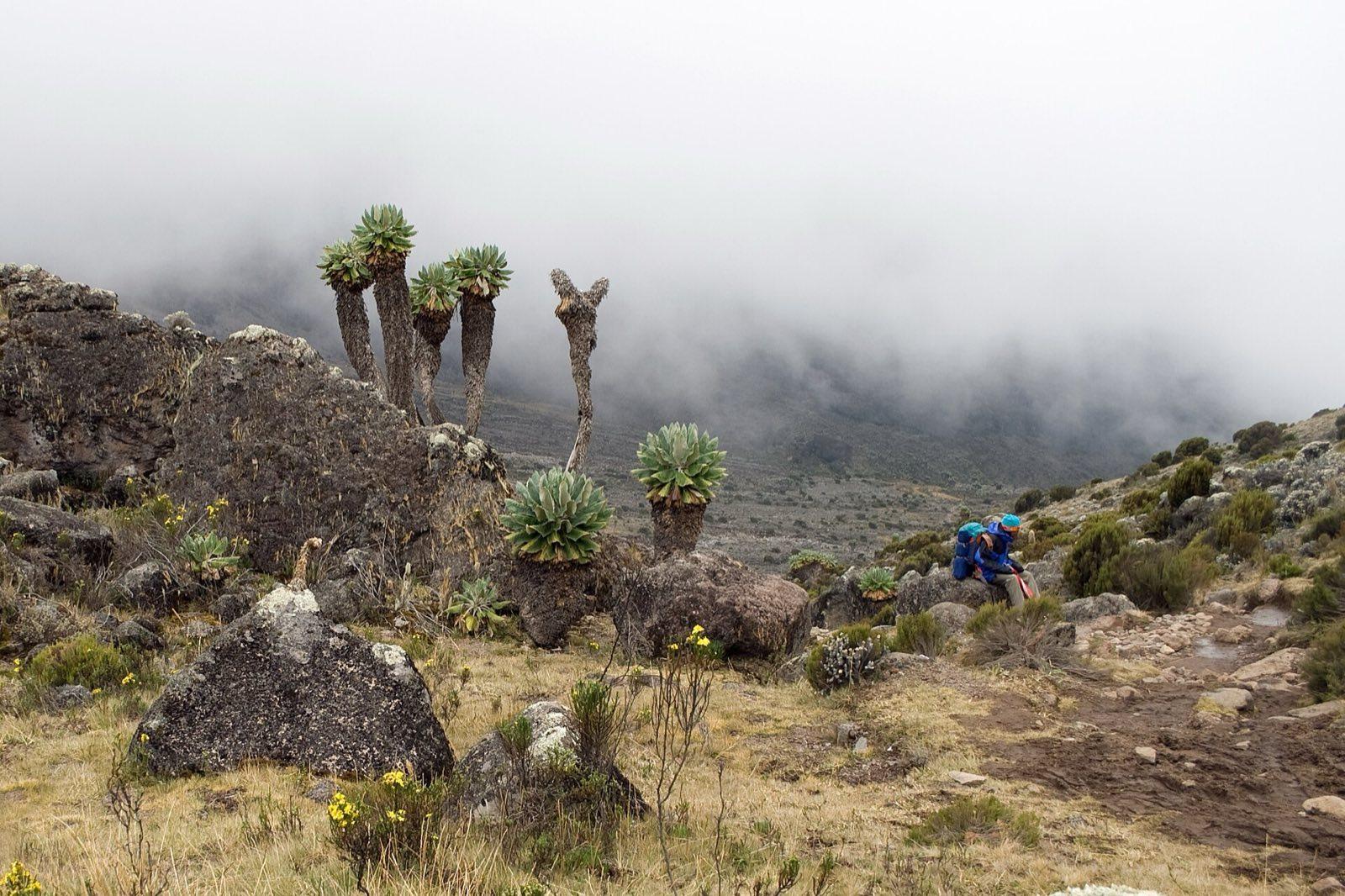
Giant groundsels on the descent to Barranco Photo: Stig Nygaard from Copenhagen, Denmark, CC BY 2.5, via Wikimedia Commons (https://commons.wikimedia.org/wiki/File:Senecio_kilimanjari_Tanzania.jpg) Day 5: The Barranco Wall to Karanga
Barranco Camp over the Barranco Wall to Karanga Camp
- Breakfast, lunch and dinner
- Stay in Karanga Camp
Day 5 details
We start after breakfast and take the wall at an even pace, stepping aside where porters need to pass. The Barranco Wall looks sheer from camp, but it is a scramble on a built path, about 250 metres of height in an hour or two, using your hands on a few rock steps and one narrow ledge known as the Kissing Rock. The guides place you hold by hold. From the top the southern glaciers are close and the plains are far below. The path then rolls up and down across valleys and streams to Karanga Camp, at about 3,995 metres, roughly 5 kilometres and 4 to 5 hours from Barranco. Karanga is where the six-day climb pushes straight on to Barafu; we stop. Lunch is hot at camp, and the afternoon is rest.
Included
- The Barranco Wall scramble with your guides
- Barranco Camp to Karanga Camp
Free time: Afternoon at camp
Activity: About 5 km and 4 to 5 hours. No ropes or climbing gear, but you need to be comfortable with some height.
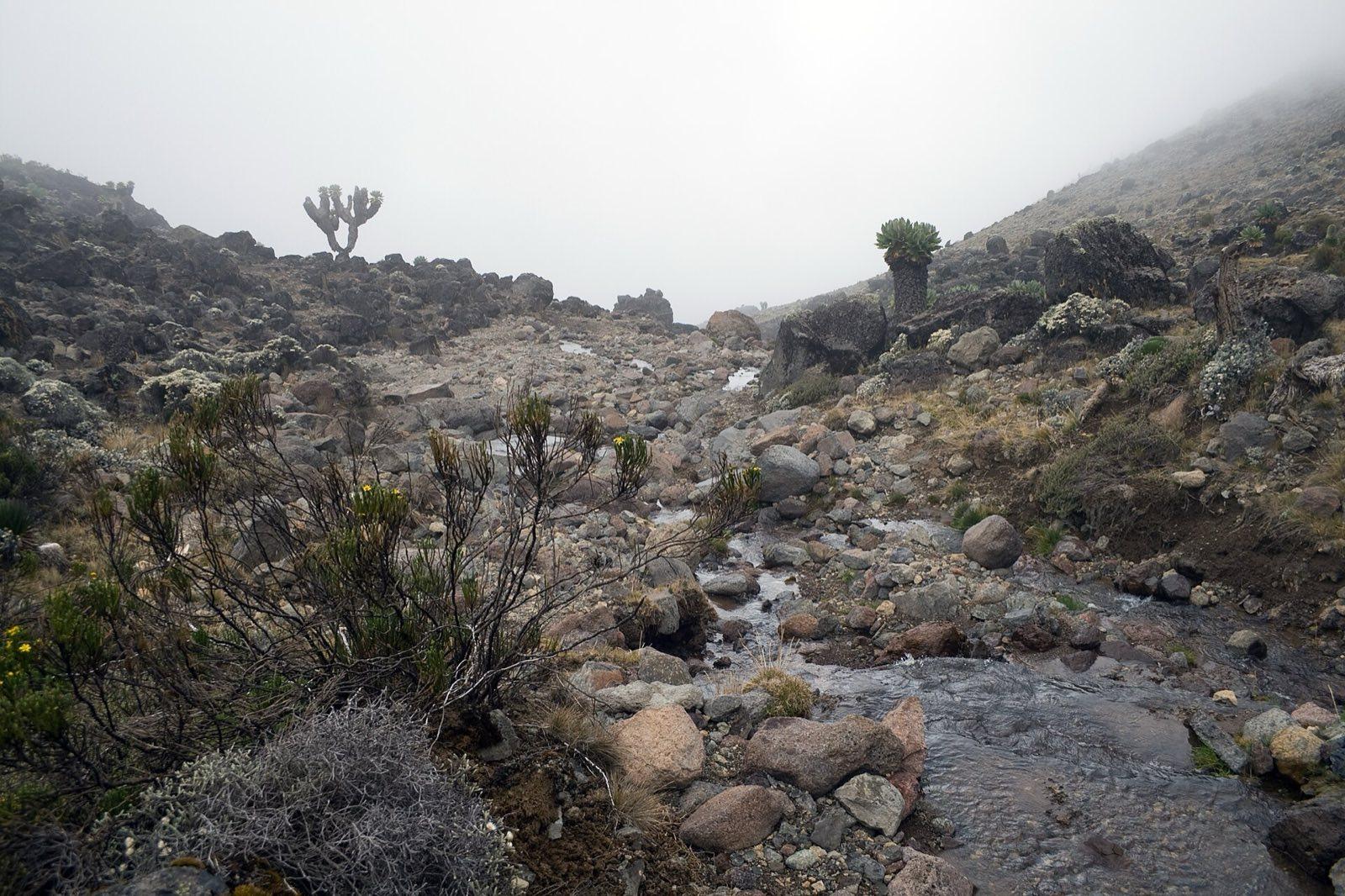
A mountain stream among giant groundsels on the Machame route Photo: Stig Nygaard from Copenhagen, Denmark, CC BY 2.0, via Wikimedia Commons (https://commons.wikimedia.org/wiki/File:Senecio_kilimanjari_stream_Tanzania.jpg) Day 6: Up to Barafu, rest before the summit
Karanga Camp to Barafu Camp
- Breakfast, lunch and dinner
- Stay in Barafu Camp
Day 6 details
A short climb on a bare, stony ridge into the alpine desert, where almost nothing grows. Barafu means ice in Swahili, and the camp, at about 4,673 metres, sits on a windy rock spine below Kibo's southern face. Starting from Karanga, we arrive by lunchtime after roughly 4 kilometres and 3 to 4 hours, which is the point of the extra night: you have the afternoon to lie down, eat and drink, instead of arriving tired at dusk. Lunch is hot in camp. Your guides walk you through summit night in the mess tent, check your oxygen and pulse, and help you lay out every layer, your headtorch and your water so you can dress in the dark. Dinner is early, around 5 pm, and you try to sleep until the wake-up call around 11 pm.
Included
- Karanga Camp to Barafu Camp
- Summit night briefing and kit check
Easier option: Rest in your tent from lunch until dinner.
More active option: A slow 30-minute walk up the ridge above camp with a guide to see the first part of the summit path in daylight.
Free time: Afternoon resting in camp
Activity: About 4 km and 3 to 4 hours. Barafu is cold and windy; keep your warm layers on in camp.
Day 7: Summit night: Stella Point and Uhuru Peak
Barafu Camp to Stella Point and Uhuru Peak, then down to Mweka Camp
- Breakfast, lunch and dinner
- Stay in Mweka Camp
Day 7 details
Tea and biscuits around 11 pm, and we leave Barafu around midnight in a line of headtorches. The climb is about 1,200 metres of steep zigzags on scree, very slow and very cold, often well below freezing with wind. Your guides walk beside you, at least one for every two climbers, carrying hot drinks and emergency oxygen. Around sunrise, after 6 to 7 hours, we reach Stella Point on the crater rim, at about 5,756 metres, as the sun comes up behind Mawenzi. From there it is about an hour along the rim, past the glaciers, to Uhuru Peak at 5,895 metres, the highest point in Africa. We stay only a few minutes. Then the long descent: back to Barafu for a rest and a hot meal, and on down to Mweka Camp at about 3,100 metres.
Included
- Summit attempt via Stella Point to Uhuru Peak with licensed mountain guides
- Descent to Barafu and Mweka Camp
Easier option: Turn back with a guide at any point; Stella Point on the crater rim is a recognised place to stop.
Activity: About 5 km up and 12 km down, 12 to 16 hours in all. Nobody can promise the summit: the guides turn back anyone with signs of serious altitude sickness, and their decision is final.
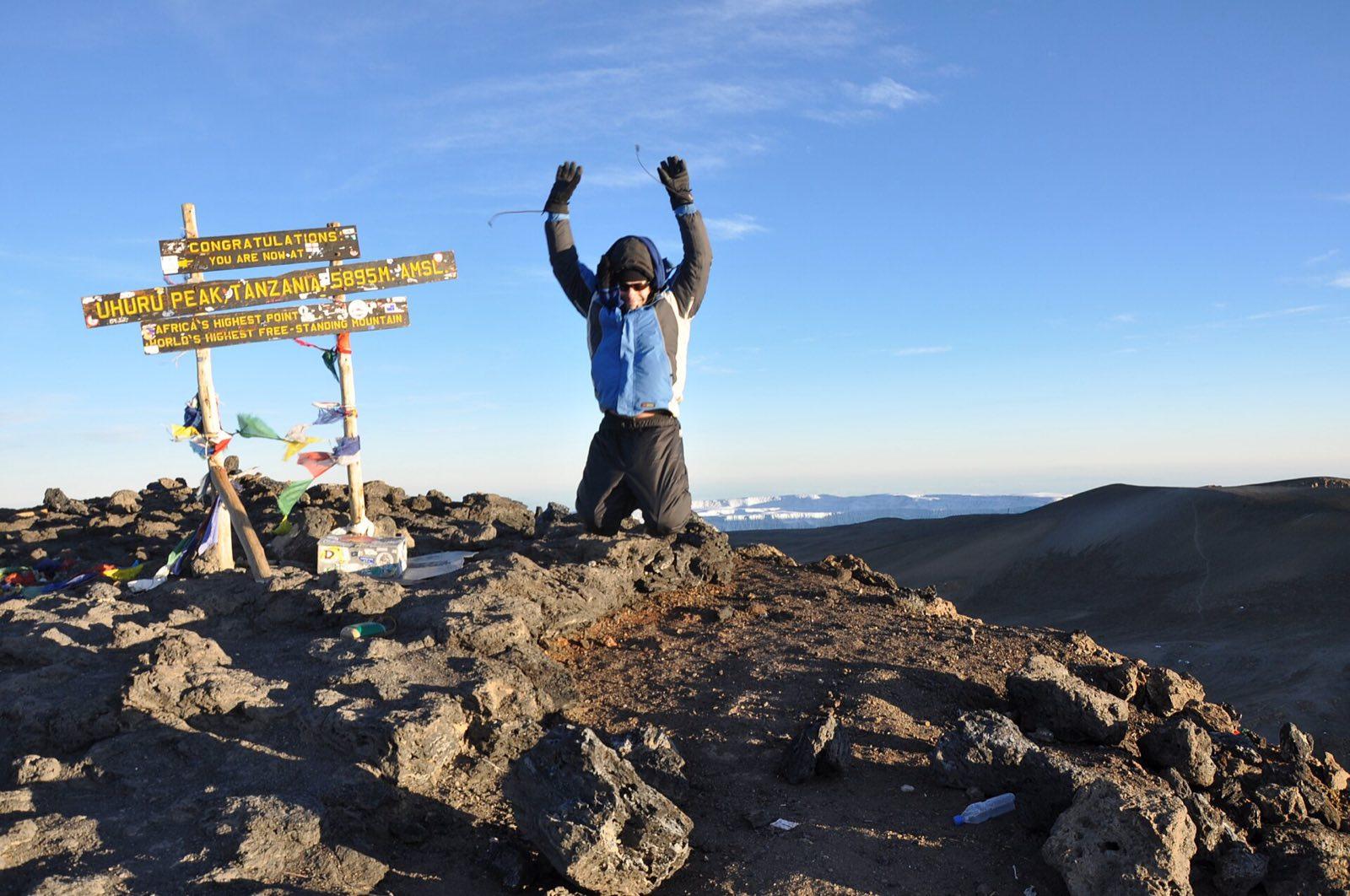
The sign at Uhuru Peak, 5,895 metres Photo: Jorge Láscar from Australia, CC BY 2.0, via Wikimedia Commons (https://commons.wikimedia.org/wiki/File:Lascar_Jumping_at_the_summit_of_the_the_tallest_freestanding_mountain_on_earth_(3408927879).jpg) Day 8: Down through the forest to Moshi
Mweka Camp to Mweka Gate, then Moshi
- Drive about 30 min
- Breakfast, lunch and dinner
- Stay in Moshi
Day 8 details
A slow breakfast, then the last walk: about 10 kilometres and 3 to 4 hours down a stepped path through giant heather and back into the rainforest, steep and often slippery, so poles help your knees. At Mweka Gate, at about 1,640 metres, the rangers record your climb and issue certificates for Stella Point or Uhuru Peak. Here we thank the crew together, with the tips already paid from the pool in your price, so the goodbye is about the people, not the envelope. Lunch is at the gate or back in town, then about half an hour's drive to the same Moshi hotel, where your safari bag, a hot shower and a real bed are waiting. The afternoon is yours, and the group meets for a celebration dinner in the evening.
Included
- Mweka Camp to Mweka Gate
- Summit certificates from the park
- Thank-you with the crew, tips paid from the pool
- Transfer to Moshi
- Celebration dinner
Free time: Afternoon free in Moshi
Activity: About 10 km and 3 to 4 hours, all downhill on steep, uneven steps.
Day 9: A slow morning, then Tarangire
Moshi to Arusha, then Tarangire National Park
- Drive about 3.5 h
- Breakfast, lunch and dinner
- Stay in Tarangire
Day 9 details
No alarm today. Sleep in, have a long breakfast and let your legs recover; the mountain kit goes back to the outfitter and your safari bag comes out. At about half past nine the two 4x4 Land Cruisers collect you at the hotel, at most six guests in each, and we drive about an hour and a half west to Arusha, the safari town under Mount Meru, for a sit-down lunch. Then about two hours south-west on tarmac through Maasai grazing country to Tarangire National Park. We reach the gate in the middle of the afternoon, lift the pop-up roofs and game drive slowly to our lodge, in or beside the park, until sunset. Elephants gather along the Tarangire River, especially in the dry months from June to October, under huge baobabs scarred where they have stripped the bark.
Included
- Transfer from Moshi in our own safari vehicles
- Lunch in Arusha
- Tarangire National Park fees
- Late-afternoon game drive to the lodge
Easier option: Go straight to the lodge and rest; the game drive is on the way, at a slow pace.
Free time: Morning free in Moshi
Activity: Wear khaki, beige or green, not dark blue or black, against tsetse flies in Tarangire.
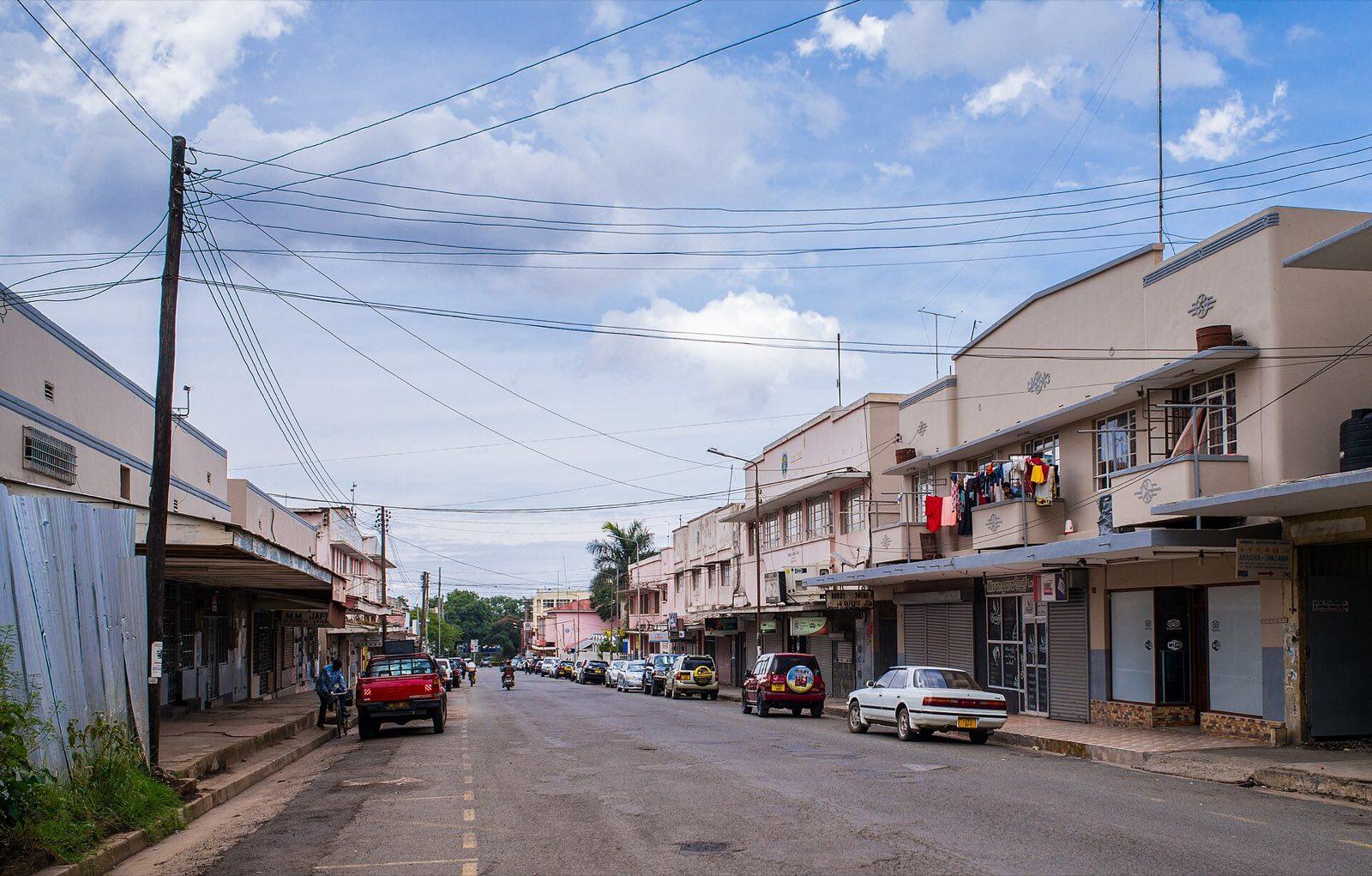
A street in central Arusha, our lunch stop on the way to Tarangire Photo: Roman Boed from The Netherlands, CC BY 2.0, via Wikimedia Commons (https://commons.wikimedia.org/wiki/File:Arusha,_Tanzania_(Explored)_-_Flickr_-_romanboed.jpg) Day 10: Tarangire at first light, into the Serengeti
Tarangire to Mto wa Mbu and over the Ngorongoro highlands, via Olduvai Gorge and Naabi Hill, to the central Serengeti
- Drive about 6 h
- Breakfast, lunch and dinner
- Stay in Serengeti
Day 10 details
We leave the lodge at first light, about half past six, with breakfast packed, and game drive out of Tarangire while the park is cool and the cats are still moving. Then north on tarmac to Mto wa Mbu, where the road runs past banana groves and rice fields under the Rift Valley wall, and up through Karatu and the forest of the Ngorongoro Conservation Area to the crater rim viewpoint. The road drops on gravel past Maasai herders to Olduvai Gorge, where Mary Leakey found a hominin skull about 1.75 million years old in 1959; the museum takes about an hour. Picnic lunch at Naabi Hill, the Serengeti gate. This is the longest day, about six hours of driving and well over our four-hour cap, because there is no shorter road into the Serengeti; the rim, Olduvai, lunch and a slow last 50 km game drive to camp near Seronera break it up.
Included
- Game drive out of Tarangire at first light
- Ngorongoro Crater rim viewpoint
- Olduvai Gorge museum and viewpoint
- Picnic lunch at Naabi Hill
- Game drive from Naabi Hill to camp
Easier option: Stay in the vehicle at Olduvai and Naabi Hill and doze between stops.
Activity: About six hours of driving, the first and last parts game drives; gravel and dust after the crater rim.
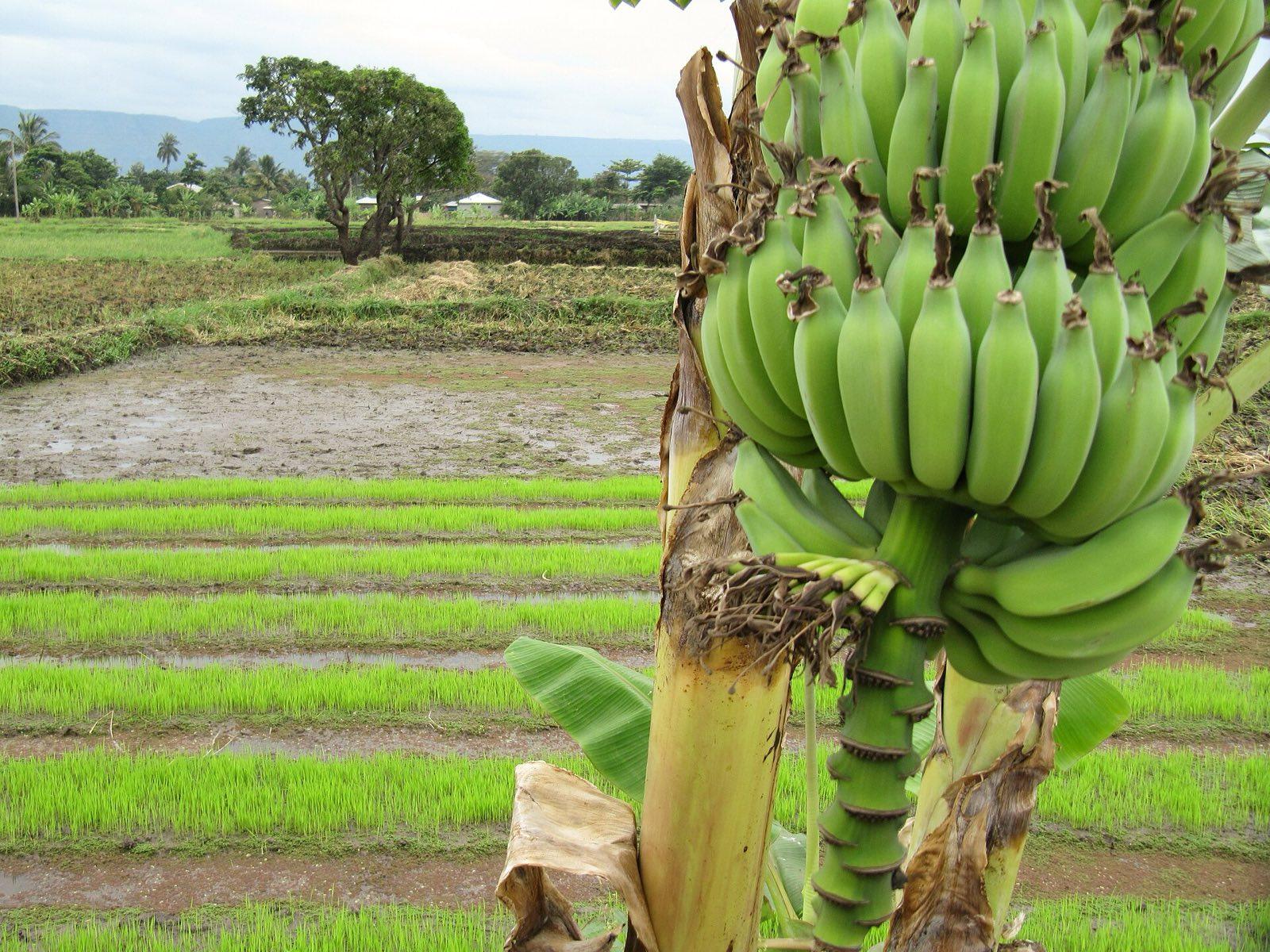
Banana plants and rice fields in Mto wa Mbu, on the road north Photo: lecucurbitacee, CC BY 2.0, via Wikimedia Commons (https://commons.wikimedia.org/wiki/File:Pousse_de_riz_Mto_Wa_Mbu.jpg) Day 11: A full day in the Serengeti
Dawn and late-afternoon game drives around Seronera
- Breakfast, lunch and dinner
- Stay in Serengeti
Day 11 details
The vehicles leave camp before sunrise, which this close to the equator comes at about half past six all year, with coffee in a flask and breakfast packed for the plains. The first hours are when lions and cheetahs hunt and the light is low and warm. The Seronera valley at the centre of the park holds resident predators in every season: lions rest on the granite outcrops called kopjes, and leopards often lie up in the sausage trees along the river. If you have booked the optional balloon flight, you lift off at dawn instead and rejoin us after a bush breakfast. Back at camp for lunch, the hot middle hours are for a nap or a book in the shade, which after the mountain most people welcome. About four, we drive out again until sundown, with time to wait at a good sighting.
Included
- Dawn game drive with packed breakfast
- Lunch at camp
- Late-afternoon game drive to sunset
Optional experiences
- Hot-air balloon flight at dawn. Booked in advance.
Easier option: Skip the afternoon drive and stay at camp.
More active option: The balloon flight at dawn, booked in advance.
Free time: Midday free at camp
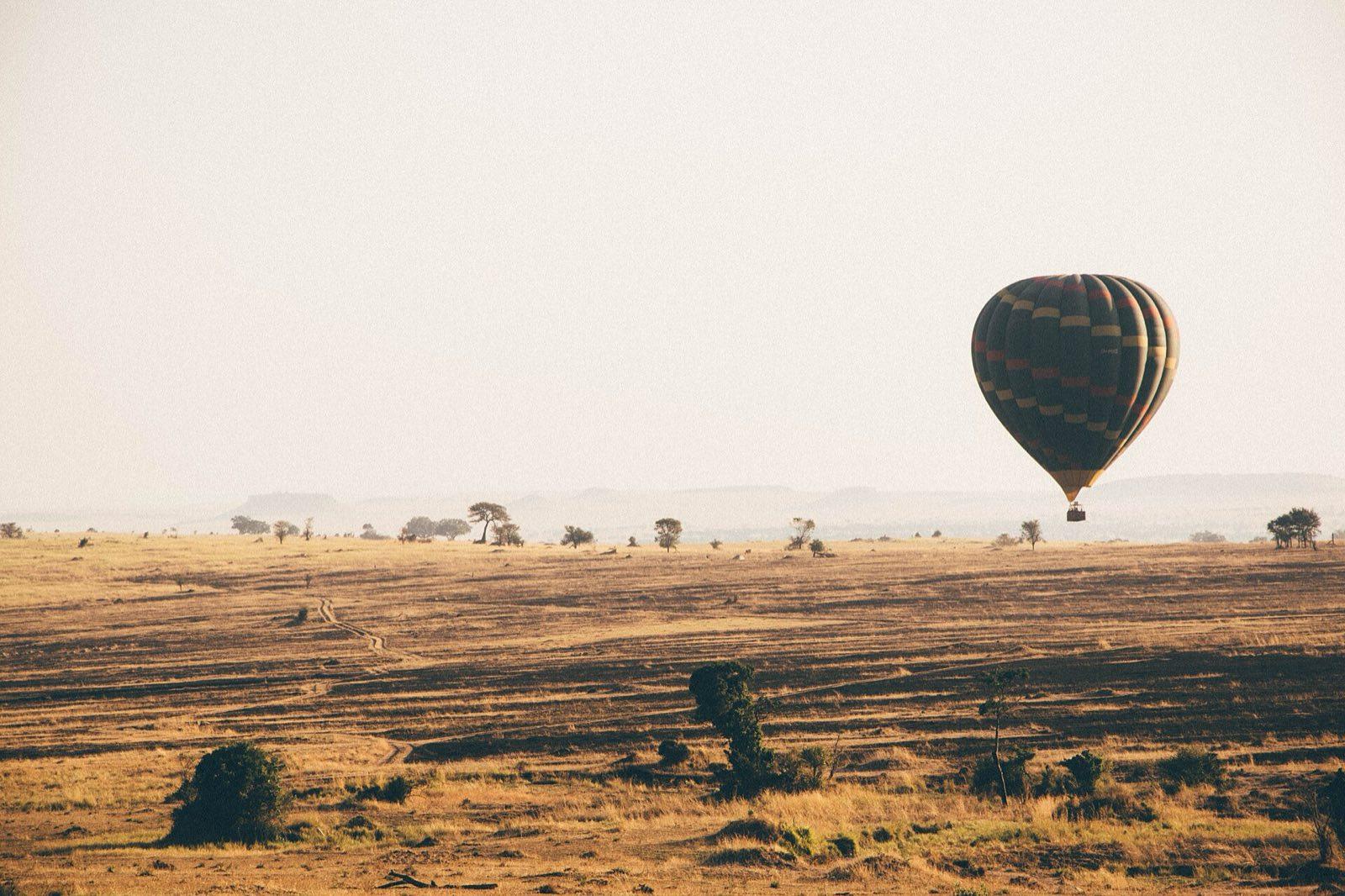
A balloon over the Serengeti at dawn, the one optional extra Photo: Ryan Al Bishri rybkstudio, CC0, via Wikimedia Commons (https://commons.wikimedia.org/wiki/File:Serengeti,_Tanzania_(Unsplash_HZrraBFLS20).jpg) Day 12: Serengeti at dawn, up to the Ngorongoro rim
Seronera to Naabi Hill, then up to the Ngorongoro Crater rim
- Drive about 5 h
- Breakfast, lunch and dinner
- Stay in Ngorongoro
Day 12 details
A last dawn drive around Seronera, then breakfast at camp and we start back east. The run to Naabi Hill, about 50 km, is another game drive, and your guide plans the route around the morning's sightings. From the gate it is about three hours on gravel across the plains and up the western slopes of the highlands to the Ngorongoro crater rim, with a picnic lunch on the way. That makes about five hours of driving, over our usual four, because the Serengeti has no shorter way out; the game drive and lunch break it up. We reach the lodge on the rim in the middle of the afternoon, at about 2,200 metres, and the rest of the day is yours: watch the light move across the crater floor from the terrace, or rest. Evenings up here are cold. Sleeping on the rim puts us minutes from the descent road when it opens.
Included
- Dawn game drive in the Serengeti
- Game drive out to Naabi Hill
- Picnic lunch on the way to the rim
Easier option: Skip the dawn drive and have breakfast at camp before we leave.
More active option: A rim walk with an armed ranger, where the lodge offers one.
Free time: Late afternoon free on the crater rim
Activity: About five hours of driving, the first part a game drive. The rim sits at about 2,200 metres and is cold at night and at dawn.
Day 13: Ngorongoro Crater at opening, then home
Ngorongoro Crater floor, then Arusha and Kilimanjaro International Airport
- Drive about 4.5 h
- Breakfast and lunch
Day 13 details
We leave the lodge at about six with a packed breakfast and drive down the descent road as it opens, among the first vehicles of the day, while mist still lies on the floor. Ngorongoro is a collapsed volcano about 600 metres deep, with some 260 square kilometres of grassland, swamp and soda lake below its walls. Lions, hyenas, buffalo, zebra and wildebeest live here all year, and it is the best chance on this trip of a black rhino, though they are few and usually distant. Breakfast is at a picnic site by a hippo pool, and we climb out late in the morning as the floor gets busy. Then the road home: about three and a half hours to Arusha, broken by lunch on the way, then about an hour to Kilimanjaro airport; a long day because it is the way home. Book a flight leaving after about 7:30 pm.
Included
- Ngorongoro Crater game drive from the opening of the descent road
- Picnic breakfast on the crater floor
- Lunch on the way to Arusha
- Drop-off at Kilimanjaro International Airport (JRO) or your Arusha hotel
Activity: Book a flight leaving JRO after about 7:30 pm. If you are staying on in Arusha, we drop you at your hotel about an hour earlier.
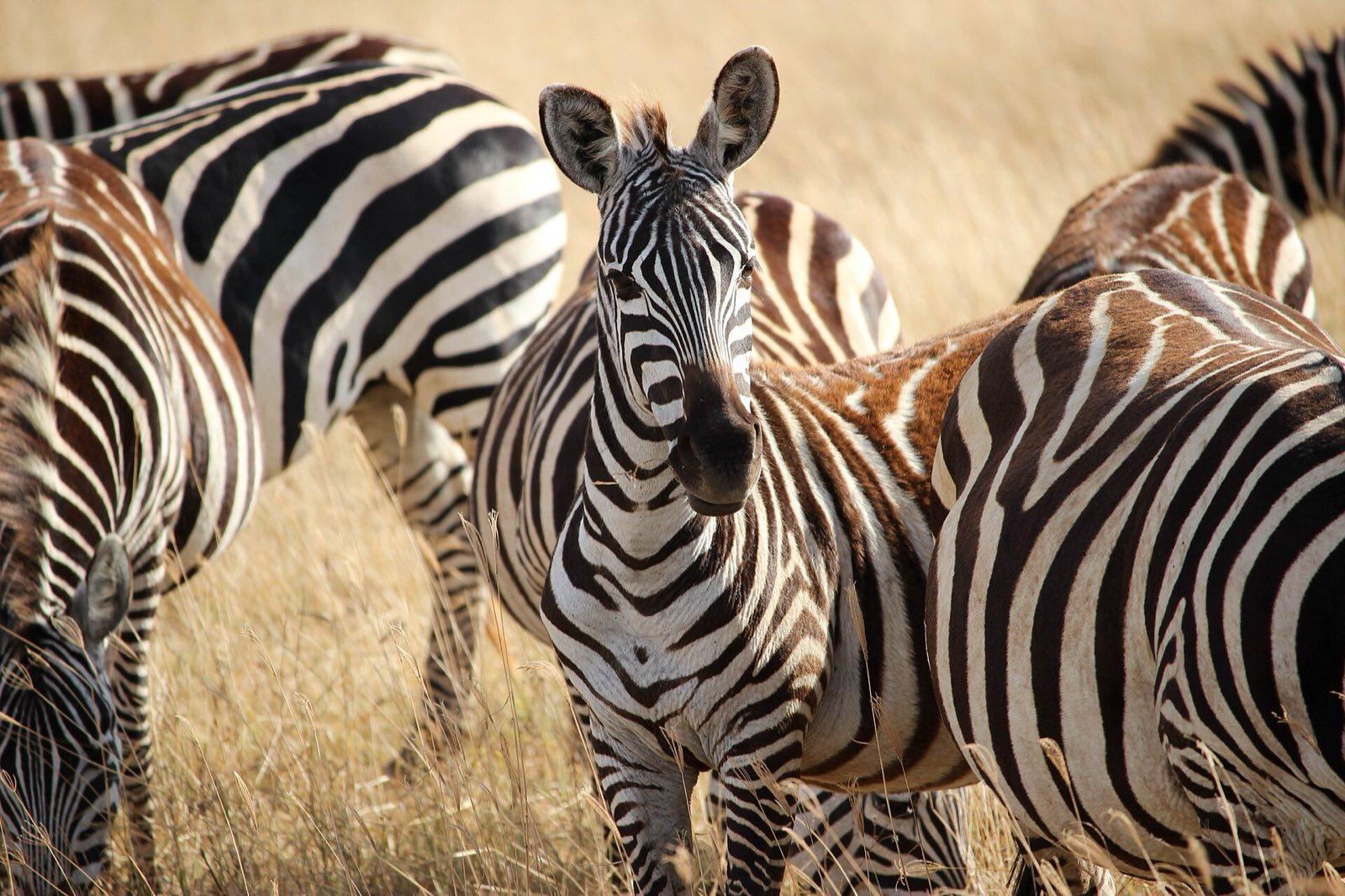
Zebras in Ngorongoro Crater Photo: Lisa H lh_photography, CC0, via Wikimedia Commons (https://commons.wikimedia.org/wiki/File:Ngorongoro_Crater,_Tanzania_(Unsplash_mRDbYulzkZk).jpg)
Wildlife and weather: January to March is warmer on the mountain, with a chance of summit snow, and is calving season in the southern Serengeti, when we may base the safari near Ndutu. June to October is dry, colder at night on the mountain and the busiest time, with animals gathered at water in Tarangire and the herds moving north in the Serengeti. We do not run in April, May or November, the rainy months.
12 nights
Where you'll stay
Your hotels are named in your trip confirmation.
- Moshi1 night
- Machame Camp1 night
- Shira Camp1 night
- Barranco Camp1 night
- Karanga Camp1 night
- Barafu Camp1 night
- Mweka Camp1 night
- Moshi1 night
- Tarangire1 night
- Serengeti2 nights
- Ngorongoro1 night
One price
What's in the price
Included
Accommodation
- 12 nights: 2 in a Moshi hotel (days 1 and 8), 6 in full-service camps on the Machame route (Machame, Shira, Barranco, Karanga, Barafu, Mweka), 1 at a lodge in or beside Tarangire National Park, 2 at a tented camp near Seronera in the central Serengeti (or near Ndutu from January to March), 1 at a lodge on the Ngorongoro Crater rim
- Hotel, lodges and tented camps of at least a 3-star-plus standard with private bathrooms, named when we confirm your dates; storage for your safari bag in Moshi during the climb
- Tents for two on the mountain, a mess tent and a private toilet tent for the group
- Sleeping bag and mat provided for the climb
Transport
- Pick-up at Kilimanjaro International Airport (JRO) at any time on day 1, and drop-off there or at your Arusha hotel on day 13
- Transfers from Moshi to Machame Gate and from Mweka Gate to Moshi
- Porters carry a duffel for you on the mountain (about 12 to 15 kg, the outfitter's limit confirmed at booking)
- Two 4x4 Land Cruisers with a pop-up roof and a licensed Tanzanian driver-guide from Moshi to the end, at most 6 guests each, seats rotated daily
- Drinking water in the vehicles
Your guide
- A See Sight Tours trip leader with the group for the whole trip, on the mountain and on safari
- Licensed Kilimanjaro mountain guides, at least one for every two climbers on summit night
- Cooks and porters from an outfitter that is a partner company of the Kilimanjaro Porters Assistance Project
- Licensed Tanzanian driver-guides in every 4x4
Activities
- The 7-day Machame route: Machame Gate, Shira Plateau, Lava Tower, Barranco Wall, Karanga, Barafu, a summit attempt via Stella Point to Uhuru Peak, and down by Mweka
- Climb briefing and kit check in Moshi; oxygen and pulse checks morning and evening, emergency oxygen and a first-aid kit on the mountain; walking poles provided
- Tarangire National Park: a late-afternoon game drive and a first-light drive out
- Ngorongoro Crater rim viewpoint, Olduvai Gorge museum and Naabi Hill
- Serengeti: a full day of dawn and late-afternoon drives, plus game drives in and out
- Ngorongoro Crater game drive from the opening of the descent road
- All park, camping, rescue and conservation fees, including the Ngorongoro crater fee
- A tipping pool for mountain guides, cooks and porters, driver-guides and lodge and camp staff
Meals
- 12 breakfasts
- 12 lunches: on the trail or hot at camp on the mountain, a sit-down lunch in Arusha, picnics on game-drive days
- 12 dinners: a welcome dinner and a celebration dinner in Moshi, six in camp on the mountain and four on safari
- Treated drinking water, tea, coffee and snacks on the mountain
Not included
- International flights to and from Kilimanjaro
- Tanzanian visa
- Travel insurance with trekking cover to 6,000 metres and medical evacuation
- Personal clothing, boots, down jacket and daypack
- Hot-air balloon flight over the Serengeti
- Lunch on day 1, and meals not listed
- Drinks other than water in the vehicles and on the mountain
- A tip for your See Sight Tours trip leader, which is optional
- Vaccinations, malaria tablets and altitude medicine
- Extra nights before or after the trip
- Laundry, souvenirs and personal expenses
Local fees: none. Nothing is collected on the trip.
Tips for your guide are included.
Extras
- Room of your own
- CAD 1,280 (estimated price)

See Sight Tours has been providing travel services across North America since 2006. Operating in 20 cities across Canada and the USA, the company specializes in small group tours that offer personalized, high-quality experiences for travelers.


Book your Tour
Get in Touch
- Toll Free1-888-961-6584
- Local1-289-271-9767


© 2026 See Sight Tours. All rights reserved.