Cornelius Amann
October 06, 2026

5/5
13 days from Tokyo to Kyoto: Mount Fuji at dawn, a ryokan night, Kamikochi, Takayama, Shirakawa-go, Kanazawa and four nights in Kyoto.
13 days · Tokyo to Kyoto · up to 12 guests
Chureito Pagoda and Mount Fuji, Fujiyoshida Photo: Dang Son, CC0, via Wikimedia Commons (commons.wikimedia.org/wiki/File:12-Chureito-pagoda-and-Mount-Fuji-Japan_(29677439878).jpg)
The facts
Moderate
You are happy with 4 to 6 hours on your feet most days, with plenty of stairs at shrines and castles (about 400 steps at Chureito Pagoda and steep wooden ladders inside Matsumoto Castle), flat valley paths in Kamikochi and several starts before 7 am.
Highlights
Free time and choices are marked on the days they fall.
A room of your own is + CAD 1,780.
Day by day
Tap any stop on the map to open that dayClick any stop on the map to open that day
Haneda or Narita airport to your hotel, welcome dinner
Fly into Tokyo Haneda (HND) or Narita (NRT). We meet you in the arrivals hall and drive you to your hotel in central Tokyo, your base for three nights; Haneda is about 30 to 45 minutes away, Narita closer to 90.
Afternoon
The afternoon is yours to rest or take a first walk.
Evening
In the early evening your guide meets the group in the lobby and explains how the trip works: the early mornings, the trains, and the vehicle that will carry your suitcases from day 4 so you never haul them through a station. Then a welcome dinner at a neighbourhood izakaya, the small Japanese pubs where plates of yakitori, sashimi and pickles arrive one after another to share.
Included
Free time: Afternoon free
Senso-ji at first light, Yanaka, Shibuya and Shinjuku after dark
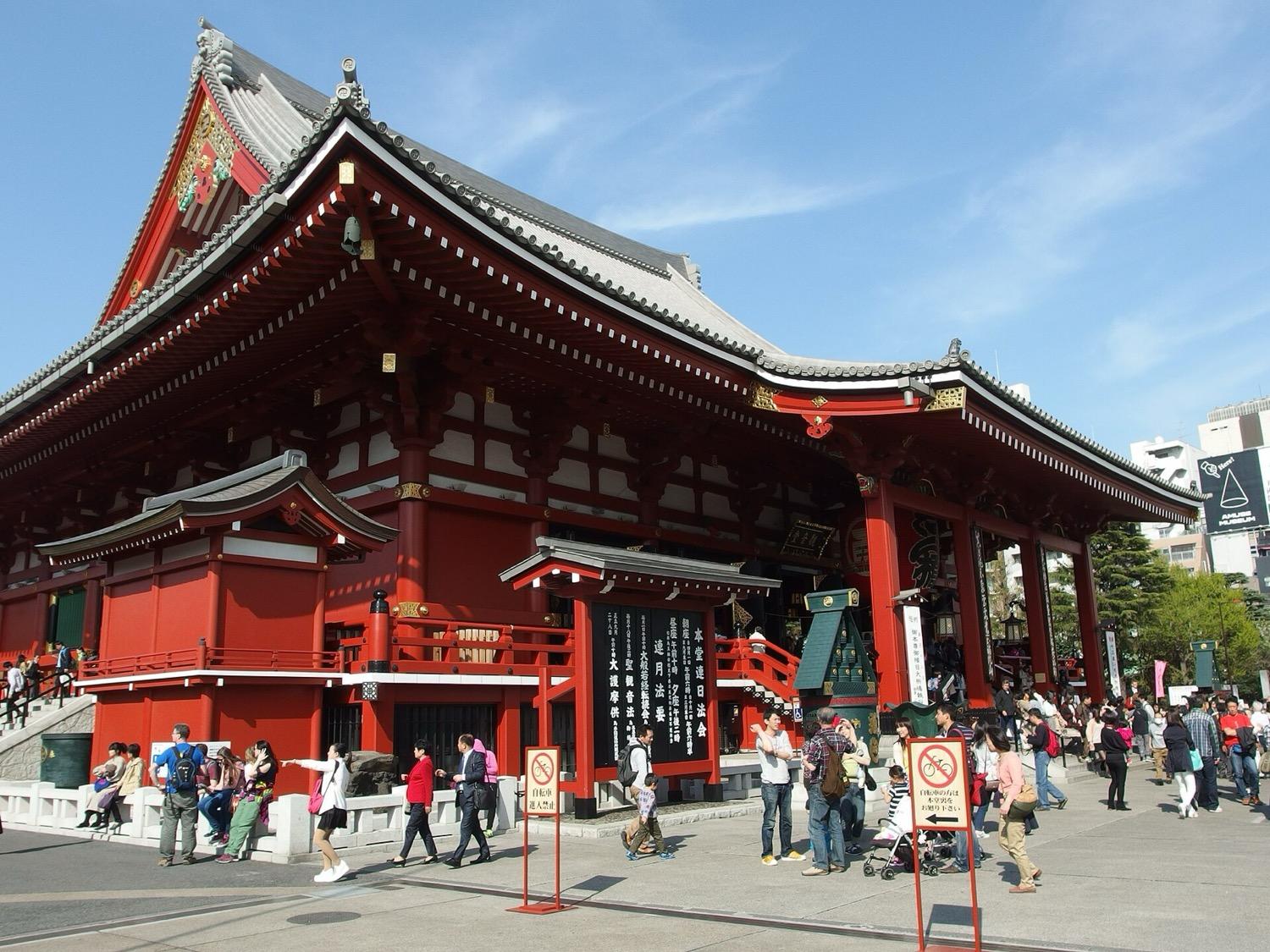
Start early in Asakusa at Senso-ji, Tokyo's oldest temple, founded in the 7th century.
Morning
At first light the red Kaminarimon gate and its giant paper lantern stand almost alone, the shutters on Nakamise street are still down and locals come to pray before work. Breakfast follows, then the metro to Yanaka, an old neighbourhood of temples, wooden houses and small family shops that survived the 1923 earthquake and the war. Walk its lanes and the Yanaka Ginza shopping street with your guide.
Evening
After a rest at the hotel through the middle of the day, the evening shows the other Tokyo: the view over Shibuya Crossing from the Shibuya Sky rooftop deck, then the neon of Shinjuku and the tiny bars of Omoide Yokocho.
Included
Free time: Midday free for rest
Activity: A 6 am start and about 4 to 5 hours on foot over the day.
Morning shrine walk and market tasting, then Tokyo on your own
Morning
Meiji Jingu opens at sunrise, and the early hour is the time to walk its wide gravel paths through a forest of about 100,000 trees, planted when the shrine was built for Emperor Meiji and Empress Shoken in 1920. You pass under huge wooden torii and see the wall of sake barrels given by brewers. Then cross the city to the Tsukiji Outer Market, which stayed when the wholesale fish market moved to Toyosu in 2018.
Afternoon
Your guide leads a tasting walk through its stalls: tamagoyaki omelette, fresh tuna, grilled scallops and matcha, enough for lunch. The afternoon is yours, with tips from your guide: the art museums of Ueno, the shops of Ginza, a Sumida River boat or simply a nap.
Included
Free time: Afternoon and evening free
Tokyo to Lake Kawaguchiko by private vehicle, about 2 hours
From today a private vehicle and driver travel with the group, and your suitcases go in the back. The drive west to Lake Kawaguchiko, one of the Fuji Five Lakes at the foot of Mount Fuji, takes about 2 hours.
Afternoon
In the afternoon walk the flower beds of Oishi Park on the north shore, where the 3,776 m volcano, a World Heritage site since 2013, rises across the water when the cloud allows.
Evening
Then check in to a traditional ryokan for the night. Change into a yukata, soak in the hot spring onsen, and sit down to a kaiseki dinner of many small seasonal courses. You sleep on futons laid out on the tatami while you eat. Bring a small overnight bag; the rest stays in the vehicle.
Included
Free time: Late afternoon at the ryokan
Chureito Pagoda at first light, Matsumoto, Route 158 to Takayama
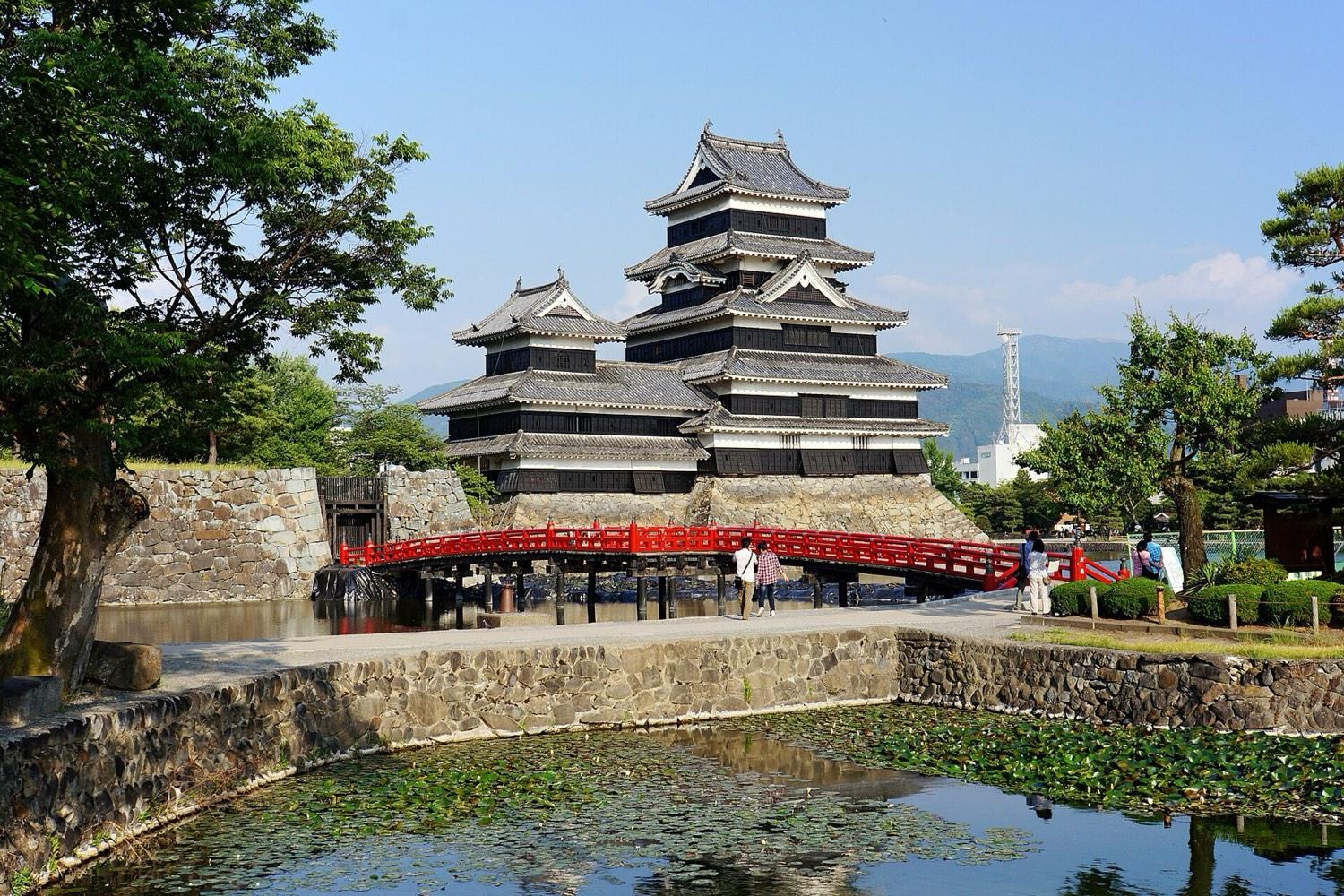
Morning
Leave the ryokan at first light for Arakurayama Sengen Park, where about 400 steps climb to Chureito Pagoda, the five-storey pagoda built in 1963 as a peace memorial. From the terrace behind it Mount Fuji stands framed beyond the roofs, and the dawn air is the clearest of the day. Back for a ryokan breakfast, then about 2 to 2.5 hours north to Matsumoto. Its castle, with black walls and a keep completed in the 1590s, is one of only twelve original castle keeps left in Japan and a National Treasure; climb its steep wooden stairs to the top floor.
Afternoon
After lunch in town, Route 158 crosses the Northern Alps to Takayama, about 2 hours, for the first of three nights in the same hotel.
Included
Easier option: Skip the steps and watch from the base of the pagoda park.
Free time: Evening free in Takayama
Activity: The longest road day, about 4 to 4.5 hours in two halves, split by Matsumoto Castle and lunch.
Takayama to Hirayu Onsen, shuttle bus into Kamikochi
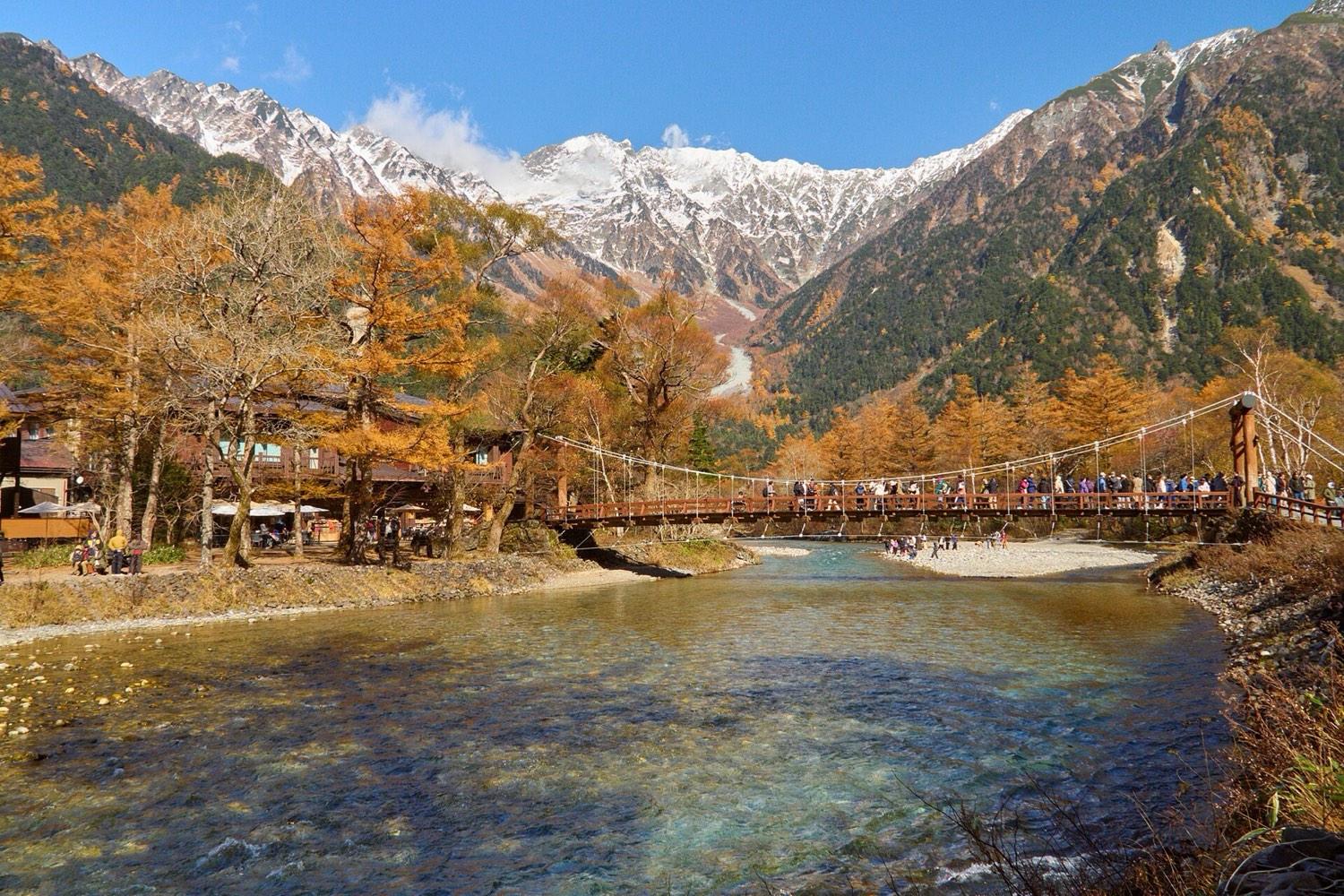
Kamikochi is a high valley at about 1,500 m in Chubu Sangaku National Park, closed to private cars to keep it quiet. Drive about an hour to Hirayu Onsen and ride the shuttle bus in through the forest. Start at Taisho Pond, formed in 1915 when an eruption of Mount Yakedake dammed the Azusa River; dead trees still stand in the still water, and early mist often lies on it. A level path follows the river through larch woods and past Tashiro Pond to Kappa Bridge, about 2 to 3 km and roughly an hour at an easy pace, with the Hotaka peaks, among the highest in Japan, above.
Afternoon
Lunch at the bridge, then walk on to Myojin Pond or rest by the clear water before the bus back down.
Included
Easier option: Take the bus from Taisho Pond to Kappa Bridge and walk only the short riverside loop.
More active option: Continue from Kappa Bridge to Myojin Pond and back, about 6 to 7 km more there and back on the flat.
Activity: About 2 to 3 km on level paths, with more for those who want it. The valley is cool, even in summer.
Morning market, Sanmachi Suji and Takayama Jinya on foot
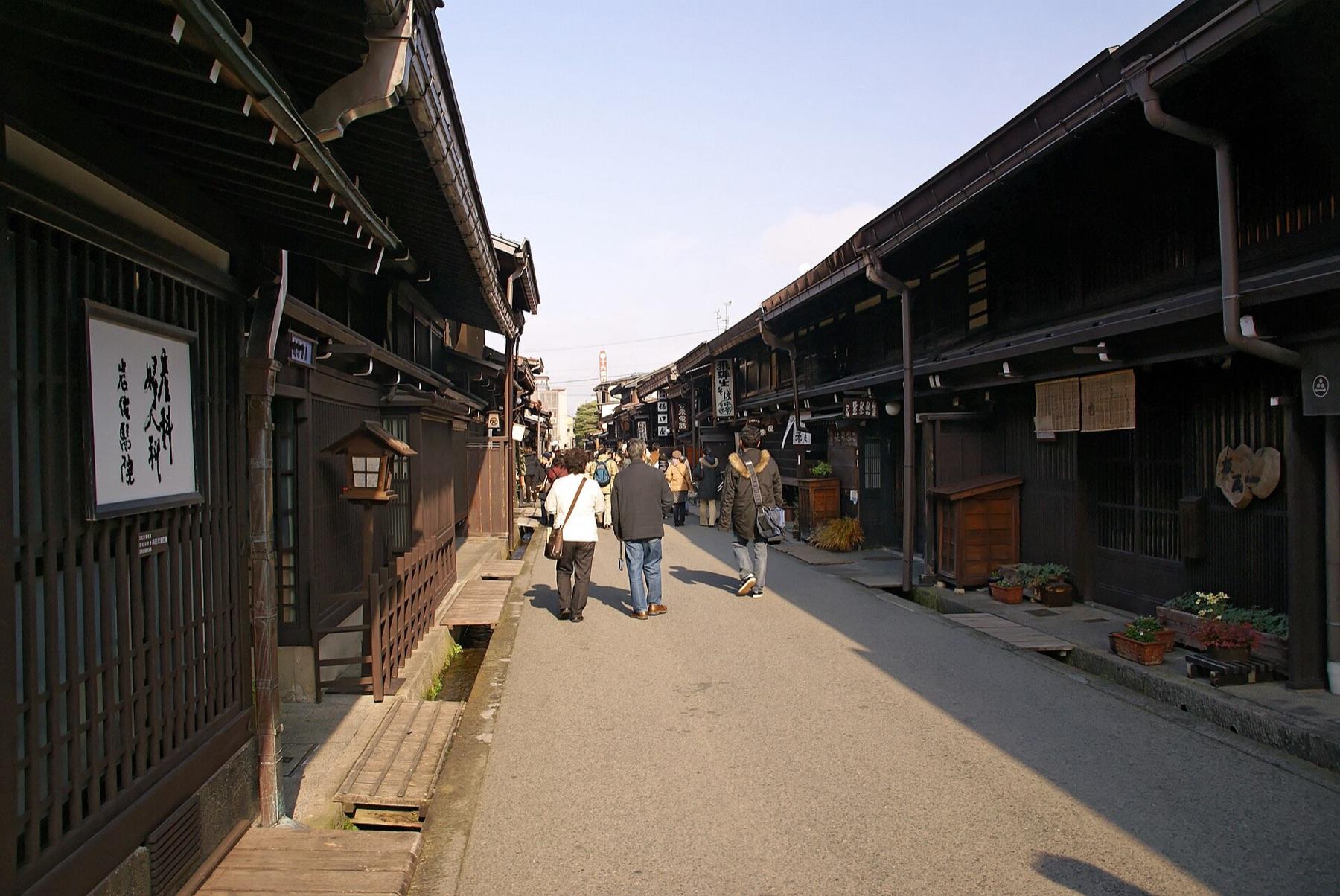
Morning
Start at 7 am at the Miyagawa morning market, where farmers along the river sell pickles, miso, mountain vegetables and flowers. While it is still quiet, walk the three parallel lanes of Sanmachi Suji, the old merchant quarter, past dark wooden houses with low eaves and lattice windows. A ball of cedar leaves hung over a door marks a sake brewery, and you visit one for a tasting. Takayama Jinya, opening at 8:45, is the only surviving Edo-period office of its kind, where the shogun's governors ran the Hida region.
Afternoon
After that the afternoon is free: the Hida Folk Village, a coffee by the river, or a nap.
Evening
In the evening the group meets for a Hida beef dinner, the marbled beef the region is known for.
Included
Free time: Afternoon free
Takayama to Shirakawa-go, about 50 minutes, then Kanazawa
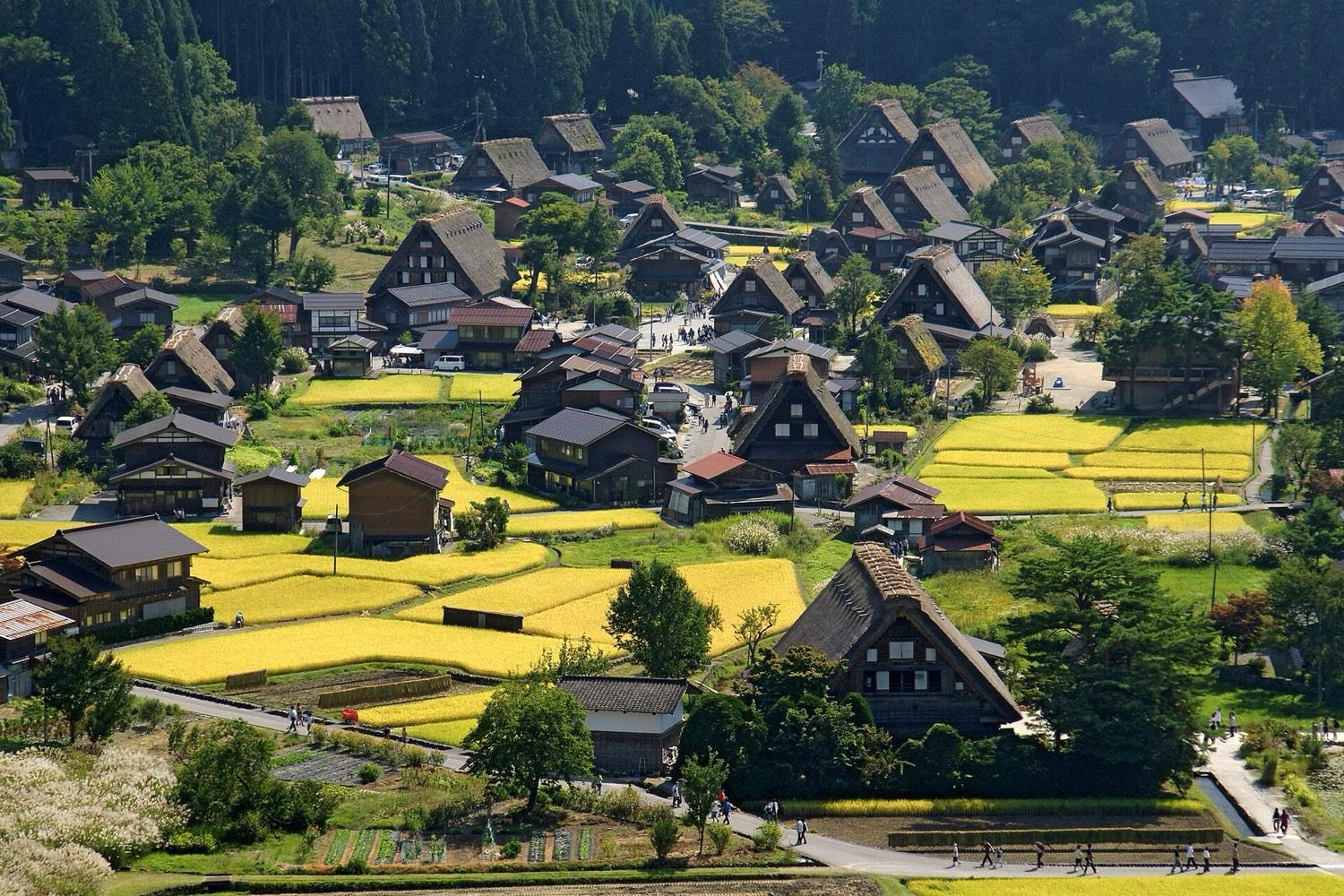
Leave Takayama at 8 am to reach Shirakawa-go before the day coaches, which build from about 10. Ogimachi, a World Heritage village since 1995, is famous for its gassho-zukuri farmhouses, named for steep thatched roofs that look like hands joined in prayer and were built to shed heavy snow. Climb to the Shiroyama viewpoint first for the classic view over the roofs and rice fields, then go inside Wada House, the largest of them, to see the attic floors once used to raise silkworms. Drive on about 75 minutes to Kanazawa, a castle town that escaped bombing in the war.
Evening
At dusk walk the Higashi Chaya district, a teahouse quarter of 1820, as its lamps come on.
Included
Free time: Afternoon free in Kanazawa before the evening walk
Kanazawa to Kyoto by Shinkansen and limited express, about 2 hours
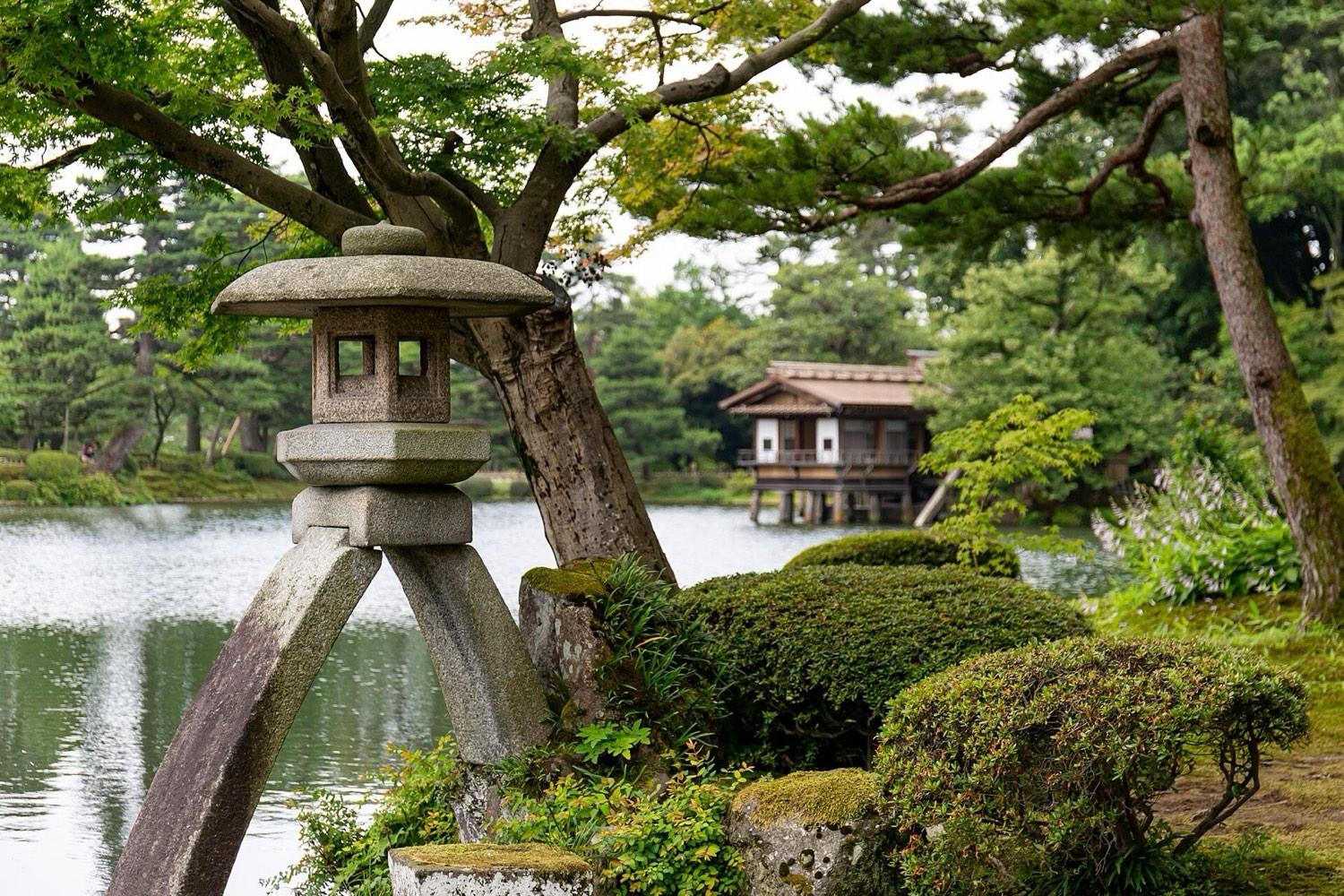
Be at the gate of Kenroku-en when it opens, 7 am in spring and summer and 8 am from mid-October. It is counted among the three great gardens of Japan, and in the early hours the Kotoji stone lantern on its two legs, the ponds and the old pines are calm. Then a hands-on gold leaf workshop: Kanazawa makes nearly all of Japan's gold leaf, and you lay a sheet on a small piece to take home.
Afternoon
Lunch is yours at Omicho Market, the city's seafood market for about 300 years. In the early afternoon take the Hokuriku Shinkansen to Tsuruga and the Thunderbird limited express along Lake Biwa to Kyoto, about 2 hours, with only a day bag; your suitcases go ahead by road.
Included
Free time: Lunch on your own at Omicho Market; evening free in Kyoto
The torii path before the crowds, a craft workshop, a free afternoon
Evening
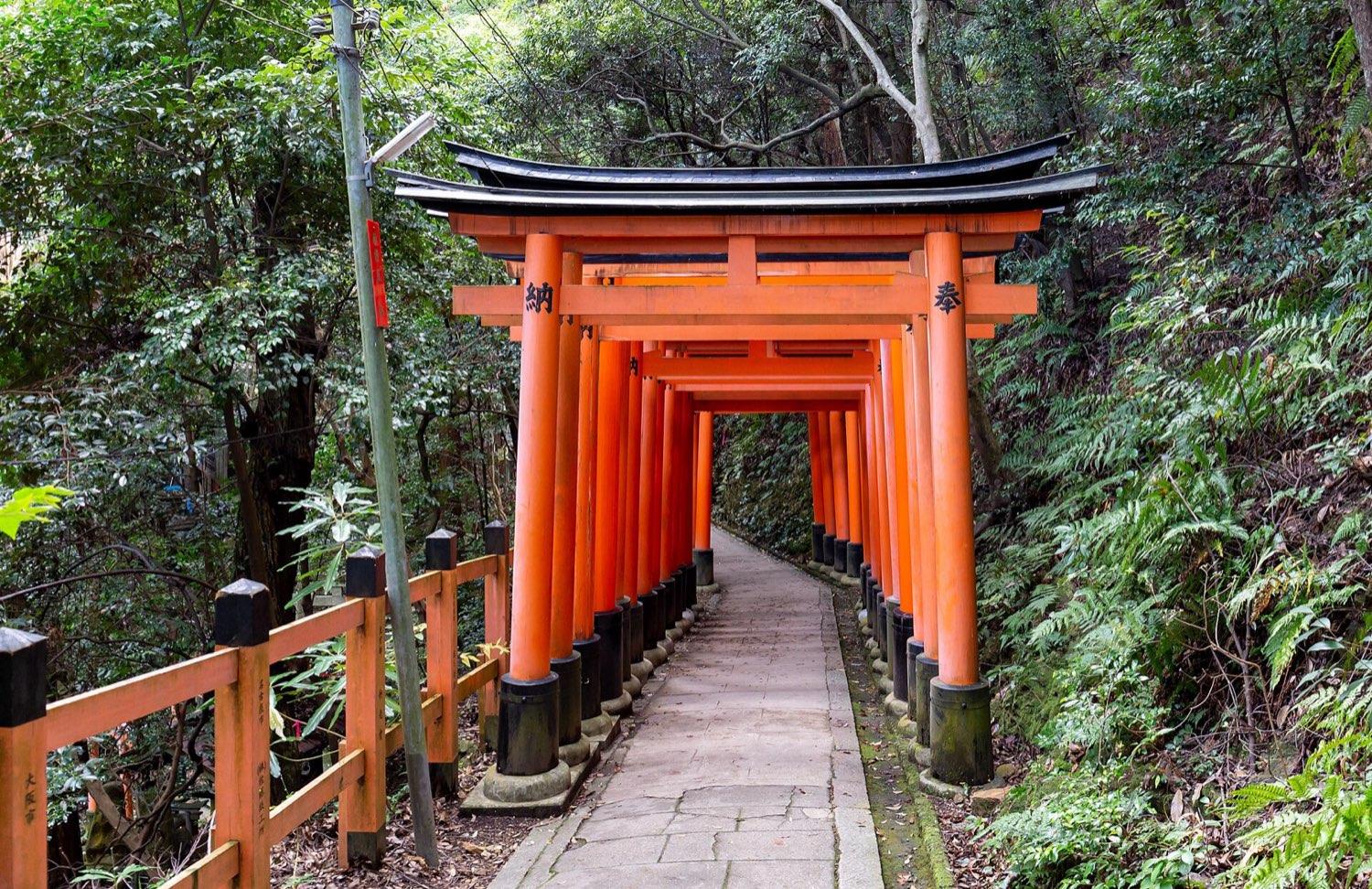
Fushimi Inari Taisha is open all night, and at 6:30 am its tunnels of vermilion torii, thousands of them given by businesses and families, are almost empty. Walk up through the Senbon Torii with your guide to the Yotsutsuji crossing, about 45 minutes, where the view opens over southern Kyoto; carry on round the summit loop if you like. Breakfast follows back in town, then a visit to a Kyoto craft workshop to meet a maker in a trade the city has practised for centuries and try it with your own hands. The afternoon is free. If you want Pontocho, the narrow lane of restaurants beside the Kamo River, go at lunchtime or early evening, before it fills.
Included
Easier option: Walk the first tunnels of torii only, about 20 minutes.
More active option: Climb the full loop over Mount Inari, about 2 to 3 hours.
Free time: Afternoon and evening free
Activity: An early start and a steady climb on stone steps.
The bamboo grove at 6:45 am, western Kyoto, tea in the afternoon
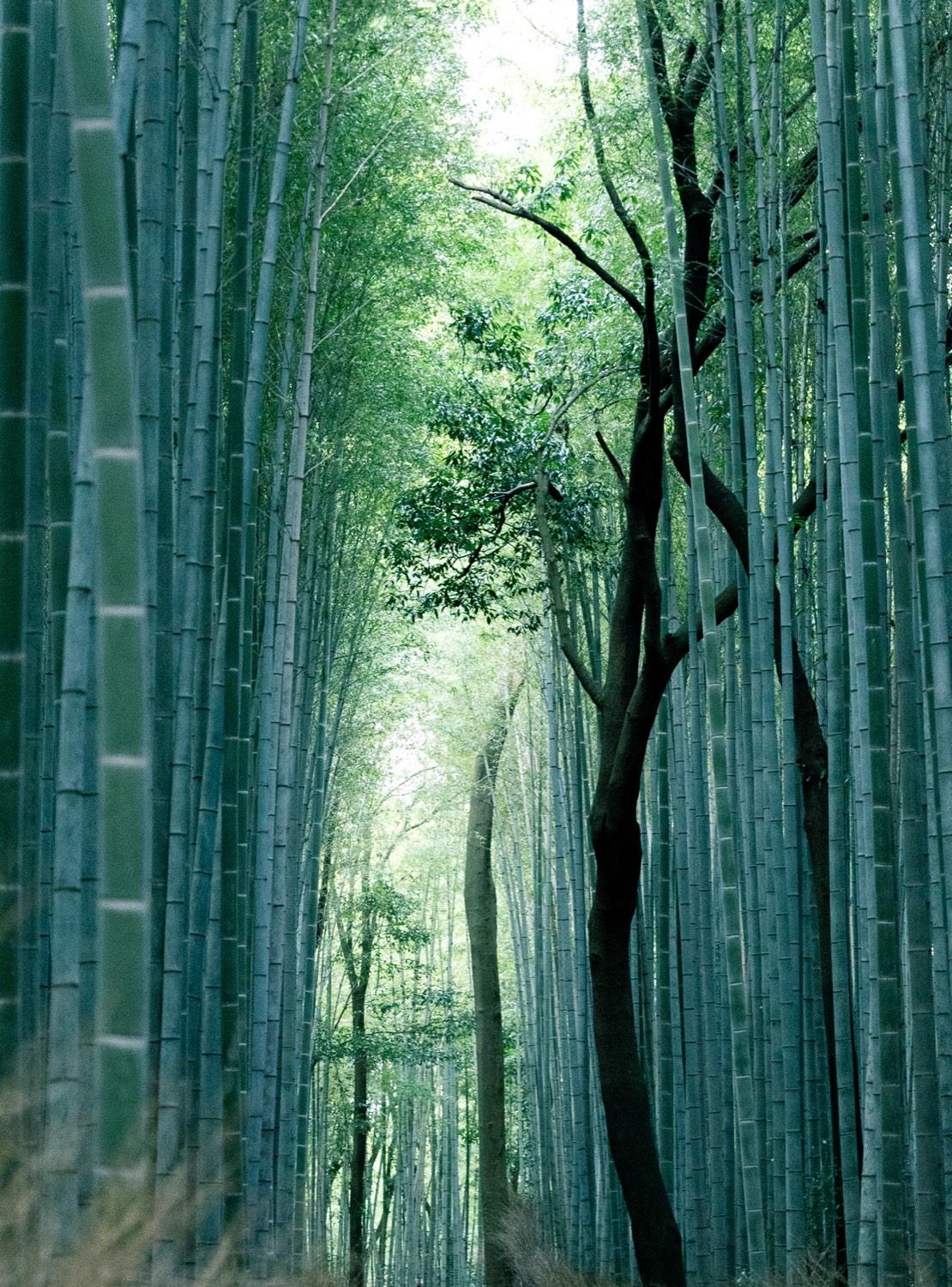
By 6:45 am you are in the Arashiyama bamboo grove, where the tall green stems creak in the breeze and the path is quiet; by 10 it is packed. Walk on to Okochi Sanso, the hillside villa and garden of the silent-film actor Okochi Denjiro, for a bowl of matcha with views across the city, then the 14th-century garden of Tenryu-ji, a World Heritage Zen temple, and the Togetsukyo bridge over the Katsura River.
Morning
In the late morning drive across to Kinkaku-ji, the Golden Pavilion, its upper floors covered in gold leaf above a mirror pond.
Afternoon
In the afternoon a tea ceremony with a host who explains each slow step, from the whisking of the tea to how the bowl is turned.
Included
Free time: Evening free
Kyoto to Nara and back, about 1 hour each way, farewell dinner
Nara was Japan's capital from 710 to 784, and its great temples are still standing. Arrive as Todai-ji opens, 7:30 am in summer and 8 am in winter, to see the bronze Great Buddha, about 15 m tall, inside the Daibutsuden, one of the largest wooden buildings in the world. Walk through Nara Park, where more than a thousand deer, held sacred, wander freely, to Kasuga Taisha and its paths lined with stone lanterns.
Afternoon
Lunch in the old Naramachi quarter, then back to Kyoto. In the late afternoon, as the day coaches leave, climb the Sannenzaka and Ninenzaka slopes to Kiyomizu-dera and its great wooden stage over the hillside.
Evening
The farewell dinner is tonight.
Included
Free morning, then Kansai International Airport
Morning
Your last morning is free. Kyoto rewards one more early walk: the canal and willows of Gion Shirakawa at first light, Nishiki Market as its stalls open, or the Kamo River path where locals jog and walk their dogs.
Evening
Your guide can suggest a route the evening before. Then the vehicle takes you, with your bags, to Kansai International Airport (KIX), about 1.5 hours away, for your flight home. If you would rather stay on in Kyoto or travel on to Osaka, Hiroshima or Tokyo, tell us when you book and we can add nights or arrange a different transfer. Itami airport, for domestic flights, is also possible on request. Leave some space in your bag for what you found along the way, from Takayama pickles to Kanazawa gold leaf.
Included
Free time: Morning free
Wildlife and weather: Mountain weather in the Alps changes quickly and can close roads or the Kamikochi buses for a day; if that happens your guide moves the day around.
Before you book
Book flights after we confirm your seat.
12 nights
Your hotels are named in your trip confirmation.
One price
When you can go
Pick your start date when you request to book. We confirm your departure within 24 hours.
Want your own dates? We can book the same hotels, transport and city tours for you to travel independently.
Before you book
Nothing is charged now. Full terms and the cancellation schedule come with your confirmation.
Business addresses
See Sight Tours Trips (USA): 3172 N Rainbow Blvd, Las Vegas, NV 89108, United StatesSee Sight Tours Trips (Canada): 5305 50 Avenue, #1091, Red Deer, AB T4N 4B6, Canada+1-888-961-6584Guest reviews
Reviews from guests on our day tours.
5/5

5/5
5/5

5/5
5/5
5/5
Good to know
Twelve nights including a ryokan night, all breakfasts, one lunch and four dinners, airport transfers, Tokyo metro fares, a private vehicle and driver from day 4, the Kamikochi bus, reserved train seats to Kyoto, a trained guide throughout, every entry fee in the day plan, and the tasting walk, sake tasting, gold leaf and craft workshops and tea ceremony.
No. From Tokyo your suitcase rides in the vehicle all the way to Kyoto. On the ryokan night you take a small overnight bag inside, and on the one train journey, Kanazawa to Kyoto, you carry only a day bag while your suitcase goes ahead by road.
Because the first hour is when the famous places are quiet. Fushimi Inari, Arashiyama, Senso-ji and Shirakawa-go are crowded by mid-morning. We go at opening or at first light, have breakfast after, and keep afternoons slower and partly free.
Late April to early June and mid-September to early November. Kamikochi's buses run only from about mid-April to mid-November, the rainy season falls in June and July, and August is hot and humid. Cherry blossom and the peak of Kyoto's autumn colour are lovely but the busiest and most expensive weeks.
We give you two chances, the afternoon at Lake Kawaguchiko and dawn at Chureito Pagoda, when the air is clearest. Fuji is often hidden by cloud, though, especially in late spring and summer, so a clear view cannot be promised.
Comfortable hotels in central Tokyo, Takayama, Kanazawa and Kyoto, with three nights in Tokyo and Takayama and four in Kyoto, and one night in a ryokan with a hot spring bath at Lake Kawaguchiko. We name each one when we confirm your dates.
The small-group trip runs with 7 to 12 guests, and we never combine two departures into one bigger group.
Yes. Besides the small group, the trip comes as a private trip for your party only, on a date you choose. If you would rather travel on your own on your own dates, ask us from the dates section: we can book the same hotels, ryokan, trains and guided visits for you.
Canadians and citizens of many other countries can visit Japan as tourists for up to 90 days without a visa. Check the current rules for your passport before you book.
Prices are per person sharing a room, with taxes, and differ by style: small group or private. The small group starts from CAD 7,735 per person, and a room of your own is from CAD 1,780 more. Pick your start date when you request to book, and we confirm your trip within 24 hours. Nothing is charged until then.

See Sight Tours has been providing travel services across North America since 2006. Operating in 20 cities across Canada and the USA, the company specializes in small group tours that offer personalized, high-quality experiences for travelers.


© 2026 See Sight Tours. All rights reserved.

