Printable itinerary
Japan's Tohoku: Matsushima, Hiraizumi, Nyuto Onsen and Aomori
9 days · Round trip from Tokyo · up to 12 guests
From CAD 6,425 per person, sharing a room (estimated price. Estimated price. The itinerary, hotels and availability are proposed and subject to confirmation. Your quote will set out the booking conditions; sending a request does not confirm a booking.)
Day by day
Itinerary
The longest drive is 3.5 h, on day 6.
- Tokyostart
- Sendai1 night
- Matsushima1 night
- Hiraizumi1 night
- Kakunodate1 night
- Nyuto Onsen1 night
- Hirosaki1 night
- Aomori2 nights
- Tokyoend
- Overnight stop
- Day trip
- By boat or train
Day 1: Tokyo to Sendai by bullet train
Tokyo Haneda or Narita airport to Tokyo Station, then the Tohoku Shinkansen to Sendai
- Drive about 1 h
- Welcome dinner
- Stay in Sendai
Day 1 details
Fly into Tokyo Haneda (HND) or Narita (NRT). A driver meets you in the arrivals hall and takes you to Tokyo Station, about 40 minutes from Haneda or 90 minutes from Narita, where your See Sight Tours guide meets the group at a set point in the early afternoon. From there the green Hayabusa bullet train runs north on the Tohoku Shinkansen and reaches Sendai in about 90 minutes, past rice fields and low mountains once the city thins out. Sendai is the largest city in the north, a leafy place rebuilt after the war with wide avenues of zelkova trees. We walk from the station to the hotel, settle in, and meet for a short briefing on the week: how the days are paced, what to bring to the onsen, and the tsunami memorial on day 3. Then dinner together at a gyutan restaurant, where Sendai's beef tongue, sliced thick and grilled over charcoal, comes with barley rice and oxtail soup.
Included
- Pick-up at Tokyo Haneda (HND) or Narita (NRT) and transfer to Tokyo Station
- Reserved seats on the Tohoku Shinkansen from Tokyo to Sendai
- Welcome briefing with your guide
- Welcome gyutan dinner in Sendai
Free time: Free until dinner after check-in
Activity: Land at Haneda by about noon or Narita by about 11 am to meet the group at Tokyo Station. From Narita the transfer is about 70 km.
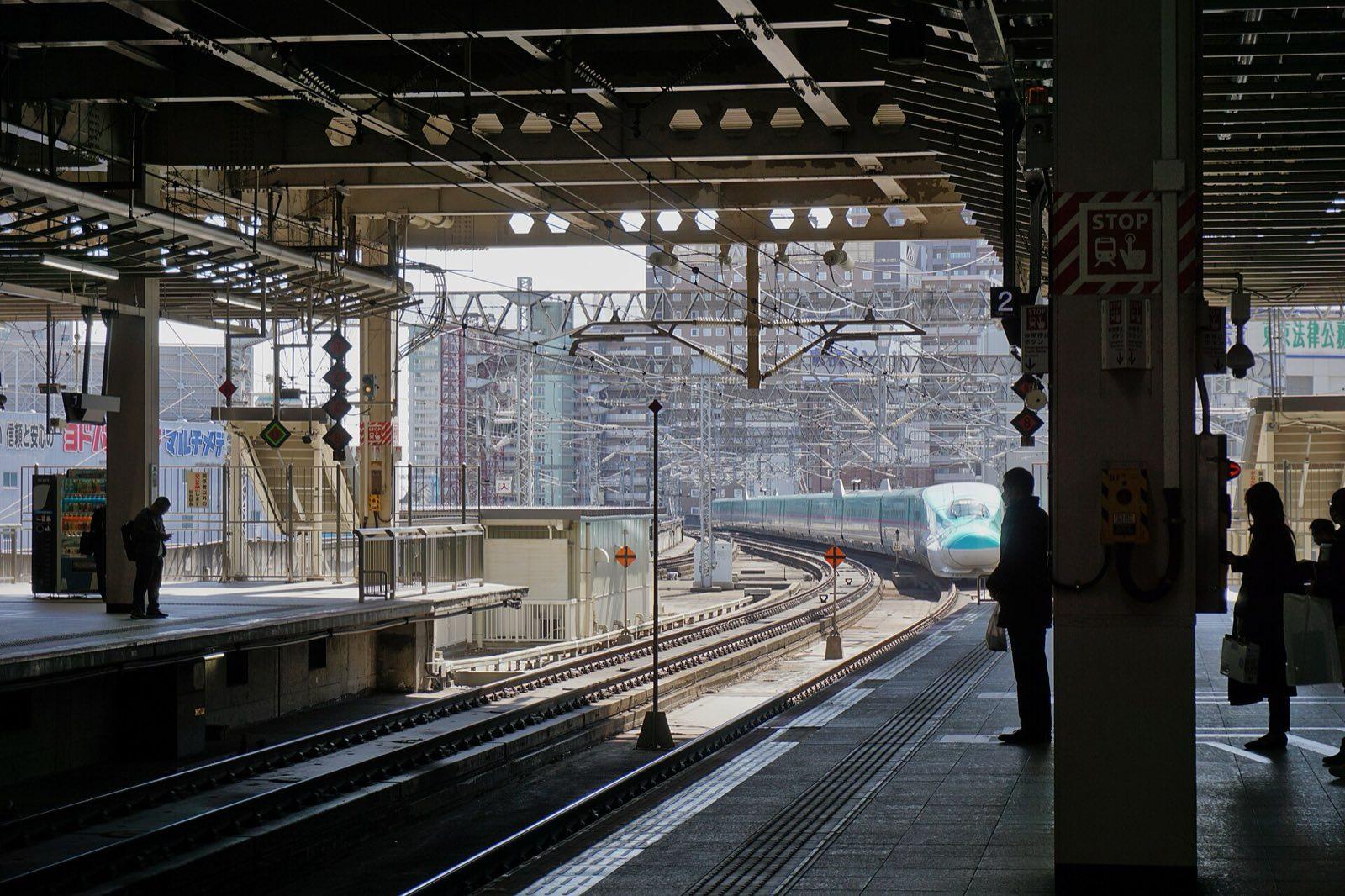
A Hayabusa bullet train arriving at Sendai from Tokyo Photo: Naruciakk, CC0, via Wikimedia Commons (https://commons.wikimedia.org/wiki/File:Hayabusa_Shinkansen_approaching_to_the_platform_of_Sendai_station_from_Tokyo.jpg) Day 2: Zuihoden and the islands of Matsushima
Sendai to Zuihoden, then Matsushima: bay cruise, Zuigan-ji and Godaido
- Drive about 1 h
- Breakfast and lunch
- Stay in Matsushima
Day 2 details
Our vehicle and driver join us this morning and stay with the group until Aomori. First Zuihoden, the mausoleum of Date Masamune, the one-eyed warlord who founded Sendai in 1600, rebuilt in black lacquer and gold up a cedar-shaded hill; we are there at 9 am opening, while it is quiet. Then about 40 minutes up the coast to Matsushima, where some 260 small islands of white rock and twisted pine fill a shallow bay. Lunch is fish and shellfish from the bay, by the water. In the afternoon we board a cruise boat for about 50 minutes among the islands, then walk to Zuigan-ji, the Zen temple of the Date family, its approach lined with caves carved by monks, and out to Godaido, a tiny hall on a rock reached by a short bridge. The red footbridge to Fukuurajima island is the late-afternoon walk for anyone with energy left. The evening is free in Matsushima.
Included
- Zuihoden, the Date Masamune mausoleum in Sendai
- Seafood lunch in Matsushima
- Matsushima Bay cruise, about 50 minutes
- Zuigan-ji temple and Godaido hall with your guide
Optional experiences
- Fukuurajima island and its footbridge (small fee, on your own)
Easier option: Skip Zuigan-ji's caves and garden walk and wait at a cafe on the waterfront.
More active option: Walk the footbridge to Fukuurajima and its island trail before dinner, about an hour.
Free time: Late afternoon and evening free
Activity: About 45 minutes at Zuihoden, 50 minutes on the boat, an hour at Zuigan-ji and 20 minutes at Godaido. Zuihoden has a stepped approach.
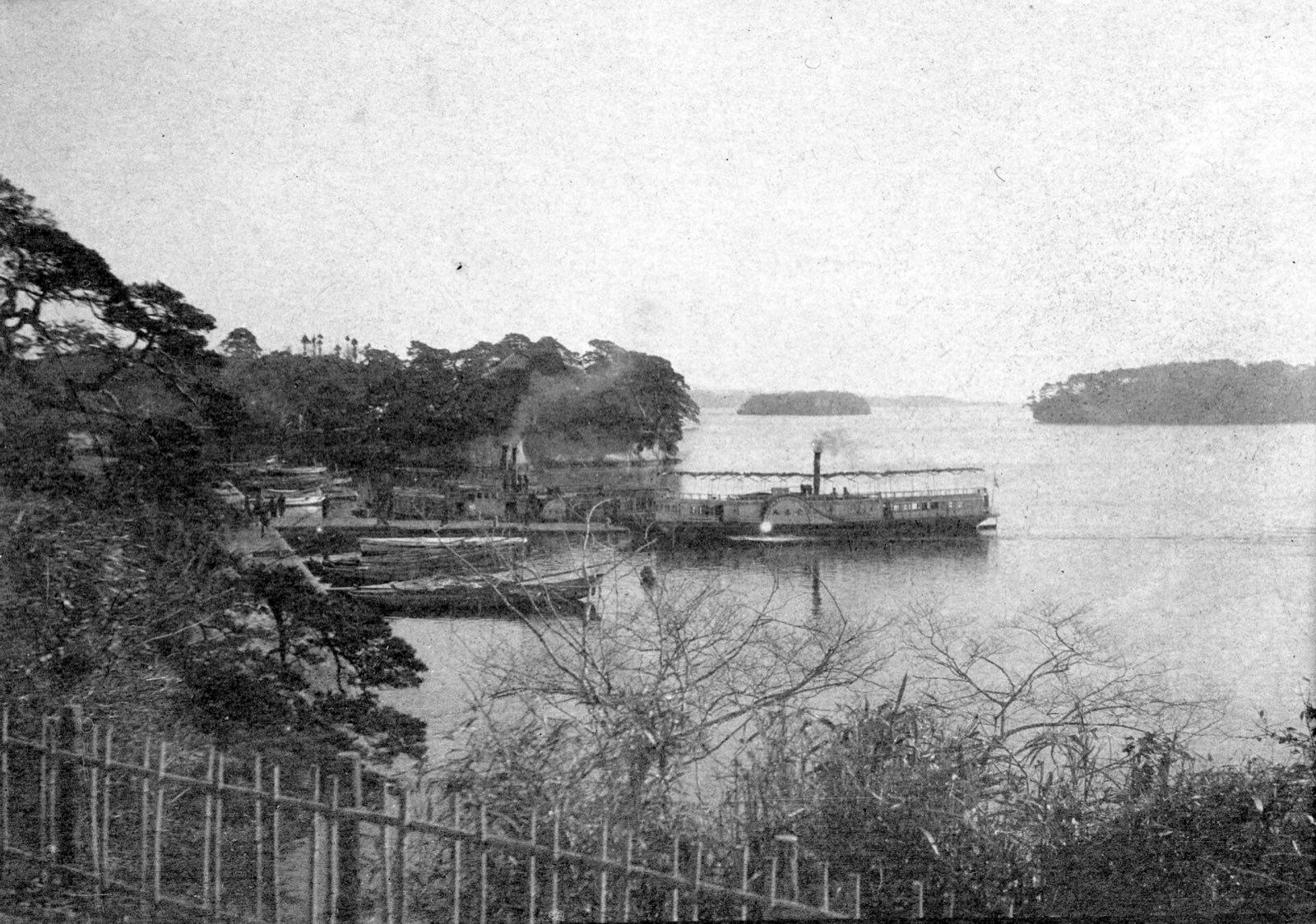
An old photograph of Matsushima Bay with a steamboat Photo: Unknown authorUnknown author, Public domain, via Wikimedia Commons (https://commons.wikimedia.org/wiki/File:Matsushima_(Matsushima_Bay)_with_steamboats.jpg) Day 3: Ishinomaki's tsunami story, then Hiraizumi
Matsushima to Ishinomaki, then inland to Hiraizumi and Motsu-ji
- Drive about 2.5 h
- Breakfast and lunch
- Stay in Hiraizumi
Day 3 details
Matsushima's islands broke the force of the 2011 tsunami, but the coast a few kilometres north did not have that shelter. After breakfast we drive about 40 minutes to Ishinomaki, where a local storyteller who lived through the disaster walks us through the Minamihama memorial park, built on ground where a neighbourhood once stood, and the preserved ruins of Kadonowaki Elementary School, where the pupils escaped up the hill behind it. It is told plainly and without spectacle, and there is time for questions. Lunch is in Ishinomaki, at a restaurant that reopened after the waters went down. In the afternoon we drive inland, about an hour and a half, to Hiraizumi, which for a century around 1100 was the capital of the northern Fujiwara clan and a rival to Kyoto. Before it closes we walk the gardens of Motsu-ji, a Pure Land garden laid out around a large pond, with the temple's original foundation stones still in the grass. The evening is free.
Included
- Ishinomaki Minamihama memorial park and Kadonowaki Elementary School ruins with a local storyteller
- Lunch in Ishinomaki
- Motsu-ji and its Pure Land garden with your guide
Easier option: Stay with the storyteller at the memorial park and skip the school ruins.
Free time: Evening free in Hiraizumi
Activity: About 2 hours in Ishinomaki with the storyteller, about an hour at Motsu-ji. Mostly level ground.
Day 4: Chuson-ji's golden hall, then Kakunodate
Chuson-ji in Hiraizumi, then by road to Kakunodate's samurai quarter
- Drive about 2 h
- Breakfast, lunch and dinner
- Stay in Kakunodate
Day 4 details
We are at Chuson-ji when the gates open at 8:30 am. The temple climbs a wooded hill on Tsukimizaka, an old approach lined with tall cedars, passing small halls on the way up, about 15 minutes of steady walking. At the top is the Konjikido, the Golden Hall, finished in 1124 and covered inside and out in gold leaf and mother-of-pearl, now kept behind glass inside a protective building. The Sankozo museum beside it holds the temple's treasures. Chuson-ji and Motsu-ji are part of Hiraizumi's UNESCO World Heritage listing. Late in the morning we drive west across the mountains, about two hours, to Kakunodate, and sit down to lunch: inaniwa udon or Akita's hinai chicken. The afternoon is the samurai street, Bukeyashiki-dori, with its black wooden fences and weeping cherry trees, and two of its houses, plus a demonstration of kaba-zaiku, the local craft of polished cherry bark. Tonight we stay at a ryokan in the old Tamachi quarter, with dinner served at the inn.
Included
- Chuson-ji at opening: the Konjikido and the Sankozo museum with your guide
- Lunch in Kakunodate
- Bukeyashiki-dori samurai street and two samurai houses
- Cherry-bark craft (kaba-zaiku) demonstration
- Ryokan night in the Tamachi quarter with dinner
Easier option: Ride to the top of Chuson-ji in the vehicle by the back road and meet the group at the Konjikido, where your guide arranges it.
Free time: Late afternoon free before dinner
Activity: About 2 hours at Chuson-ji, with a 15-minute climb on a gravel and stone path. About 2 hours in the samurai quarter.
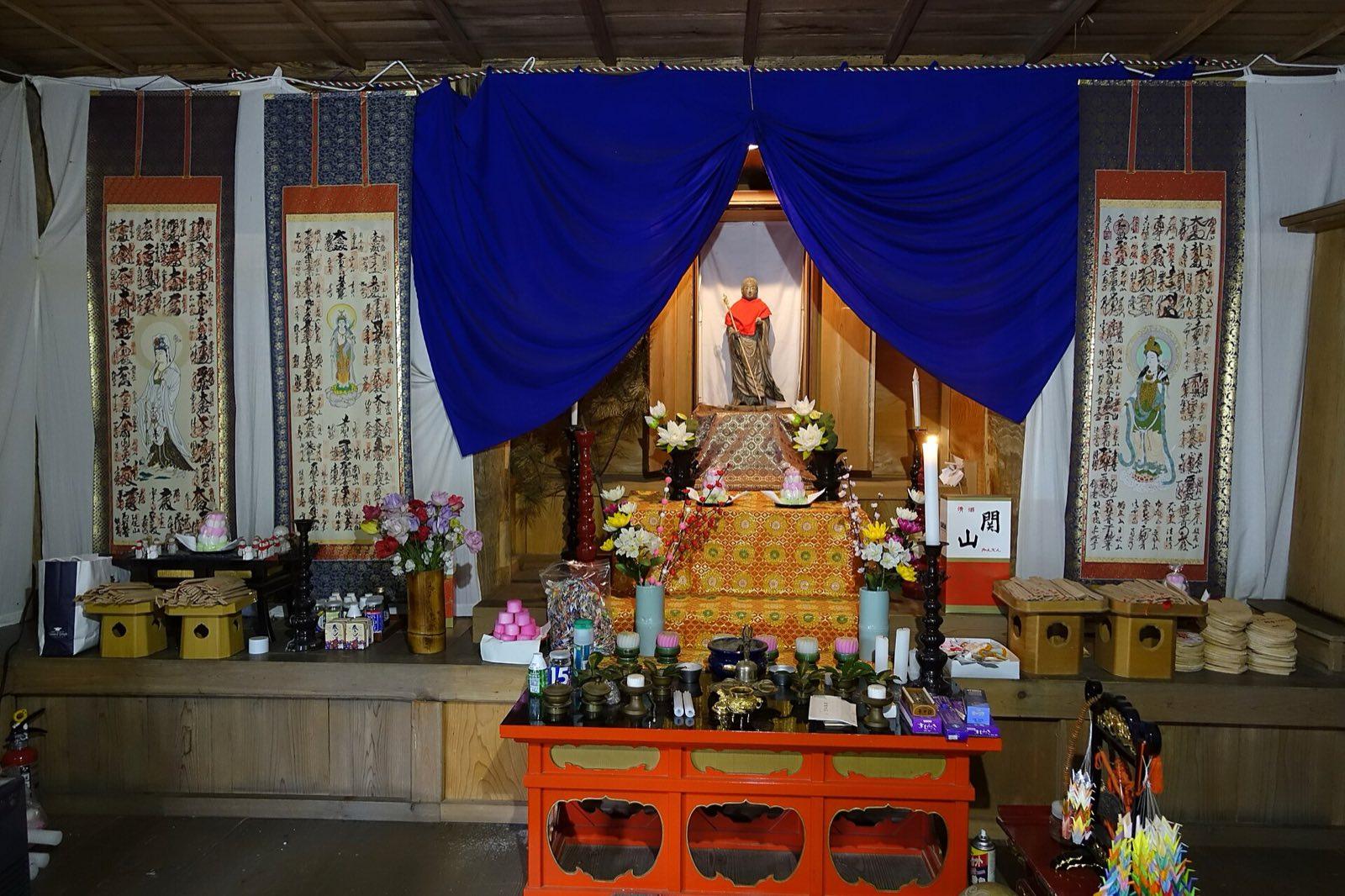
The Jizodo hall on the climb up Chuson-ji Photo: Daderot, CC0, via Wikimedia Commons (https://commons.wikimedia.org/wiki/File:Jizodo_Hall_-_Chusonji,_Hiraizumi,_Iwate_-_DSC04740.jpg) Day 5: Kakunodate early, Lake Tazawa and Nyuto Onsen
Kakunodate to Lake Tazawa, then up into the beech forest to Nyuto Onsen
- Drive about 1.5 h
- Breakfast and dinner
- Stay in Nyuto Onsen
Day 5 details
Kakunodate fills with day-trippers from mid-morning, so we walk the samurai street again at about 7:30 am, when only the gardeners are out and the light comes low through the trees. After breakfast we visit Ando Jozo, a miso and soy sauce brewery in a brick storehouse in Tamachi, and taste its pickles. Then about 30 minutes north to Lake Tazawa, Japan's deepest lake at about 423 metres, a nearly round caldera of deep blue water. We stop by the golden statue of Tatsuko, the girl of local legend who became the lake's dragon, and at Gozanoishi shrine on the shore. Lunch is on your own at the lakeside. Early in the afternoon we climb about 30 minutes into the beech forest to Nyuto Onsen, a cluster of old hot-spring inns at the end of the road. With the onsen-hopping pass you can bathe in the milky white and clear springs of the neighbouring inns before dinner at ours.
Included
- Early walk on Kakunodate's samurai street with your guide
- Ando Jozo miso and soy sauce brewery
- Lake Tazawa, the Tatsuko statue and Gozanoishi shrine
- Night at a rustic Nyuto Onsen inn with dinner
- Nyuto onsen-hopping pass
Easier option: Stay at your inn's own baths and rest instead of visiting the others.
More active option: Walk a beech forest trail between the inns with your guide, about an hour.
Free time: Lunch on your own at Lake Tazawa; afternoon free at Nyuto
Activity: About an hour on foot in Kakunodate, 45 minutes at the lake. Bathing is optional; the inn has a private bath option.
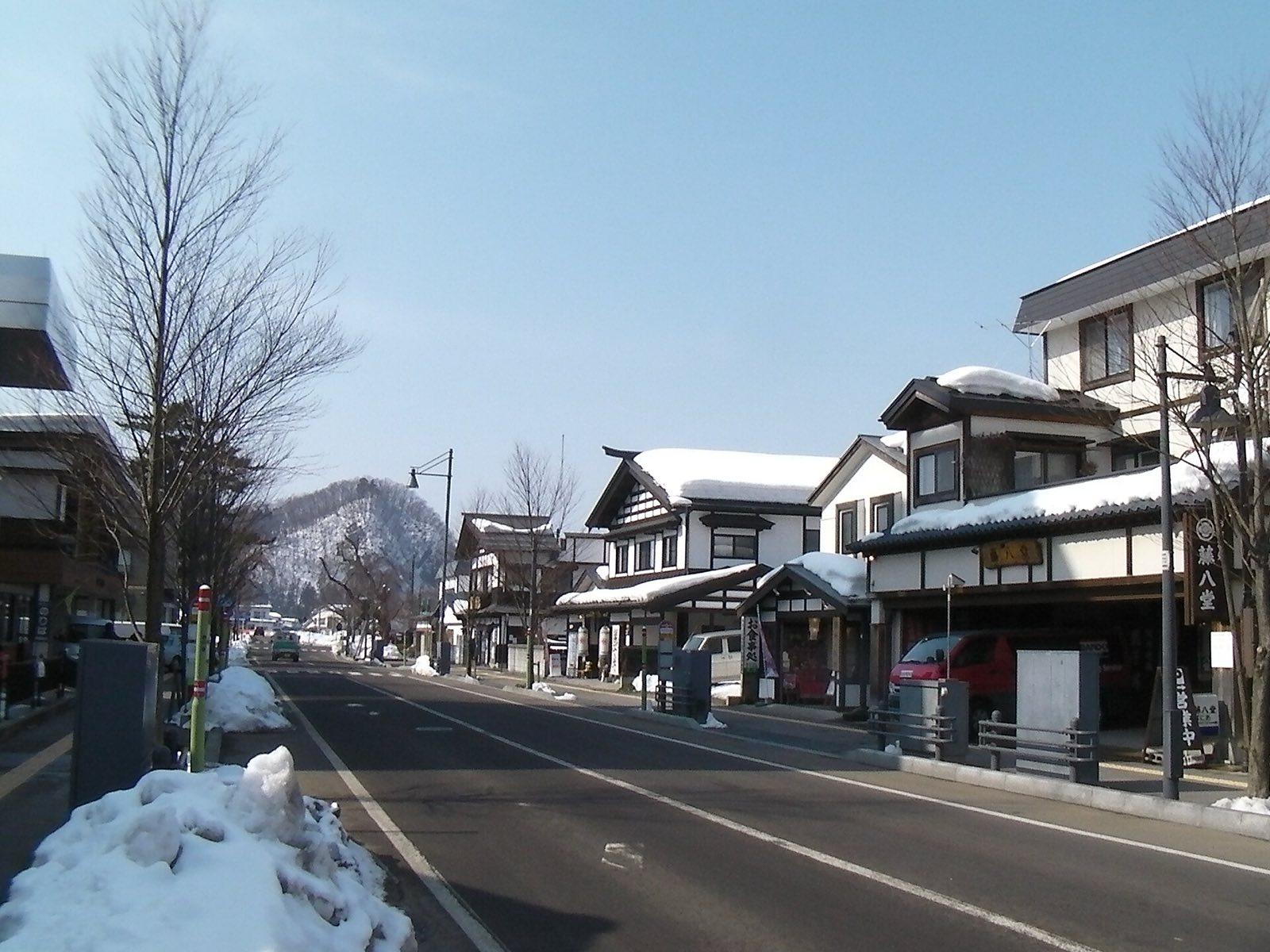
A street in Kakunodate in winter Photo: Brian Dell, Public domain, via Wikimedia Commons (https://commons.wikimedia.org/wiki/File:Kakunodate_street.JPG) Day 6: Stone circles and Hirosaki Castle
Nyuto Onsen to the Oyu Stone Circles, then Hirosaki: the castle, the Fujita garden and the Neputa village
- Drive about 3.5 h
- Breakfast and lunch
- Stay in Hirosaki
Day 6 details
A last soak before breakfast, then the longest drive of the trip, about three and a half hours in all, broken in the middle. We go north through Hachimantai and Kazuno to the Oyu Stone Circles, two rings of river stones laid out by Jomon people about 4,000 years ago and part of the UNESCO-listed Jomon sites of northern Japan with a small museum. Lunch is in Kazuno. By about 2:30 pm we are in Hirosaki, the castle town of the Tsugaru lords. Hirosaki Castle's 1810 keep is one of the few original keeps left in Japan, but it is under restoration: moved in 2015 for stone-wall repairs, it is being returned to its spot and cannot be entered for some years. We see it from outside and spend our time in the park, with its moats, gates and about 2,500 cherry trees, which in late April draw all of northern Japan. Next door, the Fujita Memorial Garden is a terraced garden with Mount Iwaki on the skyline, and the Neputa village shows the fan-shaped lantern floats of Hirosaki's August festival, with a drumming demonstration. The evening is free; Hirosaki is known for apple cider.
Included
- Oyu Stone Circles and museum
- Lunch in Kazuno
- Hirosaki Park with your guide: the moats, gates and cherry trees, and the castle keep from outside (under restoration, not open)
- Fujita Memorial Garden
- Tsugaru-han Neputa village and its drumming demonstration
Easier option: Rest at the hotel after the castle and skip the Neputa village.
Free time: Evening free in Hirosaki
Activity: About 3.5 hours of driving with an hour at Oyu and an hour for lunch between. About 90 minutes in Hirosaki Park, 30 minutes at the garden and 45 minutes at the Neputa village.
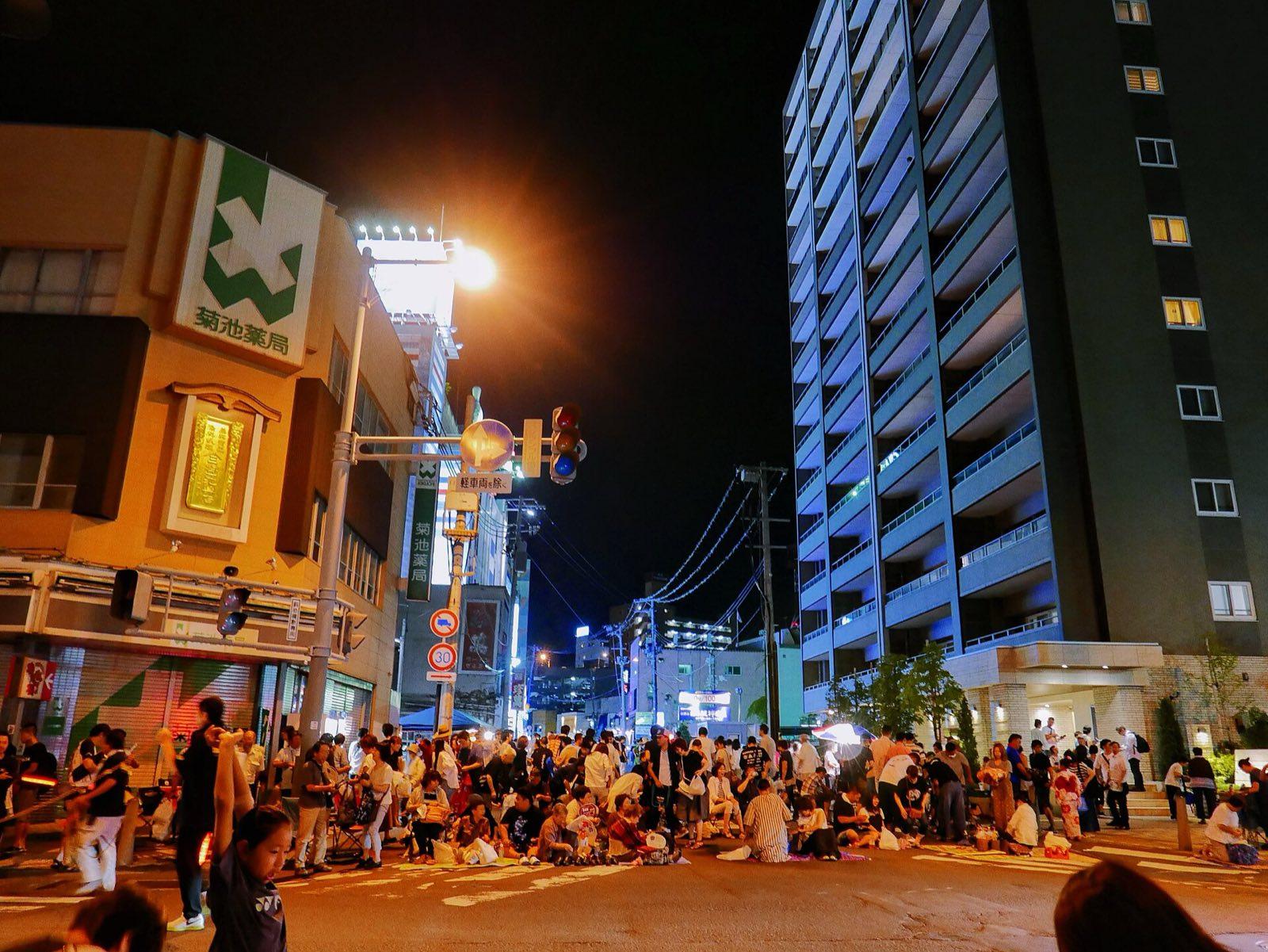
Dotemachi, Hirosaki's main street, on a summer night Photo: Kaburamata, CC0, via Wikimedia Commons (https://commons.wikimedia.org/wiki/File:Dotemachi_2018_(Hirosaki,_Japan).jpg) Day 7: Apple country, Nebuta and the Jomon village
Hirosaki's orchards, then to Aomori: Nebuta Museum Wa Rasse and Sannai Maruyama
- Drive about 1 h
- Breakfast
- Stay in Aomori
Day 7 details
Aomori grows more apples than any other part of Japan, and Hirosaki is the heart of it. We start at an apple park on the edge of town, walking between orchards of many varieties with Mount Iwaki behind; from late August to November you can pick your own, and in spring the trees are in blossom. Then about an hour to Aomori on the bay. Lunch is on your own: your guide shows you Furukawa fish market, where you buy a bowl of rice and top it with seafood from the stalls. In the afternoon we go to Wa Rasse, the Nebuta museum by the waterfront, where the giant illuminated floats of the August festival stand close enough to see the paper and wire, and a performer teaches the festival's drum rhythm and dance. Then Sannai Maruyama, the largest Jomon settlement found in Japan, with reconstructed pit houses and a tall six-pillar tower. The evening is free.
Included
- Apple orchard walk in Hirosaki
- Nebuta Museum Wa Rasse with your guide
- Sannai Maruyama Jomon site and museum
Optional experiences
- Apple picking in season (late August to November, on site)
Easier option: Stay at Wa Rasse and the waterfront and skip Sannai Maruyama, returning to the hotel early.
Free time: Lunch on your own at Furukawa market; evening free
Activity: About an hour in the orchard, an hour at Wa Rasse and 90 minutes at Sannai Maruyama.
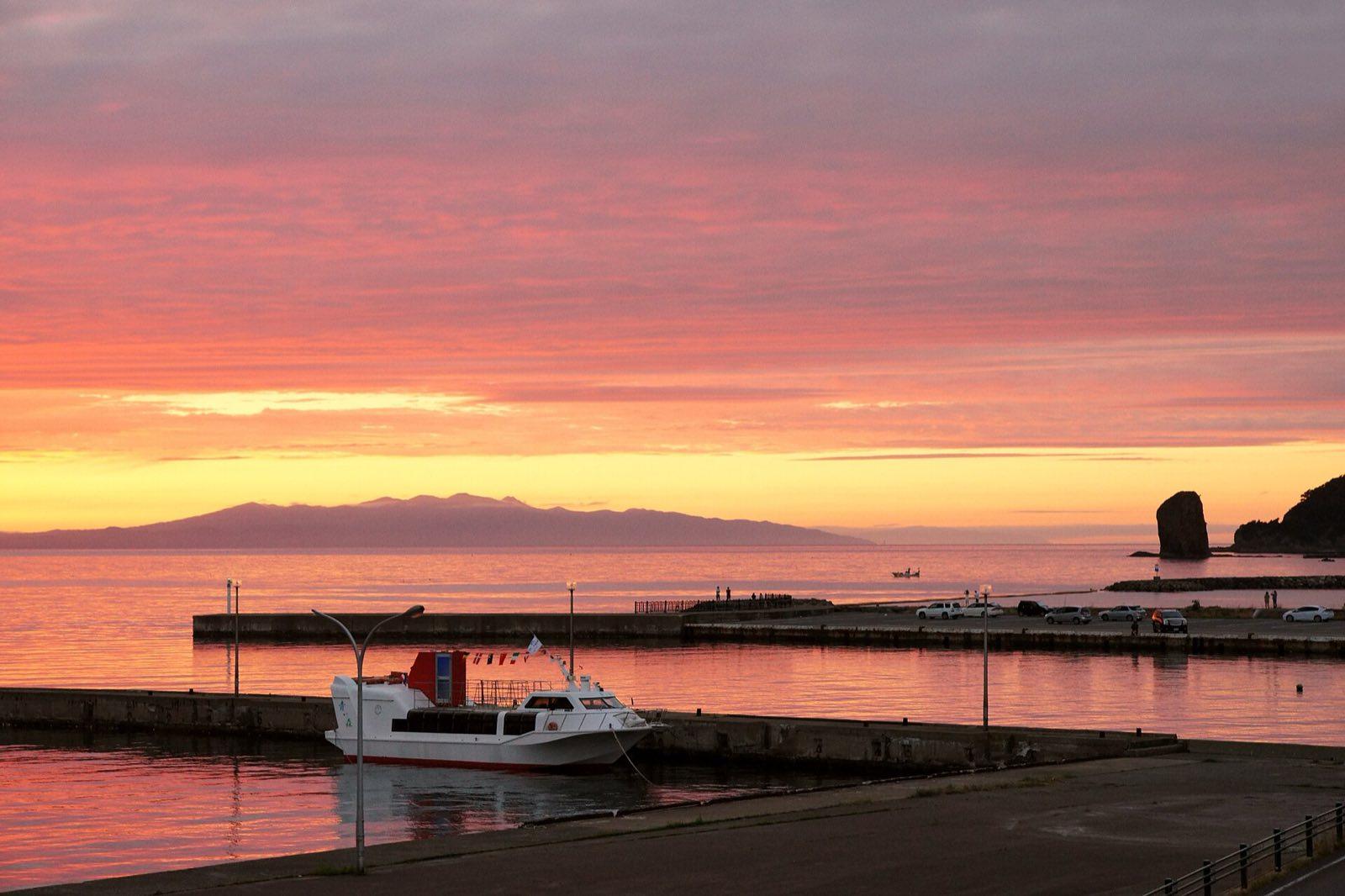
Aomori Bay at twilight Photo: 663highland, CC BY 2.5, via Wikimedia Commons (https://commons.wikimedia.org/wiki/File:Aomori_Bay_Asamushi_Onsen_Japan02bs5.jpg) Day 8: The Oirase stream and Lake Towada
Aomori over the Hakkoda mountains to the Oirase Gorge, Lake Towada by boat, and back
- Drive about 3.5 h
- Breakfast, lunch and dinner
- Stay in Aomori
Day 8 details
No packing today. We leave at about 8:30 am and drive over the Hakkoda mountains, about an hour and a half, past the old hot-spring inn at Sukayu and through beech forest, to the Oirase Gorge. Here a clear stream runs out of Lake Towada over mossy rocks and a string of waterfalls, with a walking path beside it the whole way. We walk upstream on the flat path towards Nenokuchi, about 5 km and two hours, with our vehicle waiting at the end, past the wide curtain of Choshi Otaki near the lake's edge. You can walk just the last 2 km, or start lower at Ishigedo and walk about 9 km. At Nenokuchi we board the cruise boat across Lake Towada, a caldera lake ringed by forest, about 50 minutes to Yasumiya, and sit down to lunch there, with Towada's local trout on the menu. A short walk leads to the bronze Maidens statue on the shore. Then we drive back to Aomori, about an hour and three quarters, for a farewell seafood dinner together.
Included
- Oirase Gorge stream walk with your guide
- Lake Towada cruise from Nenokuchi to Yasumiya
- Lunch at Yasumiya
- The Maidens statue on the lakeshore
- Farewell seafood dinner in Aomori
Optional experiences
- Hakkoda Ropeway when the weather is clear (on the way back, timing allowing)
Easier option: Walk only the last stretch to Nenokuchi past Choshi Otaki, about 2 km, and ride the rest in the vehicle.
More active option: Start about an hour ahead of the group at Ishigedo and walk upstream the whole way to Nenokuchi, about 9 km, to meet the group at the boat.
Free time: Free hour at the hotel before the farewell dinner
Activity: About 2 hours of walking (5 km upstream; 2 km or 9 km options), 50 minutes on the boat and an hour for lunch, split across about 3.5 hours of driving in two halves.
Day 9: Back to Tokyo, or on to Hokkaido
Shin-Aomori to Tokyo by Tohoku Shinkansen, then Haneda or Narita airport
- Drive about 1 h
- Breakfast
Day 9 details
A relaxed last breakfast, then our vehicle takes the group to Shin-Aomori station for a late-morning Hayabusa bullet train south. The ride to Tokyo takes about 3 hours 10 minutes, back down the line through Morioka and Sendai, with an ekiben lunch box from the station on board. Your guide travels with you to Tokyo Station, where a private vehicle takes you to Haneda (about 40 minutes) or Narita (about 90 minutes). For an international flight, book one leaving Haneda after about 6 pm or Narita after about 7 pm. If you are staying on in Tokyo, we drop you at your hotel instead. Going on to Hokkaido? Tell us when you book: from Shin-Aomori the shinkansen reaches Shin-Hakodate-Hokuto in about an hour through the Seikan Tunnel, or the ferry crosses the Tsugaru Strait from Aomori to Hakodate in about four hours, and we book your seat and say goodbye in Aomori.
Included
- Reserved seats on the Tohoku Shinkansen from Shin-Aomori to Tokyo
- Drop-off at Tokyo Haneda (HND) or Narita (NRT), or your Tokyo hotel
Optional experiences
- Shinkansen or ferry to Hakodate in Hokkaido instead of Tokyo (arranged on request)
Activity: Book an international flight leaving Haneda after about 6 pm or Narita after about 7 pm.
Wildlife and weather: Late April to early May brings cherry blossom to Kakunodate and Hirosaki, with cool mornings and some snow still on the Hakkoda mountains. Summer is warm and green; the rainy season runs about mid-June to late July, and early August is festival time, with Aomori Nebuta from 2 to 7 August and hotels booked a year ahead. Mid to late October is the autumn colour at Oirase and Lake Towada, with frosty nights at Nyuto. From November the lake cruise stops and the mountain roads fill with snow.
8 nights
Where you'll stay
Your hotels are named in your trip confirmation.
- Sendai1 night
- Matsushima1 night
- Hiraizumi1 night
- Kakunodate1 night
- Nyuto Onsen1 night
- Hirosaki1 night
- Aomori2 nights
One price
What's in the price
Included
Accommodation
- 8 nights: 1 in Sendai, 1 in Matsushima, 1 in Hiraizumi, 1 in a ryokan in Kakunodate's Tamachi quarter, 1 in a rustic Nyuto Onsen inn, 1 in Hirosaki, 2 in Aomori
- Hotels of at least a 3-star-plus standard in central locations, named when we confirm your dates
- Rooms shared, or your own for a supplement (Nyuto inn rooms are traditional and simpler)
Transport
- Pick-up at Tokyo Haneda (HND) or Narita (NRT) and transfer to Tokyo Station
- Reserved seats on the Tohoku Shinkansen from Tokyo to Sendai and from Shin-Aomori to Tokyo
- Our own vehicle and driver from Sendai on day 2 to Aomori on day 8, with your suitcase on board
- Matsushima Bay cruise and Lake Towada cruise
- Drop-off at Haneda, Narita or your Tokyo hotel on day 9
Your guide
- A See Sight Tours guide with the group from Tokyo Station on day 1 to Tokyo Station on day 9, with local guides and a tsunami storyteller where a site requires one
Activities
- Sendai: Zuihoden mausoleum
- Matsushima: bay cruise, Zuigan-ji and Godaido
- Ishinomaki: Minamihama memorial park and Kadonowaki Elementary School ruins with a local storyteller
- Hiraizumi: Motsu-ji, Chuson-ji with the Konjikido and Sankozo museum
- Kakunodate: the samurai street, two samurai houses, a cherry-bark craft demonstration and Ando Jozo brewery
- Lake Tazawa and the Tatsuko statue
- Nyuto Onsen: onsen-hopping pass
- Kazuno: Oyu Stone Circles
- Hirosaki: the castle and park, Fujita Memorial Garden, the Neputa village and an apple orchard
- Aomori: Nebuta Museum Wa Rasse and Sannai Maruyama
- Oirase Gorge stream walk and Lake Towada
Meals
- All 8 breakfasts
- 5 lunches: Matsushima, Ishinomaki, Kakunodate, Kazuno and Yasumiya at Lake Towada
- 4 dinners: a welcome gyutan dinner in Sendai, the ryokan dinner in Kakunodate, the inn dinner at Nyuto Onsen and a farewell seafood dinner in Aomori
Not included
- International flights to and from Tokyo
- Visas or travel authorisations, if your passport needs one
- Travel insurance
- Lunches and dinners not listed
- Drinks
- Tips (not expected in Japan)
- Optional activities, such as Fukuurajima, the Hakkoda Ropeway or apple picking
- The onward shinkansen or ferry to Hokkaido, if you choose it
- Personal spending
- Japan's departure tax, which is added to your airline ticket
Extras
- Room of your own
- CAD 1,095 (estimated price)

See Sight Tours has been providing travel services across North America since 2006. Operating in 20 cities across Canada and the USA, the company specializes in small group tours that offer personalized, high-quality experiences for travelers.


Book your Tour
Get in Touch
- Toll Free1-888-961-6584
- Local1-289-271-9767


© 2026 See Sight Tours. All rights reserved.