Printable itinerary
Japan Back Roads: Nagano, Kanazawa and the San'in Coast
11 days · Tokyo to Okayama · up to 12 guests
From CAD 7,995 per person, sharing a room (estimated price. Estimated price. The itinerary, hotels and availability are proposed and subject to confirmation. Your quote will set out the booking conditions; sending a request does not confirm a booking.)
Day by day
Itinerary
- Tokyo1 night
- Nagano2 nights
- Kanazawa2 nights
- Tottori1 night
- Matsue1 night
- Hagi1 night
- Kurashiki2 nights
- Okayamaend
- Overnight stop
- Day trip
- By boat or train
Day 1: Arrive in Tokyo
Haneda or Narita airport to your hotel in Shinjuku
- By train
- Welcome dinner
- Stay in Tokyo
Day 1 details
Fly into Haneda or Narita and we meet you in the arrivals hall and bring you into the city to a hotel in Shinjuku, chosen because tomorrow's train to the mountains leaves from Shinjuku station and the walk is short. Tokyo is only the doorway on this trip: our other Japan trips cover the city properly, and this one heads for the regions most first-time tours skip. If you land early, the gardens of Shinjuku Gyoen or the lanes of Omoide Yokocho are a few minutes away. At about 6 pm your See Sight Tours guide meets the group for a short briefing on the ten days ahead: how the trains work, how your suitcase travels separately on the longer rail days, what to pack for Togakushi's cedar forest and the Tottori dunes, and the basics of temple and onsen manners. Then we walk together to a local izakaya for a welcome dinner of small plates, yakitori and seasonal dishes.
Included
- Meet on arrival at Haneda (HND) or Narita (NRT) and transfer to the hotel
- Welcome briefing with your guide
- Welcome izakaya dinner
Free time: Free until the 6 pm briefing
Activity: Plan to land by about 3 pm to reach the briefing; later arrivals are met and join the group at dinner or the next morning.
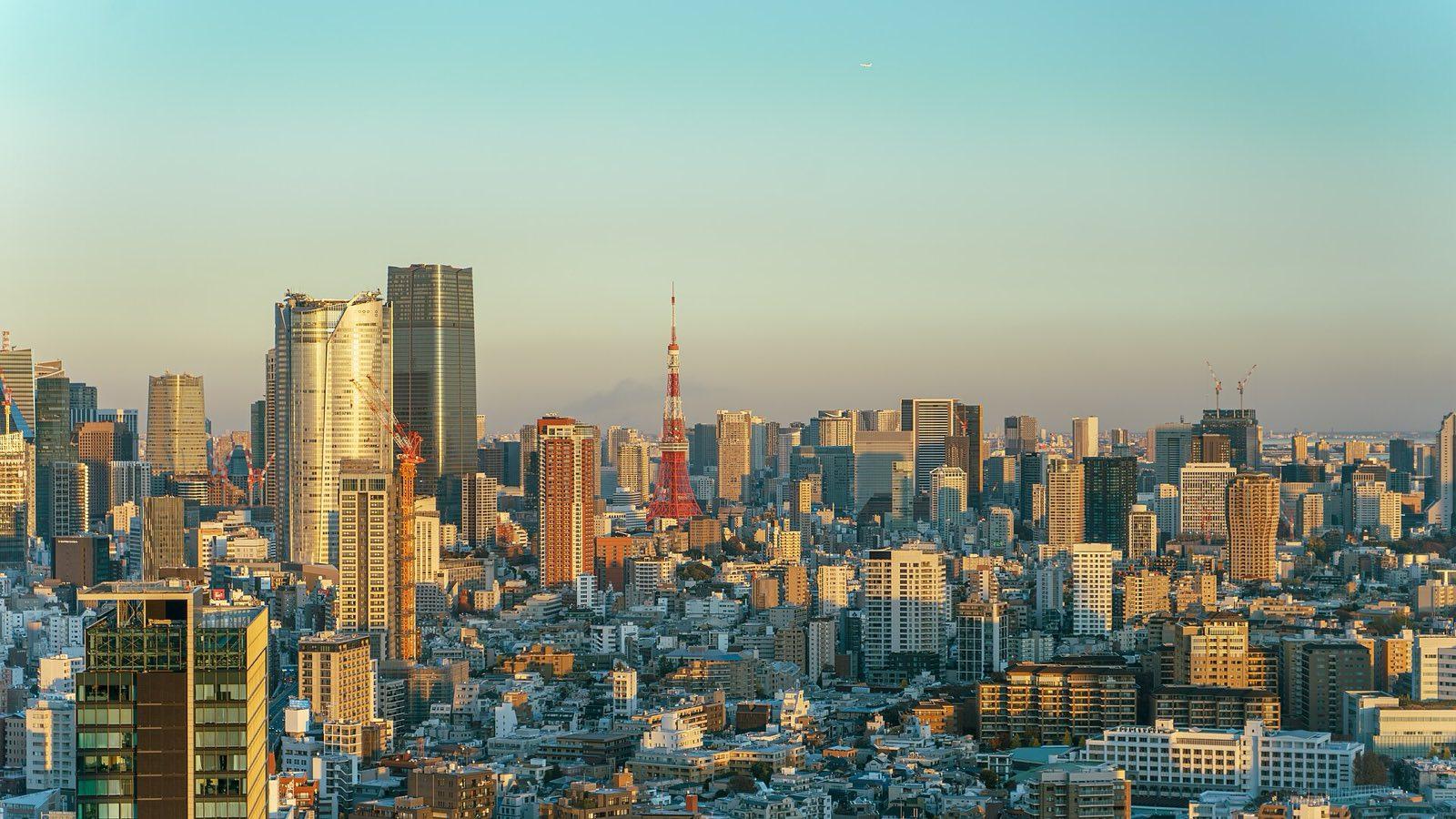
Tokyo, where the trip begins Photo: David Kernan, CC BY 4.0, via Wikimedia Commons (https://commons.wikimedia.org/wiki/File:Minato_City,_Tokyo,_Japan.jpg) Day 2: Matsumoto Castle on the way to Nagano
Shinjuku to Matsumoto by limited express, then on to Nagano
- By train
- Breakfast and lunch
- Stay in Nagano
Day 2 details
A mid-morning start, not a dawn one. We ride the Azusa limited express from Shinjuku, about two hours forty minutes west through the Kofu basin and into the Japanese Alps, with the Yatsugatake range and the Southern Alps in view on a clear day. In Matsumoto we walk ten minutes to the castle, whose black-lacquered keep dates from the 1590s and is one of only twelve original keeps left in Japan and one of five listed as a National Treasure. Inside, the wooden stairs are steep and narrow, close to ladders in places, and the top floor looks out over the town to the Alps. Lunch is soba or a set meal in the old Nakamachi merchant street, among white plastered storehouses. In the afternoon the Shinano limited express takes about fifty minutes north to Nagano, where we stay two nights. The evening is free; your guide points out the restaurants around the station and the long shopping street that climbs to Zenko-ji.
Included
- Reserved seats on the Azusa limited express from Shinjuku to Matsumoto
- Matsumoto Castle keep with your guide
- Lunch in Matsumoto
- Reserved seats on the Shinano limited express to Nagano
Easier option: Skip the climb inside the keep and walk the moat and gardens, where the view of the castle is best anyway.
Free time: Evening free in Nagano
Activity: About 6 steep flights of wooden stairs inside the castle keep, with low beams; shoes come off at the door, so wear socks you are happy to walk in.
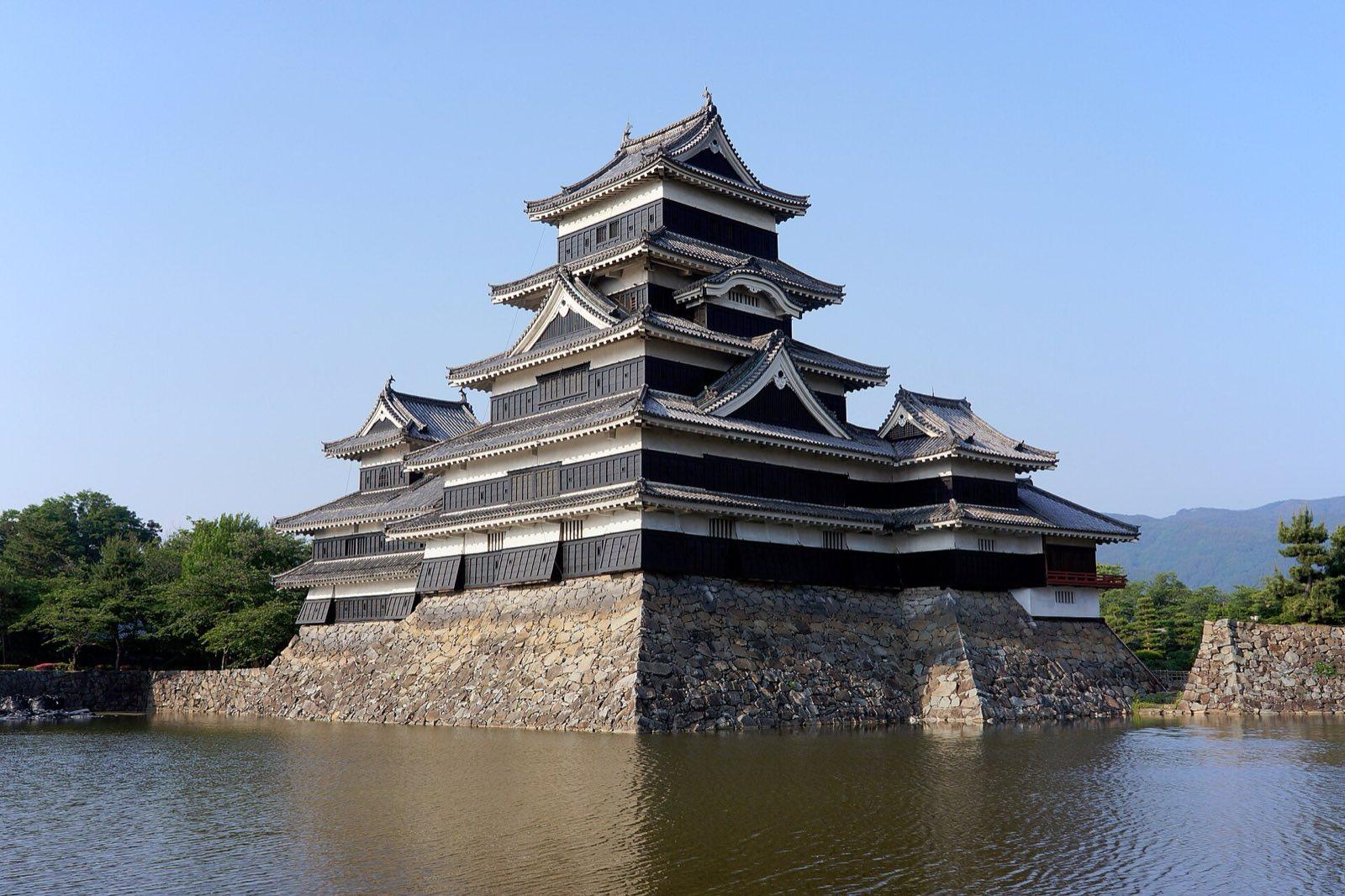
Matsumoto Castle across its moat Photo: 663highland, CC BY 2.5, via Wikimedia Commons (https://commons.wikimedia.org/wiki/File:130608_Matsumoto_Castle_Matsumoto_Nagano_pref_Japan02bs4.jpg) Day 3: Zenko-ji at dawn and the cedars of Togakushi
Nagano to Togakushi and back
- Drive about 1.5 h
- Breakfast and lunch
- Stay in Nagano
Day 3 details
Zenko-ji has stood in Nagano for some fourteen centuries, and every morning at dawn its monks hold a service in the main hall, open to anyone. We go early to join it (the time moves with sunrise through the year; your guide confirms it the night before), then walk the Okaidan, a pitch-dark passage under the altar where pilgrims feel along the wall for a key said to bring good fortune. After breakfast our own vehicle drives about forty minutes up into the hills to Togakushi, a mountain worship site of five shrines on the slopes of Mount Togakushi. From the red Zuishinmon gate we walk the approach to the Okusha, the inner shrine, about 2 km each way and the last half under an avenue of cedars planted around four hundred years ago. Lunch is Togakushi soba, the local buckwheat noodle, near the Chusha shrine. Back in Nagano by mid-afternoon, the rest of the day is yours.
Included
- Morning service at Zenko-ji and the Okaidan passage under the main hall
- Togakushi with your guide: the walk to the Okusha through the cedar avenue, and the Chusha shrine
- Soba lunch in Togakushi
Easier option: Skip the Okusha walk and visit the Chusha and Hokosha shrines, both a few steps from the road, with time over tea while the others walk.
More active option: After lunch, walk the forest trail through the Togakushi Forest Botanical Garden to the Kagami-ike pond, where the cliffs of Mount Togakushi are reflected on a still day; the vehicle collects you there.
Free time: Afternoon and evening free in Nagano
Activity: About 4 km on a gravel path to the Okusha and back, rising gently with stone steps at the end, at about 1,200 to 1,300 m. From about December to April the upper path is under snow and the Okusha is closed; on those dates we walk as far as the cedars allow.
Day 4: Hokuriku Shinkansen to Kanazawa and Higashi Chaya
Nagano to Kanazawa by Hokuriku Shinkansen
- By train
- Breakfast
- Stay in Kanazawa
Day 4 details
A slow morning in Nagano, then about an hour and a quarter on the Hokuriku Shinkansen to Kanazawa, running down from the mountains to the Sea of Japan coast. Kanazawa was the seat of the Maeda lords, the richest domain outside the shogun's own, and because it was never bombed in the war its old quarters survive. Your suitcase is already on its way to the hotel, so we drop day bags and go straight out. In the afternoon we walk the Higashi Chaya district, a street of wooden teahouses with latticed fronts built in the 1820s, where geisha still entertain in the evenings. We step inside one of the old teahouses to see the upstairs rooms where guests were received, then cross the Asano River for the smaller Kazuemachi lanes along the water. Kanazawa produces nearly all of Japan's gold leaf, and the shops here sell it on everything from lacquer to ice cream. The evening is free.
Included
- Reserved seats on the Hokuriku Shinkansen from Nagano to Kanazawa
- Higashi Chaya and Kazuemachi with your guide, with entry to a historic teahouse
Free time: Evening free in Kanazawa
Activity: About 3 km on foot on flat streets.
Day 5: Kenroku-en at opening and a gold-leaf workshop
A day on foot in Kanazawa
- Breakfast and lunch
- Stay in Kanazawa
Day 5 details
Kenroku-en opens at 7 am from March to mid-October and at 8 am in winter, and we walk in soon after, before the tour buses. This was the Maeda family's garden, laid out over nearly two centuries: the Kasumigaike pond with its two-legged Kotoji stone lantern, a fountain fed only by the pressure of the garden's own streams and, from November, the rope cones that hold the pine branches up under the snow. Next door, the rebuilt turrets and stone walls of Kanazawa Castle park show how the town grew around its lord. Late morning we sit down to a gold-leaf workshop, laying sheets about a ten-thousandth of a millimetre thick onto a lacquer tray or chopsticks you keep. Lunch is at Omicho Market, where the stalls sell crab, sweet shrimp and other fish from the Sea of Japan; we eat at a counter, not on the walk. The afternoon is free: the 21st Century Museum of Contemporary Art and the Nagamachi samurai lanes are both close.
Included
- Kenroku-en at opening with your guide
- Kanazawa Castle park
- Gold-leaf workshop, with the piece you make to keep
- Sit-down seafood lunch at Omicho Market
Optional experiences
- Myoryu-ji, the 'ninja temple' with its hidden stairs and trap doors (guided visits by reservation only, price shown at booking; ask your guide the day before)
Free time: Afternoon and evening free in Kanazawa
Activity: About 6 km on foot over the day on paved paths and garden gravel.
Day 6: By rail to the San'in coast and the Tottori dunes
Kanazawa to Tsuruga and Kyoto by train, then the Super Hakuto to Tottori
- Drive about 30 min
- Breakfast and lunch
- Stay in Tottori
Day 6 details
This is the one long travel day, and it is on trains, not a coach: about five hours of rail in three legs, with a break for lunch in the middle. We take the Hokuriku Shinkansen to Tsuruga, change to the Thunderbird limited express along Lake Biwa to Kyoto, and stop there for a sit-down lunch near the station before the Super Hakuto, which climbs through the Chugoku mountains and drops to Tottori in about three hours. Your suitcase goes ahead by delivery, so you travel with a day bag. Our own vehicle and driver meet us at Tottori station and stay with the group along the coast for the next four days. Fifteen minutes later we are at the Tottori Sand Dunes, part of the San'in Kaigan UNESCO Global Geopark, ridges of sand some 16 km long rising to about 50 m above the Sea of Japan. We climb the big ridge, the Uma-no-se, in the late afternoon light, when the wind ripples show best and most day visitors have gone.
Included
- Reserved seats on the Hokuriku Shinkansen, the Thunderbird and the Super Hakuto from Kanazawa to Tottori
- Sit-down lunch in Kyoto between trains
- Tottori Sand Dunes in the late afternoon with your guide
Optional experiences
- A camel ride on the dunes (price shown at booking, paid on the spot)
Easier option: Stay at the dune viewing terrace above the sand rather than climbing the ridge.
Free time: Evening free in Tottori
Activity: The climb up the main dune ridge is short but steep, in soft sand; about 1 km there and back. Train time is about five hours with a one-hour lunch stop. If a train runs late and we reach Tottori after sunset, we visit the dunes first thing the next morning, before the drive west, instead.
Day 7: The Adachi garden and Matsue Castle
Tottori to Yasugi, then Matsue
- Drive about 2.5 h
- Breakfast and lunch
- Stay in Matsue
Day 7 details
Our vehicle takes the coast road west, about 150 km and two and a half hours of driving in all, broken by the museum stop, past Mount Daisen, the highest peak in the Chugoku region, whose cone fills the view on a clear morning. Mid-morning we stop at the Adachi Museum of Art in Yasugi, known as much for its gardens as for its paintings: you look at the raked gravel, pines and borrowed hills through the museum's windows as if they were framed pictures, and inside hangs a large collection of the painter Yokoyama Taikan. Lunch is nearby. In Matsue we visit the castle, whose keep, finished in 1611, is another of the original twelve and was listed as a National Treasure in 2015. Then we ride a small Horikawa sightseeing boat around the old moat, ducking under low bridges, past the samurai houses of Shiomi Nawate and the former home of the writer Lafcadio Hearn. Matsue sits on Lake Shinji, whose sunsets are the town's pride; the evening is free to watch one.
Included
- Adachi Museum of Art and its gardens
- Lunch near Yasugi
- Matsue Castle keep with your guide
- Horikawa sightseeing boat around the castle moat
Optional experiences
- The Lafcadio Hearn Memorial Museum on Shiomi Nawate
Free time: Evening free in Matsue, with sunset over Lake Shinji
Activity: The Horikawa boat is about 50 minutes; you sit on the floor, and the roof lowers under the bridges. In winter the boats carry a heated kotatsu table.
Day 8: Izumo Taisha, then the Sea of Japan coast to Hagi
Matsue to Izumo, then west along the coast to Hagi
- Drive about 3.5 h
- Breakfast, lunch and dinner
- Stay in Hagi
Day 8 details
We leave Matsue after breakfast for Izumo Taisha, about forty-five minutes away, one of the oldest and most important Shinto shrines in Japan, dedicated to Okuninushi, a god of good relationships and marriage. We arrive early, before the coaches from Hiroshima, and walk the pine-lined approach to the main sanctuary and the Kaguraden hall with its huge twisted straw rope. Here you clap four times, not the usual two. Lunch is Izumo soba served in stacked lacquer bowls, a few minutes' walk away. Then comes the longest drive of the trip, about two and a half hours west along the coast road, broken by stops at the Sea of Japan: about three and a half hours of driving across the day, inside our daily limit. We drive here because the coast railway west of Izumo is slow, with few through trains. We reach Hagi by late afternoon. Tonight's stay is a traditional inn with a hot spring bath where we can find one, and dinner is a kaiseki meal together.
Included
- Izumo Taisha with your guide, early before the day-trip coaches
- Izumo soba lunch
- Stops on the coast road between Izumo and Hagi
- Dinner together in Hagi
Easier option: Rest at the inn's hot spring bath on arrival rather than the short evening walk.
Activity: About three and a half hours of driving across the day (about 230 km), the longest on the trip, split into a 45-minute morning leg and an afternoon leg of about two and a half hours with two coast stops. Izumo Taisha is free to enter; in October, the month the gods are said to gather at Izumo, it is busier.
Day 9: Hagi's castle town, then the Shinkansen to Kurashiki
Hagi to Shin-Yamaguchi, then the Sanyo Shinkansen to Okayama and Kurashiki
- Drive about 1 h
- Breakfast and lunch
- Stay in Kurashiki
Day 9 details
Hagi was the castle town of the Mori lords of Choshu, and in the 1860s young samurai from here helped bring down the shogunate. Five places in and around the town belong to the UNESCO-listed Sites of Japan's Meiji Industrial Revolution, and we see two of them this morning: the small Shokasonjuku school where the teacher Yoshida Shoin trained many of those samurai, and the old castle town itself, a grid of earthen walls, white storehouses and summer orange trees behind the gates of merchant and samurai houses. We go inside the Kikuya family house, once merchants to the Mori lords, and stop at a kiln to see Hagi ware, the soft-glazed pottery prized for tea ceremonies. After lunch our driver takes us about an hour over the hills to Shin-Yamaguchi, past the Hagi Okan roadside station with its Shoin Memorial Hall, and we say goodbye to the vehicle at the station. The Sanyo Shinkansen reaches Okayama in about an hour and a half, and a local train has us in Kurashiki fifteen minutes later.
Included
- Hagi with your guide: Shokasonjuku, the castle town and the Kikuya family house
- A Hagi ware kiln visit
- Lunch in Hagi
- Reserved seats on the Sanyo Shinkansen from Shin-Yamaguchi to Okayama, and the local train to Kurashiki
Free time: Evening free in Kurashiki
Activity: About 3 km on foot in Hagi on flat streets.
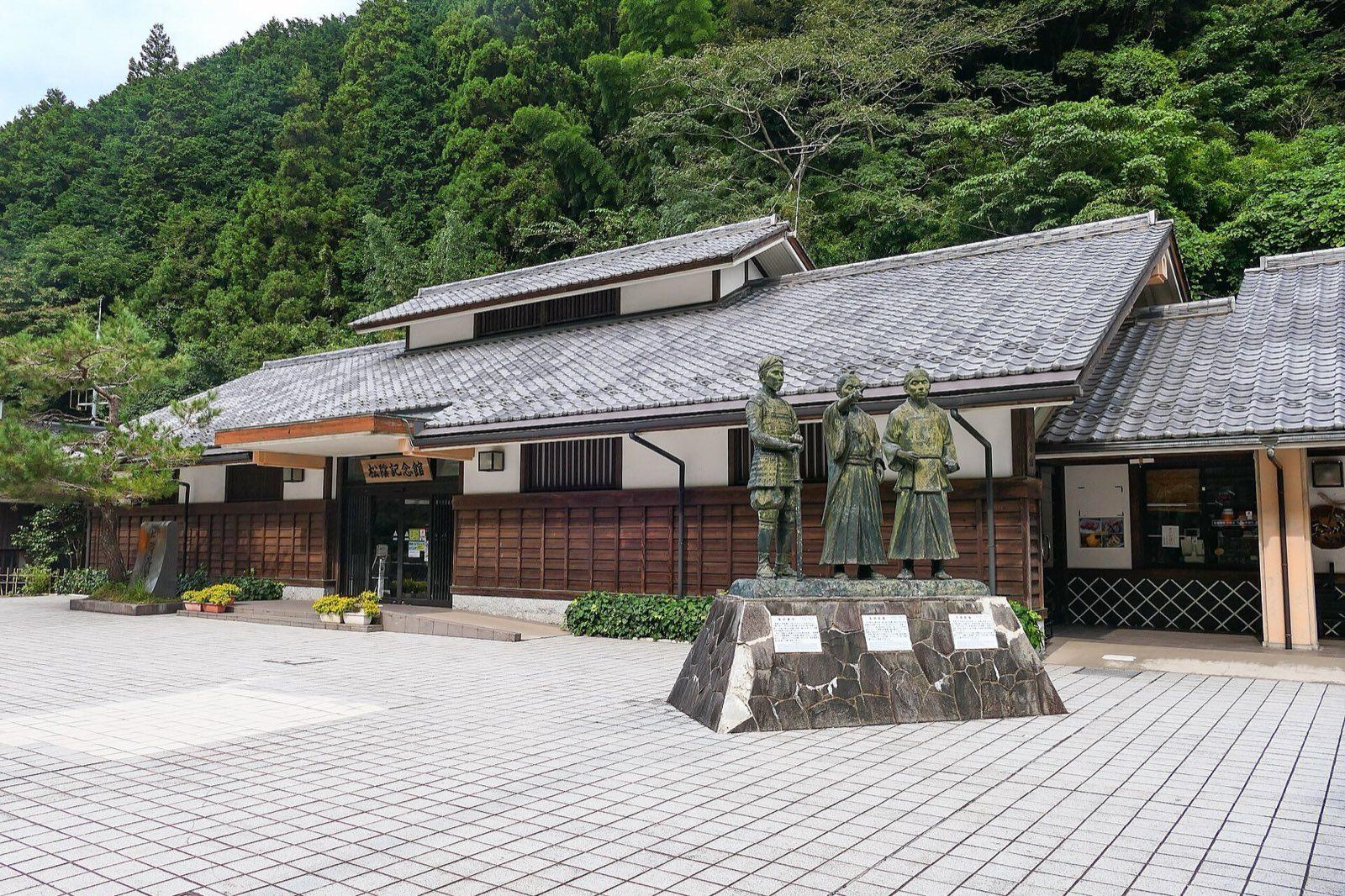
The Shoin Memorial Hall at Hagi Okan, on the road out of Hagi Photo: MaedaAkihiko, CC0, via Wikimedia Commons (https://commons.wikimedia.org/wiki/File:Hagi_Shoin-Memorial-Hall.jpg) Day 10: Kurashiki's canal quarter and Korakuen
Kurashiki, with an afternoon in Okayama
- Drive about 1 h
- Breakfast and dinner
- Stay in Kurashiki
Day 10 details
Kurashiki grew rich shipping rice along its canal in the Edo period, and the Bikan quarter keeps the merchants' white-walled storehouses with their black-tiled lattice patterns, willows leaning over the water. We walk it early, while the shops are still opening, and take a short flat-bottomed boat ride along the canal. The Ohara Museum of Art, opened in 1930 as the first museum of Western art in Japan, holds El Greco, Monet and Gauguin among Japanese folk craft and modern pieces; we give it a proper hour and a half (it closes on Mondays, so we plan around them). After lunch on your own in the quarter, we drive twenty-five minutes to Okayama for Korakuen, one of Japan's three great gardens with Kenroku-en, which you walked five days ago: lawns, tea fields and a pond laid out around views of Okayama Castle's black keep. In the evening we sit down together for a farewell dinner back in Kurashiki.
Included
- The Bikan historical quarter with your guide
- Kurashiki canal boat ride
- Ohara Museum of Art
- Korakuen garden in Okayama
- Farewell dinner
More active option: Hire a bicycle in the morning for the Kibi Plain cycle path, past rice fields, burial mounds and shrines, and meet the group at Korakuen.
Free time: Lunch and the late morning free in Kurashiki
Activity: About 5 km on foot on flat paths. The canal boat does not run every day in winter; on those days we walk the canal instead.
Day 11: Okayama and onward
Kurashiki to Okayama station, then the Shinkansen to Osaka or Tokyo
- Drive about 30 min
- Breakfast
Day 11 details
A last breakfast, then a short morning walk along the canal before the crowds, if you want it. Our vehicle takes the group and luggage to Okayama station, about twenty-five minutes away, by about 10 am, and your guide sees you onto a reserved Shinkansen seat. Okayama sits on the main Sanyo line, so the trip ends close to wherever you fly from: Shin-Osaka is about 45 minutes away, with the Haruka express on to Kansai International Airport in about another 50 minutes, and Tokyo is about three and a quarter hours. If you are staying on, Hiroshima is about 40 minutes west and Kyoto about an hour east, and your guide can help you buy onward tickets or send your suitcase ahead. Flights from Kansai International after about 2 pm, or from Haneda after about 5 pm, work with the morning departure. If you would rather fly out of Okayama's own airport, we take you there instead.
Included
- Transfer to Okayama station
- A reserved Shinkansen seat from Okayama to Shin-Osaka or Tokyo
Activity: Book a flight from Kansai International (KIX) after about 2 pm, or from Haneda (HND) after about 5 pm.
Wildlife and weather: Spring and autumn are mild, with cherry blossom in early April in Matsumoto and Nagano and maple colour from late October in Togakushi and Kenroku-en. Summer is hot and humid, and June to mid-July is the rainy season. From about December to April snow closes the upper path at Togakushi and the San'in coast is cold and often grey.
10 nights
Where you'll stay
Your hotels are named in your trip confirmation.
- Tokyo1 night
- Nagano2 nights
- Kanazawa2 nights
- Tottori1 night
- Matsue1 night
- Hagi1 night
- Kurashiki2 nights
One price
What's in the price
Included
Accommodation
- 10 nights: 1 in Tokyo, 2 in Nagano, 2 in Kanazawa, 1 in Tottori, 1 in Matsue, 1 in Hagi and 2 in Kurashiki
- Central hotels of at least a 3-star-plus standard near a station or the old quarter, and a traditional inn in Hagi where we can find one with a hot spring bath, named when we confirm your dates
- Rooms shared, or your own for a supplement
- Local accommodation taxes
Transport
- Meet on arrival at Haneda (HND) or Narita (NRT) and transfer to the hotel in Tokyo
- Reserved seats on the Azusa from Shinjuku to Matsumoto and the Shinano to Nagano
- Reserved seats on the Hokuriku Shinkansen from Nagano to Kanazawa
- Reserved seats on the Hokuriku Shinkansen, the Thunderbird and the Super Hakuto from Kanazawa to Tottori
- Our own vehicle and driver for Togakushi (day 3) and from Tottori to Shin-Yamaguchi (days 6 to 9)
- Reserved seats on the Sanyo Shinkansen from Shin-Yamaguchi to Okayama, and the local train to Kurashiki
- Vehicle for Korakuen (day 10) and the transfer to Okayama station (day 11)
- Suitcase forwarding between hotels on the rail days where the delivery timetable allows (one suitcase per person)
- A reserved Shinkansen seat from Okayama to Shin-Osaka or Tokyo on day 11
Your guide
- A See Sight Tours guide with the group from the first evening in Tokyo to the last morning in Okayama, with local guides where a site requires one
- A pre-departure pack about a week before you travel: daily plan, hotel addresses, train times and an introduction from your guide
Activities
- Matsumoto: Matsumoto Castle keep
- Nagano: the Zenko-ji morning service and the Okaidan passage
- Togakushi: the Okusha cedar avenue walk and the Chusha shrine
- Kanazawa: Higashi Chaya with a historic teahouse, Kenroku-en, Kanazawa Castle park and a gold-leaf workshop
- Tottori: the Tottori Sand Dunes
- Yasugi: the Adachi Museum of Art
- Matsue: Matsue Castle keep and the Horikawa moat boat
- Izumo: Izumo Taisha
- Hagi: Shokasonjuku, the castle town, the Kikuya family house and a Hagi ware kiln
- Kurashiki: the Bikan quarter, the canal boat and the Ohara Museum of Art
- Okayama: Korakuen
Meals
- All 10 breakfasts (days 2 to 11)
- 7 lunches: Matsumoto (day 2), Togakushi soba (day 3), Omicho Market (day 5), Kyoto between trains (day 6), near the Adachi Museum (day 7), Izumo soba (day 8) and Hagi (day 9)
- 3 dinners: a welcome izakaya dinner in Tokyo (day 1), a kaiseki dinner in Hagi (day 8) and a farewell dinner in Kurashiki (day 10)
Not included
- International flights to Tokyo and from Osaka or Tokyo
- Japan's international tourist tax, which is collected in your airline ticket
- Travel insurance
- Meals not listed
- Drinks
- Tips (not expected in Japan)
- Optional activities, such as the camel ride at Tottori and Myoryu-ji in Kanazawa
- Personal expenses
- A second suitcase forwarded between hotels
Extras
- Room of your own
- CAD 1,440 (estimated price)

See Sight Tours has been providing travel services across North America since 2006. Operating in 20 cities across Canada and the USA, the company specializes in small group tours that offer personalized, high-quality experiences for travelers.


Book your Tour
Get in Touch
- Toll Free1-888-961-6584
- Local1-289-271-9767


© 2026 See Sight Tours. All rights reserved.